

How Work Retaliation Laws Protect Teachers During School and TEA Investigations
Most teachers don’t expect their job to become a legal situation. You go into education to help students learn, to create stability, and to make a positive impact in your community. But when a school issue turns into a formal complaint, a student safety concern, or a TEA-related investigation, the pressure can shift fast. Suddenly, the same workplace that felt familiar can feel like it’s watching your every move.
For many educators, the first sign that something is wrong is administrative leave. It may happen with little warning, sometimes after you ask a question, submit a report, or raise a concern about compliance. Your employer may say it’s “standard procedure,” but you feel the weight of being removed from your classroom, your routine, and your professional identity. Even if you are placed on paid administrative leave, the experience can still feel like a stain on your reputation.
At Masterly Legal Solutions, we help teachers understand their legal rights and protect their careers when retaliation begins during school investigations and TEA investigations. Work retaliation laws exist for a reason: teachers should not be punished for doing the right thing. This article explains these protections in plain language, shows how retaliation can be subtle and undocumented, and explains how our firm can help you enforce your rights when the system feels stacked against you.
Why TEA and School Investigations Create a High-Risk Workplace for Teachers
School investigations can begin from a student complaint, a parent complaint, an internal report, or a referral from a campus manager or district leadership. In some situations, the matter becomes connected to a TEA complaint process or a review of educator conduct. Regardless of how the investigation begins, it often creates fear inside the organization. Administrators worry about public attention, policy failures, and possible consequences for leadership.
That fear can change how the employer treats a teacher. Instead of focusing on facts and fairness, schools sometimes focus on damage control. A teacher may become an easy target, especially if they raised concerns or questioned decision-making. This is when retaliation becomes most likely, even if no one says the word “retaliation” out loud.
What Retaliation Means in Plain Language
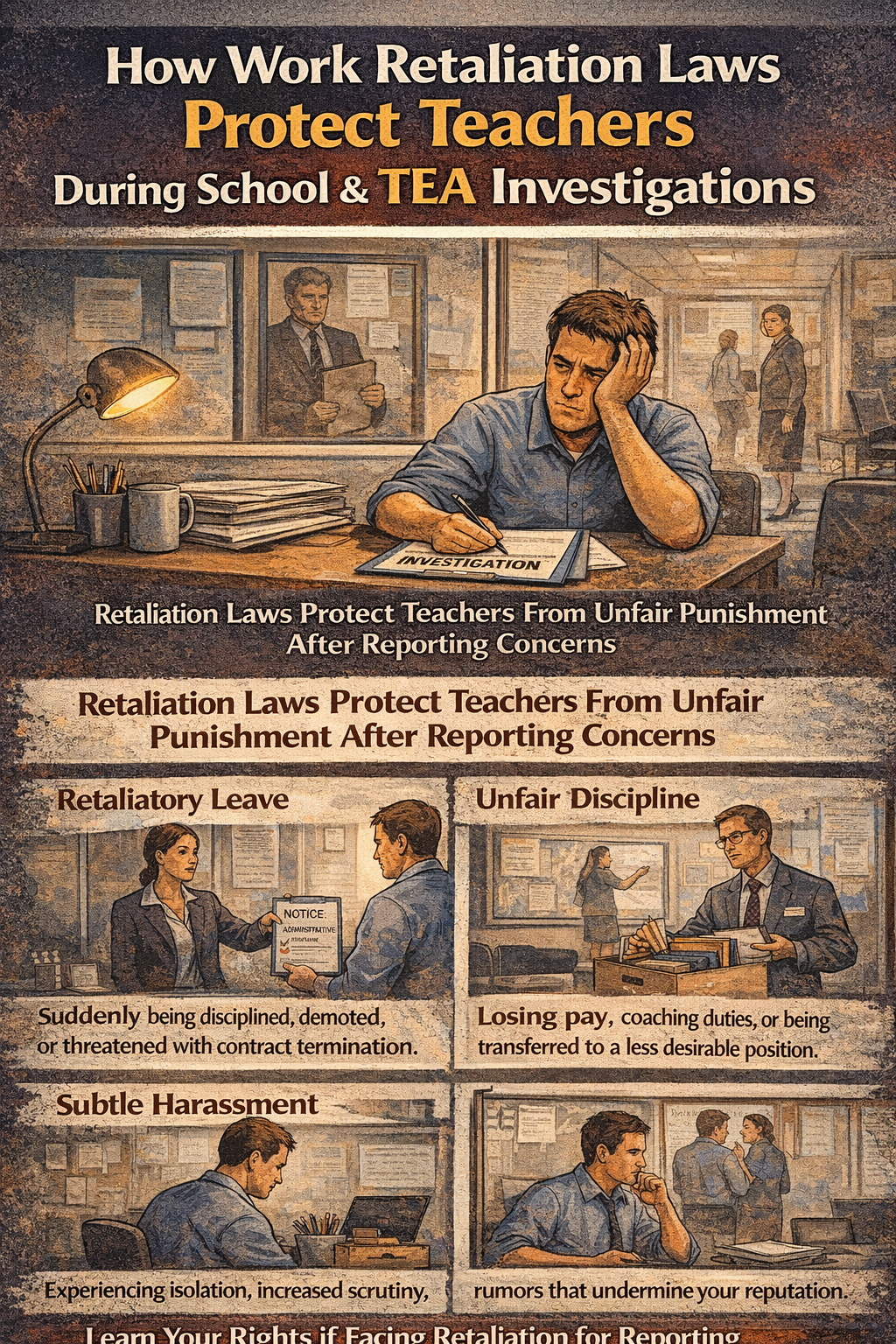
Retaliation is when a teacher experiences punishment or negative treatment because they participated in something the law protects. This could include reporting a problem, participating in an investigation, or making a complaint about discrimination or safety. It is not always dramatic, and it is not always written down as retaliation. In many cases, the discipline looks “official,” but the motive is hidden.
Retaliation can come in many forms, including schedule changes, threats, removal of duties, isolation, harassment, or repeated write-ups. It can also involve shifting you out of a desirable position and into a less desirable position without legitimate cause. Teachers often feel confused because the actions feel personal but are explained as “policy.” Understanding how retaliation works is the first step to protecting yourself.
Why Administrative Leave Is Often the First Move
In education settings, administrative leave is one of the most common tools used during investigations. Schools sometimes place an employee on administrative leave quickly to control risk, reduce communication, and limit student contact. The district may say it is neutral, but it often creates a presumption of wrongdoing in the eyes of other employees. Even if you did nothing wrong, administrative leave can change how people look at you.
A teacher on administrative leave may lose access to email, student records, and classroom materials. They may also be told not to contact coworkers or parents, which makes it harder to defend themselves. This is why administrative leave must be taken seriously, even if it is temporary. The way a teacher responds during administrative leave can shape the rest of the case.
Paid Administrative Leave Still Has Consequences
Many teachers are told, “Don’t worry, it’s paid administrative leave.” While pay matters, being removed from your role can still cause harm. Paid administrative leave can affect your confidence, your reputation, and how your leadership team talks about you internally. It can also lead to long-term changes that do not show up immediately.
Even when you remain on paid leave, you may lose extra duty pay, overtime opportunities, or stipends. You may also lose the ability to build relationships with administrators that support your career growth. The negative effect is not only financial—there can be a deep emotional impact from being isolated. Teachers deserve real protection, not just a paycheck during uncertainty.
How Administrative Leave Can Turn Into a Long Period of Uncertainty
One of the hardest parts about administrative leave is that it can drag on without answers. A teacher may remain on administrative leave for a long period, with very little information about the timeline. This can become a pressure tactic, whether intentional or not. The longer the administrative leave lasts, the more unstable the teacher’s position feels.
During extended administrative leave, teachers may start receiving vague messages about “updates” with no real resolution. A school may continue gathering statements, reviewing records, or interviewing staff. The teacher is often left in the dark while the district controls the file. This is one reason early legal guidance is so important—because delay can harm your career just as much as a formal write-up.
The Key Legal Concept: Protected Activity
Many teacher protections begin with the idea of protected activity. A teacher engages in protected activity when they do something that the law encourages or allows without punishment. Reporting safety issues, reporting discrimination, and participating in a formal complaint process can all qualify as protected activity. In TEA-related matters, cooperation with the process can also be part of protected activity.
Teachers often think the report must be perfect to be protected. That is not always true. A teacher can be protected when acting in good faith, even if the concern later turns out to be different than expected. If you engaged in protected activity and then suffered consequences, it may be evidence that retaliation occurred.
What Happens When Retaliation Occurs After a Teacher Speaks Up
Retaliation often begins right after the teacher raises concerns. The teacher may notice they are treated differently, excluded from meetings, or monitored more closely. A supervisor might start documenting minor issues that were never mentioned before. Soon after, the teacher may face disciplinary action or be placed on administrative leave.
In many cases, retaliation occurs through quiet decisions rather than loud threats. The teacher might be removed from committees, denied opportunities, or asked to “step aside.” This can feel humiliating and isolating. The law exists to protect educators from exactly this type of treatment, especially when the teacher was trying to do what is right.
Subtle Retaliation Can Be Harder to Prove
One of the most dangerous forms of retaliation is the kind that is subtle and undocumented. A district may never write “retaliation” in an email. Instead, retaliation shows up as changing your schedule, giving you less support, or micromanaging your classroom. A teacher may be criticized more harshly than other employees for the same behavior.
This is why teachers must document patterns. Retaliation can be proven through timing, comparison, shifting explanations, and inconsistent discipline. Even without direct admissions, the law can recognize retaliation when the facts point to unfair treatment. Teachers should not assume subtle retaliation is “too small to matter,” because small actions can lead to major outcomes.
Understanding Adverse Action: The Legal Trigger Teachers Should Watch For
The phrase adverse action is critical in retaliation cases. An adverse action is any employer action that harms a teacher’s job, status, pay, or opportunities. An adverse action can include termination, suspension, demotion, or forced transfer. But an adverse action can also include administrative leave, schedule reductions, or changing duties to punish the teacher.
Teachers often think “nothing happened” because they still have a contract. But retaliation law does not require a firing to be real. If an adverse action would discourage a teacher from reporting concerns again, it may be legally relevant. That is why administrative leave—even when paid—can still qualify as an adverse action under many circumstances.
Examples of Adverse Action Teachers Experience During Investigations
During a TEA investigation or internal school investigation, adverse actions often appear quickly. Many teachers describe it as “everything changed overnight.” The school’s tone, expectations, and communication suddenly shift. This can happen even when there is no proof of wrongdoing.
Here are common examples of adverse action:
- Being placed on administrative leave with limited explanation
- Being moved to a less desirable position or campus
- Losing coaching duties or supplemental roles that affect pay
- Being excluded from meetings that impact future opportunities
- Being assigned a heavier workload without support
- Being pressured into resigning to “make it easier”
These steps can deeply affect a teacher’s financial stability and professional reputation.
When Administrative Leave Becomes Considered Retaliatory
A teacher may wonder whether administrative leave is normal or whether it is retaliation. The truth is it depends on context. Administrative leave is sometimes a standard step to protect student safety while facts are gathered. But administrative leave can also be considered retaliatory when it is triggered by a report or complaint rather than genuine safety issues.
If you were placed on administrative leave right after reporting a possible violation, that timing matters. If the district cannot explain why you needed to be removed immediately, that matters too. If other staff were not treated the same way for similar accusations, that comparison becomes important. A legal review can help determine whether your administrative leave looks lawful or retaliatory.
“Occurs When an Employer” Punishes a Teacher for Doing the Right Thing
Retaliation occurs when an employer takes action against a teacher because the teacher asserted their rights or reported concerns. This can include reporting misconduct, reporting discrimination, or cooperating with an investigation. It can also include refusing to cover up wrongdoing or refusing to ignore policies. Teachers are not supposed to be punished for enforcing standards.
Unfortunately, retaliation often hides behind “workplace rules.” Administrators may call it “policy compliance” while applying standards unfairly. That is why understanding legal protections matters. The law is designed to protect teachers from being targeted simply because they spoke up.
How Employment Discrimination Issues Can Overlap With Retaliation
Retaliation cases sometimes overlap with employment discrimination concerns. A teacher might face discrimination based on race, sex, age, or disability, and retaliation may follow after they complain. Even if the teacher’s original issue involved safety, the retaliation may include discriminatory treatment. In some cases, an educator may be facing both discrimination and retaliation at the same time.
Discrimination and retaliation often show up together through selective discipline, negative evaluations, and isolation. Teachers should pay attention to patterns, especially if others are treated differently. If discrimination is present, retaliation may become more aggressive. Teachers deserve protection in both areas, and legal guidance can help identify all available options.
Protected Activity During TEA Investigations: What Teachers Should Know
Many teachers fear TEA investigations because they feel serious and intimidating. But even during a TEA matter, educators still have rights. Participation in an investigation, reporting concerns, and responding truthfully can be part of protected activity. Teachers should not be punished for cooperating with legal and regulatory processes.
Some teachers worry they should “stay quiet” to avoid attention. That may feel safer in the moment, but silence can increase risk long term. A teacher should be able to report concerns and respond to inquiries without fear of retaliation. This is where legal support becomes essential, especially when the school environment becomes hostile.
Harassment After Reporting: The Most Common Retaliation Tactic
Workplace harassment often increases after a teacher reports a problem. This harassment may involve ridicule, gossip, isolation, or being publicly criticized. It may also involve being set up to fail through impossible demands or lack of support. Even subtle harassment can create emotional strain that pushes educators out of the profession.
Harassment can come from a supervisor, a manager, or even a co worker who blames the reporting teacher for bringing scrutiny to the campus. Schools sometimes ignore this harassment while claiming they are protecting “team culture.” But harassment after protected activity can strengthen a retaliation claim. Teachers should document these patterns carefully.
Sexual Advances and Retaliation in School Workplaces
In some cases, retaliation begins after a teacher rejects sexual advances or reports inappropriate behavior. When a teacher refuses to participate in misconduct, a supervisor may respond with hostility. That response can include discipline, schedule changes, isolation, or administrative leave. Teachers should never be pressured to tolerate inappropriate behavior to keep their job.
The law often protects employees from retaliation tied to harassment complaints. Even if the school tries to label the teacher as “difficult,” the timing and facts can reveal retaliation. Teachers should not carry shame for rejecting misconduct. They deserve fair treatment, safety, and legal protection.
The Role of Human Resources in School Retaliation Cases
Teachers often turn to human resources for help, expecting a neutral process. Sometimes HR is supportive and professional. But HR also exists to protect the district from risk, which means teachers must be careful and strategic. A vague report to HR may not protect you if the district later claims you never raised a formal complaint.
If you make a complaint, write it clearly and keep your records. Include dates, what happened, and why it matters. Focus on facts, not emotions, even if you feel overwhelmed. HR communication can become evidence later, and it may be critical to your case.
Why Teachers Are Placed on Administrative Leave After Complaining
It is common for schools to place a teacher on administrative leave right after a complaint is made. The district may say it is to avoid “interference” in the investigation. But sometimes it is used to remove the teacher from visibility and weaken their influence. Administrative leave can also stop the teacher from gathering information or communicating with witnesses.
This is why teachers should treat administrative leave as a serious legal event. The leave may be used to build the case against you while you are isolated. Even when the leave is framed as neutral, it can still create a negative presumption. If you are placed on administrative leave, legal guidance should be considered immediately.
Paid Leave vs. Paid Time: What Schools Sometimes “Forget” to Explain
Some districts use confusing terms like paid leave, paid administrative leave, or “leave with paid time.” Teachers are often told they will be paid but not told what they may lose. Leave can affect stipends, extra duty pay, and opportunities tied to performance. It can also affect your professional standing and future placement.
A teacher may still receive base pay while losing other forms of compensation. That means the teacher’s overall income can decrease even while on paid leave. Teachers should request clear details in writing. Understanding the financial effect is part of protecting your career.
Alleged Misconduct: How Schools Flip the Focus
When a teacher reports a safety issue or policy concern, the district may respond by alleging the teacher engaged in alleged misconduct. This could involve accusations of “unprofessional behavior,” “policy violations,” or “failure to follow chain of command.” Sometimes the alleged misconduct is vague and unsupported. But it still creates pressure and risk for the teacher.
Schools may use alleged misconduct to justify administrative leave, write-ups, or formal discipline. The teacher becomes the subject, rather than the safety issue. This is one of the clearest ways retaliation develops. A teacher who reported a concern should not become the scapegoat for the district’s discomfort.
The Investigation Process Teachers Experience Behind Closed Doors
A school investigation often feels like it happens without you. A teacher may be questioned once, then hear nothing for weeks. During that time, leadership may interview staff, review documents, and create a written report. The teacher may not see the evidence or be allowed to correct misunderstandings.
This process can feel unfair, but it is common. Districts sometimes treat investigations as internal property, not as a transparent process. That is why documentation and legal guidance matter. When your career is on the line, you deserve to know what you are being accused of and what evidence is being used.
When Workplace Safety Reporting Leads to Retaliation
Teachers sometimes report workplace safety concerns like unsafe classrooms, violent incidents, security failures, or lack of supervision. These reports should be taken seriously, because safety affects students and staff. But safety reports can embarrass leadership or expose a lack of compliance. That can trigger retaliation against the reporting teacher.
Retaliation may involve isolating the teacher, changing their role, or claiming they “overreacted.” The district may treat the teacher as a troublemaker rather than a protector. Teachers should understand that workplace safety reporting can be legally protected. If retaliation follows, legal support can help enforce the protection.
Police Reports and Why They Trigger Employer Pushback
When a teacher contacts police or supports a report involving police, schools sometimes react defensively. District leadership may worry about publicity or accountability. Even if contacting police was responsible, the teacher may be treated as if they caused the problem. This is where retaliation becomes personal.
Police involvement may also trigger a more aggressive internal investigation. The district may move quickly to control the narrative, sometimes placing the teacher on administrative leave. Teachers should document their reasons and ensure their actions were consistent with policy and safety expectations. An attorney can help protect you if the school tries to punish you for calling for help.
Regulations, Compliance, and the Pressure Teachers Feel
School systems operate under many regulations and compliance standards. Teachers are often expected to follow them perfectly, even when leadership fails to support those standards. When a teacher reports non-compliance, the district may respond harshly because it creates internal risk. But reporting concerns can be the right move, especially when student safety is involved.
Compliance reporting should not lead to retaliation, but it sometimes does. Teachers may feel pressure to stay quiet or “handle it internally.” The problem is that silence can create bigger issues over time. Teachers deserve protection for raising compliance concerns, especially when they are acting in good faith.
State Laws and Federal Protections for Teachers
Teachers may have rights under state laws and under federal law depending on the issue. Some protections relate to reporting safety concerns, policy violations, harassment, or discrimination. The law recognizes that employees must be able to report concerns without fear. That is why retaliation laws exist and why they are taken seriously in many contexts.
Federal protections may apply in discrimination or harassment cases, while state laws can apply in whistleblower and employment contexts. Understanding which laws apply requires careful analysis of the facts. That is why legal guidance is not one-size-fits-all. Teachers should speak with counsel who understands the education workplace environment.
What a Reasonable Employee Standard Means for Teachers
The idea of a reasonable employee is often used when evaluating retaliation. The question becomes whether the employer’s action would discourage a reasonable employee from reporting concerns. Teachers often doubt themselves and assume they’re being too sensitive. But the law is not about feelings alone—it’s about whether the employer’s actions created real harm or pressure.
If a reasonable employee would feel punished, intimidated, or pushed out after reporting concerns, that matters legally. This is especially true when the teacher ends up on administrative leave, loses pay opportunities, or faces hostile treatment. Teachers should not minimize the impact. Retaliation can be real even when it looks subtle.
Less Desirable Position Transfers and Career Damage
Moving a teacher into a less desirable position is a common retaliation strategy because it does not look like termination. A district may claim it is a “needs-based move” or “reassignment.” But if the transfer follows a complaint, it may be retaliatory. A teacher may lose preferred grade levels, leadership roles, or stable schedules.
In contrast, a desirable position might include a preferred campus, program, or classroom assignment. Losing that placement can be emotionally and professionally damaging. It can also change your future opportunities. Teachers should treat these transfers seriously and document the timing, justification, and impact.
Pay, Wages, Hours, and Schedule Changes as Retaliation
Retaliation is not only about discipline or termination. It can be about pay, wages, hours, and your schedule. A teacher may lose extra duty pay, coaching stipends, after-school opportunities, or summer hours. The district may change the schedule in ways that disrupt family life or financial stability.
These changes can look “neutral” on paper, but the impact can be severe. The law may recognize these adjustments as adverse actions when they are connected to protected activity. Teachers should track every pay change carefully. Documentation matters when proving a retaliation pattern.
Benefits and Career Opportunities That Disappear Quietly
Retaliation can also target benefits and professional growth. A teacher might be denied training opportunities, excluded from leadership pathways, or removed from committees that build experience. They may lose access to mentorship or special program roles. These may not look like discipline, but they can damage long-term advancement.
Teachers should document opportunities they had before the complaint and what changed afterward. A sudden drop in support, resources, or professional respect can be part of retaliation. Even if the district never states the reason, the pattern can reveal the truth. Teachers deserve protection for their career trajectory, not just their base job.
Employee Morale and the Broader Damage Retaliation Causes
When a district retaliates against a teacher, it sends a message to everyone watching. Employee morale drops because staff realize speaking up comes with consequences. Over time, silence becomes the norm, and real problems go unreported. That creates a dangerous culture for students and educators alike.
The damage spreads beyond one person. Overall employee morale suffers, and teams stop trusting leadership. Teachers become less willing to document concerns or participate in compliance processes. Retaliation is not just unfair—it is harmful to the entire educational environment. The law exists to protect the people who are trying to protect students.
The Role of Supervisors and Managers in Retaliation Patterns
Retaliation often comes through a supervisor or manager who controls daily working conditions. A supervisor may increase scrutiny, issue write-ups, or create stressful expectations. Managers may shift assignments, reduce support, or create negative narratives. Even if they never say “retaliation,” their actions can show intent.
Teachers should track changes in interactions after reporting concerns. Was your supervisor supportive before and hostile afterward? Did your manager start “checking in” constantly or criticizing everything? These shifts matter. Retaliation is often proven through patterns of conduct and timing, not direct admissions.
Working Conditions That Change After a Complaint
Sometimes retaliation happens by changing working conditions. A teacher may be assigned more difficult students without support, moved to a high-conflict team, or given extra duties. The classroom resources might shrink, or the teacher may be denied assistance that others receive. These actions can be designed to pressure the teacher into quitting.
Working condition changes can also involve increased meetings, constant monitoring, or frequent “check-ins.” They can create stress that affects your mental health and performance. Teachers should document these changes and compare treatment to other employees. Unequal conditions can be evidence of retaliation.
Complaining, Asserting Rights, and Why Teachers Feel Afraid
Teachers often hesitate before complaining because they fear the backlash. They worry about being labeled difficult, losing job security, or being pushed out. That fear is not irrational. Many teachers have watched colleagues suffer consequences for speaking up.
But asserting your rights is not wrong. Asserting a complaint about safety, discrimination, or policy violations is often legally protected. Teachers should not be punished for raising concerns. The law is designed to encourage reporting and protect employees who act responsibly.
Other Related Protected Activity Teachers Don’t Realize Counts
Some teachers assume protected activity only applies to formal complaints. But other related protected activity can include helping a coworker report an issue, providing statements in an investigation, refusing to falsify records, or reporting a policy violation to a supervisor. It can also include participating in workplace safety reporting or raising compliance concerns.
Teachers may also be protected when they support another employee facing discrimination or harassment. Even if you were not the main complainant, involvement can still qualify as protected activity. Retaliation against teachers for doing the right thing is exactly what the law is designed to prevent. If your role in the process triggered punishment, legal review is critical.
The Employer’s Favorite Defense: “It Was Just Procedure”
Many employers claim retaliation is not happening because they followed “procedure.” They say the teacher was placed on administrative leave because it is the normal investigation method. They claim discipline was required by policy. They insist the transfer was part of staffing needs.
But procedure does not excuse retaliation if the procedure is applied unfairly or selectively. The law evaluates whether the action was connected to protected activity and whether the justification is credible. If the employer’s story keeps changing, that can signal retaliation. Teachers should not accept vague explanations without documentation.
How Teachers Can Protect Themselves During Administrative Leave
If you are placed on administrative leave, you should assume every step matters. Avoid venting on social media. Avoid emotional text messages to coworkers. Do not guess at what happened or try to “explain everything” without a plan.
Instead, take these steps:
- Keep a written timeline of events leading to administrative leave
- Save emails, texts, evaluations, and messages related to the investigation
- Ask for the allegations in writing when possible
- Track any pay changes, lost stipends, or lost opportunities
- Seek legal guidance before signing any statements
These steps can protect your rights and strengthen your position.
Why Documentation Matters When Retaliation Is Undocumented
One of the hardest truths is that retaliation is often undocumented by design. Employers rarely write “this is retaliation.” They write “insubordination,” “performance,” or “policy violation.” The teacher must often prove motive through timing and patterns.
That is why your own documentation becomes critical. Write down dates, times, and the names of people involved. Track every adverse action, including administrative leave, reassignment, and discipline. Keep evidence of your performance history before the complaint. These details help reveal the real story behind the employer’s actions.
The Difference Between Discipline and Retaliation
Schools have the authority to discipline teachers for real misconduct. But discipline becomes retaliation when it is used to punish protected activity. A key factor is whether the discipline is consistent with how others are treated. Another factor is whether the employer had evidence before the complaint or only “discovered” issues afterward.
If discipline appears right after the complaint, that timing matters. If the teacher’s performance was praised before and criticized after, that matters too. Retaliation often looks like discipline, but a careful analysis can uncover inconsistencies. Teachers should not assume discipline means they have no options.
Disciplinary Action and Termination Risks Teachers Face
A teacher on administrative leave may eventually face written discipline or termination. Sometimes the district recommends contract nonrenewal or immediate termination. Sometimes they push the teacher to resign “for their own good.” These tactics can be devastating, especially when the teacher was acting in good faith.
Termination can happen quickly once the employer controls the narrative. That is why early legal action matters. If your job is at risk, you should treat the situation like a serious legal matter, not a private conflict. Teachers deserve protection when their careers are threatened due to retaliation.
The Agency System: TEA, Districts, and Internal Power
Teachers are often caught between multiple layers of authority. The school district is one agency structure, and TEA processes can introduce another layer. District policies, HR procedures, and investigator decisions can all influence outcomes. The teacher may feel like they are battling a system rather than a person.
This is why representation matters. A teacher does not need to navigate this alone. The employer often has HR, legal counsel, and administrators aligned. The teacher needs strategy and support to level the playing field. Masterly Legal Solutions helps educators push back when retaliation is disguised as process.
Why Retaliation Laws Exist: Protecting Teachers Who Protect Students
Retaliation laws exist because society needs professionals to speak up. Schools cannot be safe if teachers are afraid to report problems. Students cannot be protected if staff fear punishment for raising concerns. These laws create a structure where reporting is encouraged and protected.
This matters especially during investigations. Teachers may need to report misconduct, safety issues, or compliance failures. They should not be punished for acting responsibly. The law recognizes that a safe school culture depends on protecting the reporters, not targeting them.
How Masterly Legal Solutions Enforces Teacher Protections
At Masterly Legal Solutions, we help teachers protect their careers when investigations and retaliation collide. We understand how administrative leave is used, how adverse actions develop, and how subtle retaliation can destroy reputations. We help educators enforce their legal rights in a strategic and organized way.
We provide guidance on what to say, what to document, and what to avoid. We also help teachers respond to alleged misconduct claims without making the situation worse. Our goal is to protect your professional future while ensuring the process stays fair. When a school crosses the line, we help you hold them accountable.
A Final Word for Teachers Who Feel Targeted
If you are on administrative leave, feeling isolated, and watching your career shift overnight, your instincts matter. Teachers often sense retaliation before they can prove it. If you engaged in protected activity and the workplace turned against you, do not ignore it. Retaliation thrives when teachers feel too overwhelmed to fight back.
The path forward starts with calm documentation and a clear plan. Even subtle actions can have long-term consequences. You deserve guidance that is direct, realistic, and focused on protecting your livelihood. Your career matters, and your voice matters.
Contact Masterly Legal Solutions for a Free Consultation
If you have been placed on administrative leave, pressured during an investigation, or punished after reporting a concern, it is important to get answers early. A teacher can lose reputation, opportunities, and stability long before the employer admits anything is happening. Whether you are on paid administrative leave or unpaid leave, you should not assume the process will “work itself out” without advocacy.
At Masterly Legal Solutions, we help teachers protect their jobs, protect their pay, and protect their future when retaliation starts during school or TEA investigations. Call (972) 236-5051 for a free consultation so we can listen to your situation, explain how retaliation laws may apply, and help you take the next step with confidence. If you feel the pressure building, don’t wait for the district to control the story—get informed, get supported, and protect your career.
Disclaimer: This article is for educational purposes only and does not constitute legal advice or legal guidance. Laws vary by situation, and outcomes depend on specific facts, deadlines, and applicable regulations. For advice about your individual circumstances, consult a qualified attorney.



Teacher Rights When Assaulted by a Special Needs Student: Safety, Reporting and Investigation Issues



Looking for Legal & Business Solutions? Contact Us Now
Fill in the form or call us to set up a meeting