

Retaliation at Work After Reporting Student Safety or Policy Violations
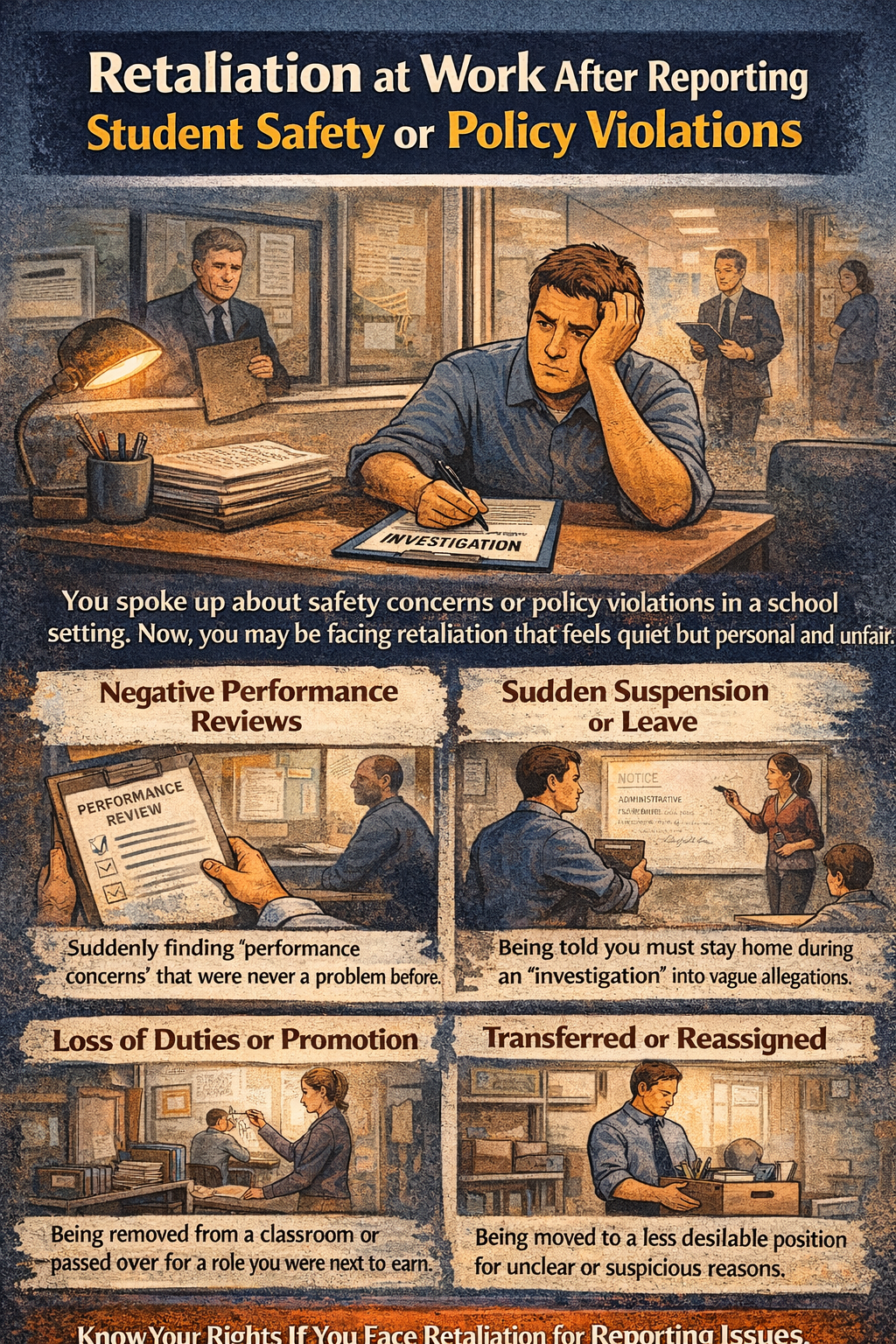
You did what you thought any reasonable employee would do. You saw something that could put students at risk, you noticed a possible violation of policy, or you witnessed behavior that didn’t feel right—and you spoke up. In many schools and education settings, employees are encouraged to report concerns, protect students, and follow rules. But in real life, the moment you report a serious issue, your workplace can change in ways that feel quiet, personal, and unfair.
For many workers, the first sign of retaliation is not a dramatic firing. Instead, it comes as subtle pressure, awkward meetings, sudden “performance concerns,” or being pushed out of a desirable position into a less desirable position. Sometimes it looks like “routine discipline.” Sometimes it arrives as a surprise administrative leave decision that leaves you confused, anxious, and isolated. Even when the employer claims it is just “procedure,” the experience can feel like punishment for doing the right thing.
At Masterly Legal Solutions, we help individual employees understand what may be happening, what steps to take next, and how to protect their rights when retaliation follows a student safety report. This article explains how retaliation can appear in schools, how investigations are used, why administrative leave is so common, and when you should speak with an attorney or employment lawyer about your options. If you believe retaliation occurs after you reported safety concerns, you are not alone—and you may have protections under laws designed to keep the playing field fair.
Why Reporting Student Safety Concerns Can Trigger Workplace Retaliation
When an employee reports student safety concerns, the report can create immediate discomfort for leadership. Administrators may worry about audits, liability, media attention, or conflict with other staff. Even if the report is accurate, it can disrupt a school’s routine and raise questions about supervision, compliance, and accountability. That pressure sometimes leads to quick decisions meant to protect the institution rather than the employee.
Retaliation can happen in both public and private settings. It can also show up in charter systems, contracted service providers, and education-related agencies. The employer may say they are “handling it internally,” but the reporting employee suddenly becomes the subject of scrutiny. If your career begins shifting right after you report a serious concern, it is worth paying attention to the timing.
What Counts as Protected Activity in an Education Workplace
Many employees are surprised to learn that certain reports are considered protected activity. Protected activity can include reporting student safety concerns, reporting unlawful behavior, making internal complaints about policy violations, or participating in an investigation. In many cases, it also includes helping someone else report an issue or refusing to engage in unlawful conduct.
Depending on the situation, protected activity can overlap with whistleblower laws, civil rights protections, and workplace rules. In some cases, it may involve reporting discrimination, harassment, or abuse. In other cases, it may involve occupational safety issues or regulatory violations. When you engage in protected activity, your employer may have legal limits on how they respond.
Why Employers React Strongly When the Report Involves Liability
Employers often respond strongly because a student safety report can trigger exposure. A report could lead to internal discipline, regulatory action, or investigations involving outside agencies. It can also bring attention from parents, the community, or the media. If leadership believes the report could lead to a lawsuit, they may attempt to control the narrative quickly.
Unfortunately, controlling the narrative sometimes means isolating the reporting employee. The employer may treat the report as a “disruption,” even if it was responsible. In some cases, the employer reframes the situation as an employee problem rather than a policy problem. That is one way retaliation begins quietly while being labeled as “management.”
How Retaliation Occurs Without Looking Obvious
Most retaliation does not look like a direct statement that says, “We’re punishing you for reporting.” It often comes through subtle shifts: reduced support, increased scrutiny, and sudden negative feedback. A supervisor who used to praise your work may suddenly document small issues as major concerns. A minor mistake that others make may now lead to formal discipline for you.
This is one reason retaliation is so hard to prove without preparation. The employer often builds a record that makes their actions appear justified. They may claim they are addressing performance, conduct, or “workplace conflict.” The key is recognizing patterns early and documenting what changes after your report.
The Real-World Examples of Retaliation in Schools
Retaliation can look different depending on the role you hold. Teachers, coaches, administrators, counselors, and support staff may experience it in different ways. Below are examples that often show up after reporting student safety concerns:
- Being removed from classrooms or student contact without explanation
- A sudden schedule change that disrupts your life or finances
- Increased monitoring by a supervisor or administrator
- Negative evaluations after years of strong performance
- Being left out of meetings or communications
- Losing opportunities for overtime, leadership roles, or specialized duties
Even if the employer claims these changes are “normal,” the timing matters. If the change happens soon after protected activity, it may be retaliation disguised as management.
Why Administrative Leave Is Used So Often After a Report
Administrative leave is one of the most common tools employers use after a safety report. In many education settings, the employer places an employee on administrative leave while they conduct an internal investigation. They may frame it as neutral and temporary, saying it protects everyone involved. But for employees, it often feels like immediate punishment.
Administrative leave can remove you from your job, your routine, your colleagues, and your students. It can also isolate you from information about what is being alleged. Even if you did nothing wrong, the leave can affect your reputation and future opportunities. That is why employees should take administrative leave seriously, even when it is called “standard procedure.”
Understanding Paid Administrative Leave vs. Unpaid Leave
Employers sometimes use paid administrative leave to make the action look harmless. They may argue that because you are still being paid, there is no harm. But the reality is that paid administrative leave can still create a negative record and professional stigma. It can also lead to later discipline, reassignment, or termination.
A paid leave decision can also remove you from work responsibilities that impact advancement, visibility, and leadership opportunities. If the leave lasts a long period, your role may be filled by someone else permanently. It may also affect benefits related to performance incentives, supplemental pay, or coaching stipends. Even when paid, leave can have long-term consequences that employees often overlook.
How Administrative Leave Can Become the Start of Escalation
Many cases follow a pattern. First, the employee reports a safety issue. Next, the employer places the employee on administrative leave while conducting an investigation. Then, the employer introduces allegations of “policy violations,” “misconduct,” or “unprofessional behavior.” Finally, the employer imposes discipline or transfers the employee to a less desirable role.
This progression can happen fast. The employer often claims each step is independent, but the sequence tells a story. If your leave begins immediately after your report, it may be connected. Employees should document that timeline carefully and avoid assuming it will resolve on its own.
The Difference Between an Investigation and a Retaliation Strategy
Not every investigation is retaliation. Employers may have a legitimate duty to investigate student safety reports, misconduct claims, or policy concerns. But investigations can also be used strategically to justify removing an employee who made leadership uncomfortable. A process that feels one-sided, secretive, or driven by vague accusations may signal a retaliation problem.
A fair investigation should be timely, focused, and evidence-based. It should also avoid punishing the reporting employee without justification. If you are placed on administrative leave with no clear subject or timeline, the investigation may be serving the employer more than the truth. That is a sign you may need legal guidance.
Alleged Misconduct as a Common Retaliation Narrative
Employers often respond to safety reports by accusing the reporting employee of alleged misconduct. These accusations may involve “insubordination,” “unprofessional communication,” or “failure to follow proper channels.” In some cases, the employer focuses more on how you reported the concern than the concern itself. That shift is a classic retaliation move.
Allegations may also be vague. You may be told you are under investigation but not given details. You may be asked to write statements without seeing the complaint. The employer may try to catch you in inconsistencies while withholding information. This is where an attorney helps protect your rights and prevents you from being boxed into unfair admissions.
Disciplinary Action That Follows Protected Activity
A sudden disciplinary action after protected activity should raise concern. Discipline can include written warnings, performance improvement plans, suspension, transfers, or termination. It can also include removing duties, reducing access to students, or restricting your ability to speak with colleagues. The employer may claim the discipline is unrelated, but the timeline matters.
Discipline can also be layered. You may receive a small warning first, then a second warning for something minor, then more serious penalties later. Employers sometimes build “paper trails” to justify future actions. If discipline begins after you report a safety concern, you should document each step and consider consulting retaliation lawyers who understand workplace defense strategy.
Adverse Actions That Quietly Damage Your Career
The law often focuses on adverse actions—meaning actions that would discourage a reasonable employee from reporting concerns. Adverse actions can be obvious, like termination. But they can also be subtle, like being reassigned, losing overtime, or being excluded from opportunities. Many employees experience adverse actions without realizing those actions may be legally significant.
Common adverse actions include:
- Demotion or loss of leadership roles
- Lower evaluations and negative write-ups
- Schedule changes that reduce income or stability
- Removal from coaching or specialized assignments
- Transfers to a less desirable position
- Reduction in pay, benefits, or opportunities
If these changes follow protected activity, you may be facing retaliation even if the employer avoids direct threats.
Pay and Benefits: Retaliation Isn’t Always Obvious
Sometimes retaliation targets your pay rather than your job title. You may lose stipends, overtime, extra duty assignments, or opportunities tied to performance. The employer may also change your schedule in ways that reduce your ability to earn additional income. Even a small change in pay can create financial pressure that pushes employees to resign.
Retaliation may also affect benefits such as accumulated time, future promotions, or eligibility for special programs. If you are placed on administrative leave or reassigned, you may lose networking access and professional momentum. These changes may not look dramatic on paper, but they can have a negative impact on long-term career growth. Documentation is critical because financial damage is often part of the retaliation pattern.
The Role of Human Resources in Retaliation Complaints
Many employees assume human resources exists to protect them. Sometimes HR is helpful and fair. But HR’s primary role is often to reduce risk for the employer. That means HR may focus on minimizing liability rather than protecting the reporting employee’s career. Employees should approach HR carefully and keep written records.
If you file a complaint through HR, be factual and organized. Include dates, times, and supporting documentation. Avoid emotional arguments and focus on what happened and why it matters. A clear written complaint is harder to dismiss than informal conversations. It also creates a record that may support you later if retaliation continues.
Union Representative Support and Internal Process Rights
Some employees have access to a union representative, which can be a key source of support. A union representative may help you understand your rights during questioning, disciplinary meetings, or administrative leave decisions. They may also help enforce procedures and push back against unfair treatment.
However, union support does not always replace legal guidance. Some cases involve complex employment laws, discrimination claims, or whistleblower issues that require a legal strategy. A union representative can be part of your support system, but legal representation may be needed to fully protect your options. If your career is on the line, it is worth exploring both.
Occupational Safety and Student Safety Are Often Connected
In school environments, occupational safety issues often overlap with student safety. A broken door lock, unsafe building conditions, violent incidents, or lack of adequate supervision can create risk for staff and students. When employees report safety hazards, the report can trigger uncomfortable questions for leadership. Those questions sometimes lead to retaliation rather than correction.
Occupational safety concerns also involve policies and regulations. Employees may feel pressure to “handle it quietly” instead of reporting. But quiet problems tend to grow into major incidents. When employees report safety, they are often protecting the school community—not attacking it. The employer’s response should reflect that reality, but it often doesn’t.
Police Involvement and the Shift in Workplace Dynamics
If a situation involves students, violence, or serious threats, police involvement may occur. Reporting issues that involve police can significantly raise tension inside a school. Administrators may worry about public perception and blame. Employees who contacted police or supported a report may become targets of criticism.
Police involvement can also trigger internal investigations and administrative leave. Employers may claim they are ensuring safety and order, but they may also try to distance themselves from the employee who initiated reporting. If your report involved police or criminal issues, you should be prepared for pushback and consider legal assistance early.
Federal Employees and Government Agency Settings
Not every education employee works for a school district. Some are federal employees or work through a government agency connected to education programs, juvenile services, or special education support. These environments can add extra layers of policy and procedure. Reports may involve agency oversight, internal investigations, and strict documentation rules.
Federal employees may also have additional protections and formal complaint processes. Even then, retaliation can still happen through transfers, reassignments, or administrative leave. Employees may experience retaliation in ways that are quieter but just as damaging. Understanding the right process and deadlines is essential in these cases.
Laws That Protect Reporting Employees
Several laws may protect employees who report safety violations or policy concerns. Depending on the facts, protections may involve state laws, federal whistleblower rules, workplace civil rights laws, or anti-retaliation frameworks. The key is whether the report qualifies as protected activity and whether adverse actions followed.
In some cases, retaliation overlaps with discrimination and harassment issues. For example, an employee who reports misconduct might also face harassment from a supervisor or colleagues afterward. In other cases, the retaliation is purely about silencing the report. Either way, laws may provide protection, but they require strategy and evidence.
Title VII, Discrimination, and Retaliation Connections
Retaliation often intersects with title vii issues when the report relates to discrimination or harassment. Employees who report harassment or discrimination may face retaliatory discipline, transfers, or isolation. In those situations, retaliation can be just as unlawful as the original harassment. Many employees do not realize that retaliation is its own legal violation.
Even if the original complaint is not proven, retaliation may still be unlawful. Employers cannot punish employees for making good-faith reports. A reasonable employee should be able to report concerns without fear of losing their job or career path. When that doesn’t happen, legal guidance becomes essential.
Recognize the Patterns Before the Employer Controls the Narrative
A key skill is learning to recognize retaliation patterns early. The sooner you identify the shift, the easier it is to document and respond. Many employees wait too long, hoping the situation will calm down. By the time they act, the employer already has a paper trail.
Look for red flags like sudden administrative leave, sudden performance issues, and increased monitoring. Also watch for subtle behaviors such as being excluded from email chains, being denied information, or having responsibilities removed. These shifts may not seem “legal,” but they can show retaliation in action. When patterns appear, protect yourself with documentation and a plan.
When a Supervisor Becomes the Source of Retaliation
In many cases, retaliation starts with a supervisor who feels threatened or embarrassed by the report. The supervisor may fear that the report will expose failures, mistakes, or poor leadership. Instead of addressing the issue, they focus on controlling the employee who reported it. That can lead to targeted discipline, negative evaluations, and hostile treatment.
Supervisors may also pressure other employees to distance themselves from you. That damages relationships and creates workplace isolation. When a supervisor becomes the source of retaliation, internal reporting alone may not stop it. You may need legal counsel to protect your rights and career.
Employee Morale and the Message Retaliation Sends to Others
Retaliation doesn’t just harm one person. It affects employee morale across an entire campus or department. When other employees see retaliation, they learn that speaking up is dangerous. That creates silence and unsafe conditions. Over time, the negative impact spreads through the workplace and lowers trust.
The fear of retaliation reduces reporting of safety concerns, misconduct, and policy violations. That undermines student safety and staff safety. It also damages overall employee morale, which affects performance and retention. Employers who retaliate create long-term harm that often becomes visible only after serious incidents occur.
How the Employer Uses Process to Wear Down Employees
Employers often rely on the process itself to exhaust employees. Administrative leave may extend without updates. Meetings may be scheduled repeatedly. Deadlines may be tight, and information may be vague. This prolonged stress can push employees to resign, accept a transfer, or stop fighting.
This is why documentation and planning matter. When the employer controls the narrative and timeline, employees feel powerless. A strong legal strategy shifts that balance. It forces clarity, demands evidence, and ensures the employee’s rights are protected during every stage of the investigation.
Work Diligently to Document What Happened
You do not need to be a lawyer to build a strong record. You just need to be consistent and organized. Keep copies of emails, notes, schedules, and evaluations. Write down the timeline of your protected activity and what happened afterward. Include names, dates, and what was said.
It also helps to track any changes in job duties or workplace treatment. Did your supervisor change your hours? Did you lose pay opportunities? Were you excluded from meetings? Those details matter. Documentation is how you protect yourself when the employer claims everything is unrelated.
Additional Information That Helps Your Case
In retaliation situations, additional information can make a big difference. Employees often focus only on the original report, but the reaction afterward is just as important. Evidence may include performance history, prior evaluations, and witness statements. It can also include proof that other employees were treated differently.
Helpful information may include:
- Prior positive evaluations before the report
- Copies of the report or complaint submitted
- Messages showing changed tone from leadership
- Notes from meetings about discipline or leave
- Proof of schedule or pay changes
- Witnesses who observed retaliation
Your attorney can help determine what evidence matters most for your specific situation.
The Playing Field: Why Legal Guidance Matters
Without guidance, employees often feel like the employer has all the power. The employer has HR, supervisors, policies, and access to internal records. The employee may feel alone and intimidated. That is why legal guidance helps level the playing field.
When you have an attorney, communication becomes more controlled and strategic. Employers tend to act more carefully when they know the employee understands their rights. A strong legal approach also reduces mistakes, like oversharing, missing deadlines, or accepting unfair discipline. The goal is protection, clarity, and control over your next steps.
State Laws and Federal Protections Can Work Together
In many cases, state laws and federal protections overlap. That means you may have multiple routes for protection depending on the facts. Some claims involve whistleblower protections. Others involve anti-retaliation protections connected to discrimination or workplace reporting. The right path depends on the details.
That is why you should not rely on general internet advice. Each case has unique circumstances, deadlines, and procedures. An experienced employment lawyer can help determine which laws apply and what steps to take. Your strategy should be tailored to your job type, your employer’s structure, and the nature of the report.
Hiring an Employment Lawyer Before the Situation Gets Worse
Waiting too long can reduce your options. If retaliation grows, the employer may build a narrative that justifies adverse actions. They may frame you as “difficult” or “problematic.” They may also pressure you into resigning or accepting a demotion. Early legal support helps prevent that.
An employment lawyer can help you respond to administrative leave, defend against alleged misconduct, and preserve evidence. They can also help you decide whether to file internal complaints, pursue agency remedies, or prepare legal claims. A clear plan prevents panic-driven decisions. The earlier you act, the more control you keep.
How Masterly Legal Solutions Helps Employees Under Pressure
At Masterly Legal Solutions, we understand how education employees can become targets after doing the responsible thing. We help workers who reported student safety concerns, policy violations, or misconduct and then faced administrative leave, discipline, or career damage. We also understand that many employees want to protect students without destroying their own future.
We work to protect your job, your reputation, and your long-term career options. That includes guiding you through investigations, preparing statements, and challenging unfair adverse actions. We focus on strategy, not guesswork. Our goal is to help you move forward with strength, clarity, and confidence.
A Practical Reminder for Employees Facing Retaliation
Retaliation can feel personal, but it is often strategic. Employers may use process and paperwork to isolate you and control the story. The most important step is staying calm and documenting everything. Do not assume the employer will “cool off” on their own. When retaliation starts, it often intensifies unless challenged.
If you are placed on administrative leave, respond carefully and request clear information. If you are being disciplined, do not sign admissions you do not agree with. If your pay or schedule changes, track every detail. These steps protect you and strengthen your options.
Contact Masterly Legal Solutions for a Free Consultation
If you reported student safety concerns or a policy violation and now feel like your employer is targeting you, you deserve answers. Retaliation can quietly damage your job, your pay, your reputation, and your long-term career—especially when administrative leave becomes the first step toward discipline or removal. You should not have to choose between protecting students and protecting your livelihood.
At Masterly Legal Solutions, we help employees take control of the situation, protect their rights, and respond strategically to workplace investigations and adverse actions. If you are looking for retaliation lawyers who understand how retaliation happens after protected reporting in education settings, we are here to help.
Call (972) 236-5051 for a free consultation and a confidential consultation so we can review your circumstances, explain your options, and help you decide the next step with confidence.
Disclaimer: This article is for educational purposes only and does not constitute legal advice or legal guidance. Laws and outcomes vary based on facts, location, and deadlines. For advice about your specific situation, consult a qualified attorney.


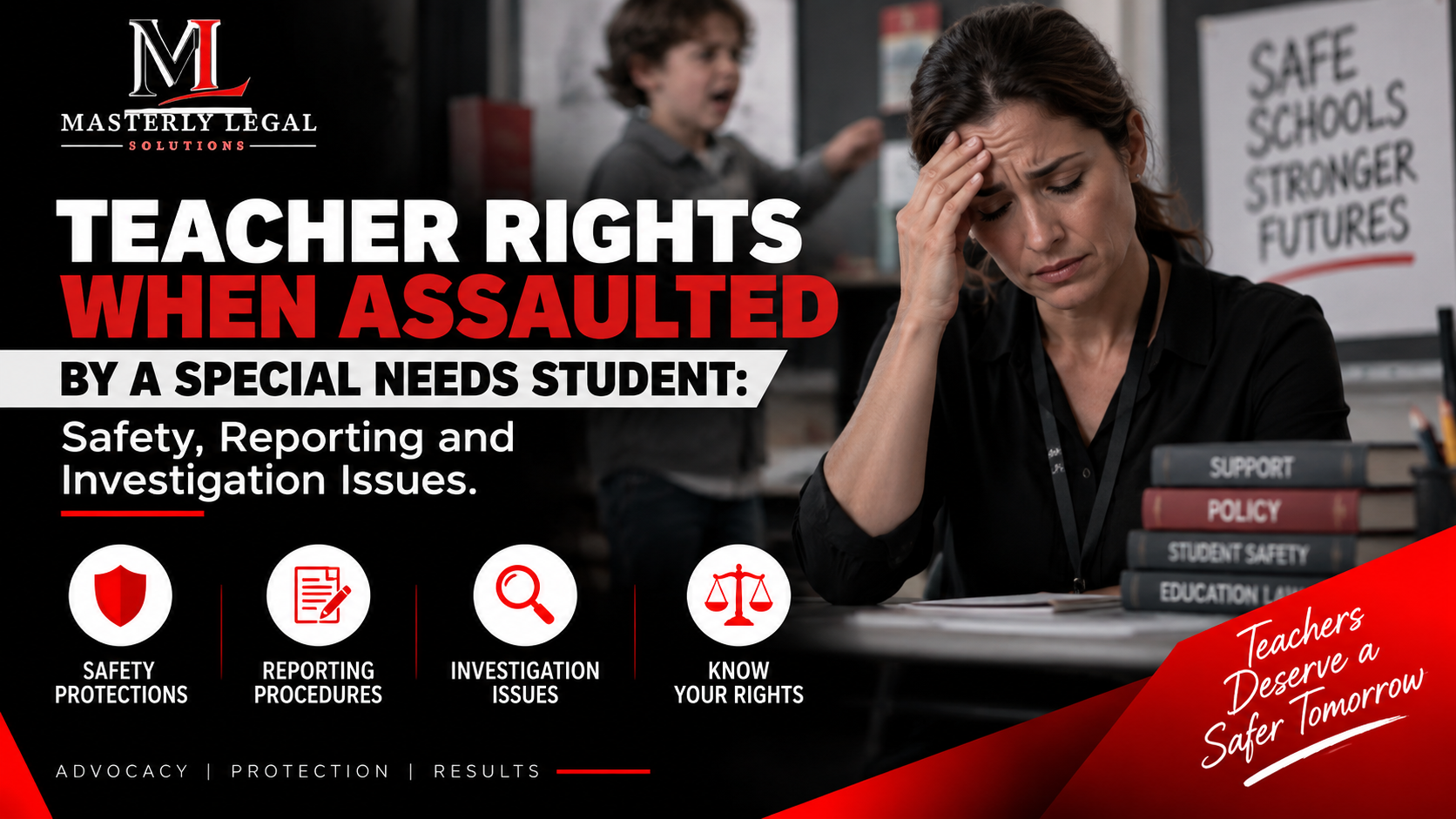
Teacher Rights When Assaulted by a Special Needs Student: Safety, Reporting and Investigation Issues


Looking for Legal & Business Solutions? Contact Us Now
Fill in the form or call us to set up a meeting





