

How CPS Houston Uses Safety Concerns to Expand Investigations
When most parents think about a CPS investigation, they picture one specific allegation being reviewed and resolved. In real life—especially in Houston—the process often feels very different. A case may begin with one complaint, but then CPS starts asking broader questions, requesting more access, and looking into parts of your family life that seem unrelated to the original report. Many parents feel blindsided because the investigation grows quickly, and what started as “just a check” becomes something that threatens their home, their reputation, and their future.
At Masterly Legal Solutions, we work with families who feel powerless during CPS involvement because they don’t understand how “safety concerns” can be used to justify expanded searches, new allegations, and deeper scrutiny. CPS does have a duty to protect children, but that does not mean families lose their rights or that every expansion is fair. When CPS frames nearly everything as a safety issue, it can create pressure that pushes parents into agreements, statements, or decisions they later regret. If you are facing this situation, you are not alone—and you are not overreacting.
This article explains how CPS Houston commonly uses safety concerns to expand the scope of investigations, how those expansions impact parental rights, and what steps you can take to build the strongest possible defense early. We will also explain how working with an attorney can help you defend your family while staying calm, cooperative, and protected.
Understanding CPS in Houston and What It Actually Does
In Texas, child protective services is part of the agency responsible for investigating concerns involving child abuse, neglect, and family safety. Many people refer to the system as child protective services CPS, and in many situations it is connected to family and protective services. CPS can get involved after a hotline report, a school report, a medical report, or a call from someone who believes a child is at risk. Once CPS opens a case, they may send a cps investigator or caseworker to gather information and determine what happens next.
Families in Houston often experience faster case movement because large metropolitan systems have heavy caseloads and standardized procedures. That can make the process feel impersonal and rushed. Even if your family is stable, CPS may still treat the case as serious until they feel satisfied the risk is eliminated. This is why you should not assume “common sense” will guide the outcome.
Why Safety Concerns Are the Most Powerful Tool CPS Uses
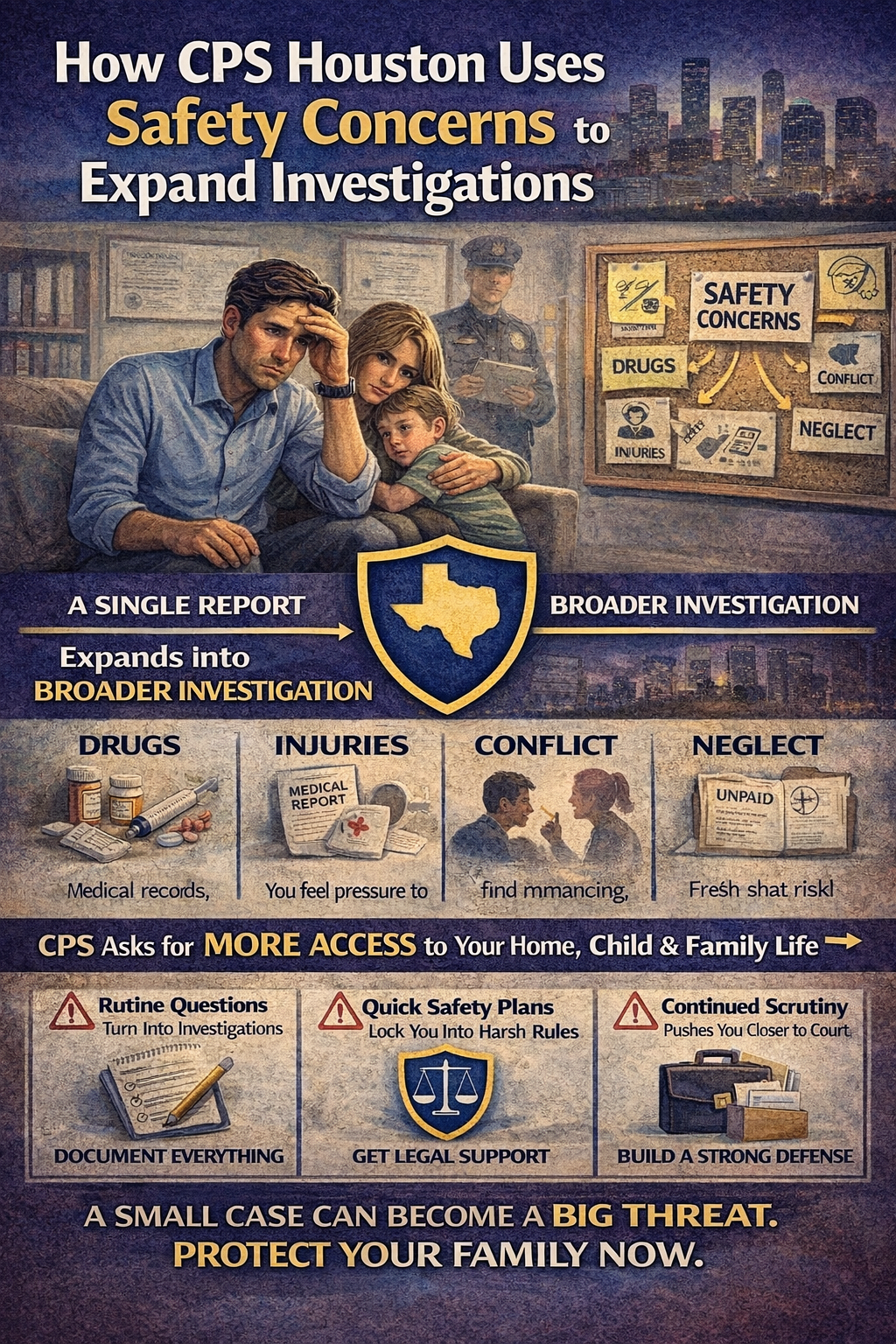
CPS can justify many actions by using one phrase: safety concerns. The reason safety concerns matter is because the agency’s mission is to prevent harm, and they often take a broad view of what harm can mean. Safety concerns can involve physical danger, emotional risks, supervision issues, drug exposure, domestic conflict, or allegations of sexual misconduct. When CPS documents safety concerns in a case file, it can become the foundation for expanded interviews, home visits, and requests for additional information.
Sometimes safety concerns are real and immediate, and families need help. Other times, safety concerns are exaggerated, misunderstood, or based on incomplete facts. But once CPS puts “safety” into writing, that language can drive the entire process. Parents should understand that safety concerns are not just opinions—they become leverage.
How One CPS Report Turns Into a Bigger Investigation
A cps investigation usually starts with a report. Parents often expect CPS to focus only on that report, but caseworkers are trained to look beyond the initial claim. Even if the original report involves one child, CPS may begin asking about other children in the home. Even if the report involves one incident, CPS may ask about patterns, history, relationships, and supervision routines.
This is where investigations expand. A caseworker may say they are simply being thorough, but the reality is that any new information can lead to new concerns. That’s how a single allegation becomes multiple allegations—sometimes within days. Families need a plan early because each expansion adds risk.
The CPS Investigator’s Role and Why It Matters
A cps investigator is responsible for collecting information, interviewing people, and documenting findings. They may speak to parents, the child, relatives, school staff, and medical professionals. The investigator may also inspect the home, take photos, or request documentation. In many cases, the investigator’s notes become the most influential “story” in the file.
This matters because CPS investigators are human, and their interpretation can shape the case outcome. Parents may believe they explained everything clearly, but the written summary may not reflect their intent. That’s one reason legal representation matters—because the file is what gets reviewed later, not your feelings. In Houston cases, investigators often have limited time and rely heavily on initial impressions.
“Safety” Can Mean Many Things in a CPS Case
Parents are often shocked by what CPS labels as “unsafe.” Safety concerns may include obvious issues like violence or injury, but they may also include household arguments, messy homes, or a lack of consistent routines. CPS may connect ordinary family challenges to potential harm, even if the child is loved and cared for. They may also tie concerns to the parent’s relationships, living arrangements, or stress levels.
In some cases, CPS interprets parenting mistakes as abuse or neglect, even when the parent intended no harm. CPS may also focus on a child’s vulnerability, such as age or medical needs. That’s why families need to understand how CPS defines risk—not how parents define it. The definition can be broader than you expect.
How CPS Expands Investigations Through “Additional Information”
One of the most common ways CPS expands a case is by requesting additional information. It may seem harmless, but each new document, statement, or detail becomes something CPS can analyze and interpret. The caseworker may ask questions that feel like casual conversation, but those answers may be recorded in official notes. Families sometimes talk too freely because they want to appear cooperative.
CPS may request school records, medical records, photos, or explanations about your home routine. The investigator may also contact people you didn’t expect, including neighbors or family associates. Once the “additional information” is gathered, CPS may claim the original concern is only part of a larger issue. This is how the scope expands and the stress grows.
Why Parents Feel Powerless When CPS Controls the Narrative
Many parents feel powerless because they don’t realize how fast CPS documentation becomes the official truth. Once a caseworker writes something down, it can be difficult to correct later. If CPS misunderstands you, or if a report includes assumptions, that can quickly become the foundation for the next step. Parents often don’t see what is written until much later.
This is especially hard in Houston, where families may feel like they are dealing with a system rather than a person. The fear of losing a child, the fear of court, and the fear of foster placement can push parents into silence or panic. But panic can create mistakes, and mistakes can create new allegations. Getting legal support early helps restore control.
Child Abuse Allegations: The Fastest Path to Expansion
Child abuse allegations can cause immediate escalation because CPS treats them as urgent. Even one report can lead to broad questioning, home assessments, and interviews with multiple people. Allegations may involve physical abuse, emotional harm, or sexual concerns. CPS will often expand the investigation to determine if the child is currently safe and whether the home environment creates ongoing danger.
CPS may also investigate whether abuse occurred previously, whether there were missed warning signs, or whether other adults were involved. Even if the accused person is not the parent, CPS may still evaluate the parent’s choices. Child abuse claims often bring increased scrutiny and pressure. The stakes become higher very quickly.
Neglect Claims Can Expand Just as Quickly as Abuse Claims
While child abuse gets attention, neglect often expands investigations in quieter ways. CPS may claim neglect involves supervision problems, unsafe housing, missed medical appointments, or failure to protect the child from danger. Even if the home is loving, CPS may focus on resources and conditions. Neglect cases are often built on interpretation and subjective views.
Neglect can also be tied to stress, depression, or financial hardship. CPS may claim the household environment increases the risk of harm. Parents should not assume neglect is “minor” compared to abuse—neglect can lead to removal and court action in serious circumstances. If CPS believes neglect is ongoing, the case may expand rapidly.
Drug Allegations and How They Trigger Broader Searches
In many Houston investigations, CPS expands the scope when there are drug concerns. Even a small allegation can lead to broad questions about the household, visitors, and supervision. CPS may request testing, ask about prescriptions, or evaluate living conditions. Drug concerns are often framed as immediate risks to the child.
Parents sometimes feel accused even when no proof exists. CPS may still push for services, safety plans, or restrictions based on suspicion. Even worse, drug allegations can increase the risk of criminal charges depending on the circumstances. If drugs are mentioned at all, it is wise to speak with an attorney before making detailed statements.
Domestic Conflict Can Become “Child Endangerment” in CPS Files
CPS frequently expands cases when there is conflict between adults in the household. In some cases, family law disputes such as divorces and custody battles trigger reports. In other cases, an argument or disturbance becomes a CPS “safety concern.” Even if no one was harmed, CPS may treat conflict as a risk to the child’s emotional and physical safety.
This is where families often feel unfairly judged. Parents may say, “We argued, but the child is fine,” and CPS may respond, “The home is unstable.” Stability becomes a major theme in the case file. If conflict is ongoing, CPS may push for separation, supervision, or court involvement. These issues can expand quickly if not managed carefully.
How CPS Uses the “Best Interests” Standard to Justify Expansion
CPS often argues that every step is in the child’s best interests. That phrase sounds reasonable, but it can become broad enough to justify almost anything. When CPS says, “We are doing this for the best interests of the child,” they may be expanding interviews, requesting documents, or pushing services. Parents may feel like they can’t argue without appearing selfish.
The truth is, the best interests standard is not meant to erase parental rights. Families can protect the child while still challenging unnecessary expansions. A parent can love their child and still question whether CPS is overreaching. That’s why a strong legal defense matters.
Safety Plans: The Tool CPS Uses to Lock Families Into Conditions
A safety plan is one of the most important and misunderstood parts of a CPS case. CPS may present a safety plan as a quick solution, but it can become a set of conditions that controls your home life. Safety plans may restrict who can be in the home, who can supervise the child, or where the child can stay. They may also require services or monitoring.
Parents often sign a safety plan thinking it’s temporary and informal. But once a safety plan exists, CPS may treat it as proof that safety concerns were valid. It can also be used to expand the investigation and add new requirements. Before agreeing to a safety plan, it’s smart to seek legal counsel.
Providing Services Can Feel Like Help, But It Can Also Expand the Case
CPS often focuses on services, including counseling, parenting classes, evaluations, and monitoring. In theory, providing services helps families, and sometimes it truly does. But in many cases, services also create a paper trail that CPS uses to measure compliance and progress. The more services added, the more “failure points” exist.
CPS may also use services to justify continuing the investigation longer than expected. Parents may feel trapped in an endless process. Some families comply fully but still face ongoing scrutiny. Services should be chosen and negotiated carefully so they actually protect your family rather than expanding risk.
Why CPS Might Start Asking About Custody and Household Structure
When safety concerns appear, CPS often starts asking who lives in the home and who has access to the child. This can trigger questions about custody, visitation, romantic partners, roommates, and extended family. Even if the original report had nothing to do with custody, CPS may treat household structure as relevant. The agency wants to know who is involved and who could be responsible for harm.
These questions can be uncomfortable and feel invasive. Parents may also fear that honesty will be used against them. That’s why you should approach these topics carefully and professionally. A CPS investigation can become a family restructuring case if you’re not protected.
The Texas Department and the System Behind Houston CPS
Houston CPS operations fall under state structures connected to the Texas Department and the broader protective services system. That means policies, guidelines, and procedures shape how cases are handled. Families often think the caseworker makes up rules on the spot, but many actions come from internal protocols. Those protocols often prioritize risk reduction over family comfort.
Understanding the system helps you respond strategically. CPS may act like its choices are non-negotiable when, in reality, some steps can be challenged. Families should not assume the first demand is the final option. Knowledge is power in a CPS case.
What Happens When CPS Talks to Your Child
One of the hardest moments for parents is when CPS wants to interview the child. CPS often argues they need to speak to the child privately to confirm safety. Parents fear the child will be scared or influenced. CPS may also ask the child questions that feel confusing or intimidating.
The child’s statements can become central evidence. Even a small misunderstanding can become a major allegation when it is repeated in a report. Parents should remain calm and avoid coaching the child, because coaching accusations can create more harm. The best protection is legal guidance and careful communication.
How CPS Uses “Form” Documents to Expand Control
CPS relies heavily on paperwork and form documents. Parents may be asked to sign releases, acknowledgments, safety plans, or service agreements. These forms often contain language that parents don’t fully understand. In some cases, forms may include statements that appear to admit abuse or neglect.
Once signed, those forms can be used as evidence. Families may feel pressured to sign quickly to avoid escalation. But signing without understanding can expand the case and reduce your options. Always read carefully and consider having an attorney review documents.
When CPS Turns an Investigation Into Court Action
If CPS believes the child is unsafe, or if parents do not agree to CPS conditions, CPS may seek court involvement. The court can issue a court order, set restrictions, and require compliance with services. Court involvement often escalates stress because the case becomes formal and legally enforceable.
Once in court, the timeline and risk increase. Families may face hearings, deadlines, and the possibility of removal. Even if removal doesn’t happen immediately, court involvement changes the balance of power. That’s why early CPS defense matters—preventing court escalation is often a key goal.
Foster Care Risks When CPS Expands a Case
When CPS expands an investigation, the risk of removal can increase. In some situations, CPS may place a child in foster care if they believe the home is unsafe or if no safety plan can be arranged. Some families are offered “temporary placement” with relatives, and others face direct removal. Once foster placement happens, the legal fight becomes much harder.
Foster care cases often require ongoing compliance, multiple hearings, and strict oversight. The child’s emotional health can be impacted by sudden separation. Parents may feel like they are fighting the system just to get back to normal life. Preventing foster placement is often a top priority in CPS defense.
Criminal Charges Can Follow CPS Allegations
Many parents do not realize a CPS case can trigger criminal investigation. Allegations involving serious injury, drug exposure, or sexual misconduct can lead to criminal charges. Even if CPS and law enforcement are separate, they sometimes share information. What you say to CPS may later be used in a criminal case.
If criminal charges are possible, your defense must be even more careful. Parents should avoid guessing or offering unnecessary details. This is where legal representation becomes essential. An attorney can help you defend your family while protecting your legal rights.
Present Evidence Instead of Just Explaining Yourself
When families are overwhelmed, they often rely on words alone. But CPS cases are not won by emotion—they are won by facts. Families must learn how to present evidence that supports safety and stability. Evidence may include medical records, school records, home photos, witness statements, and proof of services completed.
Presenting evidence calmly can change how CPS views the situation. It can also help in court if the case escalates. Parents often have strong evidence but don’t organize it properly. A lawyer can help turn your proof into a defense strategy.
Why the Investigation Process Feels Longer in Houston
Families in Houston often feel like investigations never end. The truth is that CPS caseloads and internal procedures can create delays. Investigations may extend while CPS waits for interviews, record requests, or supervisor approval. The longer the case continues, the more opportunities exist for CPS to expand it.
That long timeline adds emotional pressure. Parents may become exhausted and agree to conditions just to “make it stop.” Unfortunately, those agreements can expand the case even more. Families need a plan to survive the process without losing rights.
League City, Houston Area Cases, and Regional Investigation Pressure
Families in surrounding areas like League City may still feel the ripple effects of Houston’s larger CPS systems. Caseworkers may travel between locations, and the same investigation procedures may apply across regional offices. Families sometimes assume smaller communities mean smaller scrutiny, but cases can still escalate quickly.
Whether the case is based in Houston or extends into nearby areas, the same risk exists: expansion through safety concerns. Parents should not assume geography changes the seriousness. Protecting your child is the priority, and protecting your rights is essential.
CPS Defense: What It Really Means for Parents
CPS defense is not about being disrespectful or refusing every request. CPS defense is about protecting your family through structure, clarity, and strategy. It means understanding what CPS can legally request, what you should provide, and what boundaries you can maintain. It also means making sure your actions align with your family’s long-term interests.
Effective CPS defense reduces risk of removal, reduces the chance of harmful findings, and helps parents stay stable under pressure. Defense is also about communication—what you say matters, and how you say it matters. Parents need support to fight smart.
Defend Your Family Without Escalating the Situation
Many parents want to fight aggressively because they feel attacked. But aggressive behavior can backfire. CPS may interpret anger as instability or danger. The better approach is to defend your family calmly, document everything, and involve legal support early.
You can still push back respectfully. You can still ask questions. You can still refuse unreasonable requests when appropriate. But you need to do it in a way that protects your credibility. Strategy beats emotion in CPS cases.
Parental Rights Still Matter Even When CPS Is Involved
A CPS case does not erase your parental rights. Parents still have rights to fair procedures, to challenge allegations, and to protect their home life. CPS may pressure families into agreements that feel mandatory, but many steps are negotiable with the right help. Understanding your rights keeps you from being bullied into harmful decisions.
Parental rights are especially important when CPS expands the investigation beyond the original allegation. Families should not accept endless expansions without asking why. You have a right to understand what CPS is doing and what they claim to be investigating.
Protecting parental rights is part of protecting your child’s future.
When You Need a CPS Investigations Attorney
A cps investigations attorney can help when the case is expanding, the allegations are serious, or the caseworker is pushing aggressive action. Many families wait too long and only call a lawyer after the court gets involved. By then, the situation is harder to reverse.
An attorney can help you communicate properly, avoid mistakes, and respond strategically to safety plans and service demands. The earlier you act, the more options you often have. In Houston cases, early intervention can prevent removal and limit escalation.
If you feel the case is growing fast, that’s your warning sign.
Legal Specialization Matters in CPS Houston Cases
CPS cases are not like ordinary disputes. They involve government power, urgent timelines, and high emotional stakes. That’s why legal specialization matters. You want an attorney who understands CPS procedures, court practice, family dynamics, and how safety concerns are used to justify expansion.
A general lawyer may not know the patterns CPS uses. A specialized defense approach focuses on protecting your family with clear evidence and strong communication. Legal specialization means knowing what CPS looks for and how to address it effectively.
When your child is at risk, experience is not optional.
The Role of a Lawyer in Building a Defense Strategy
A strong defense starts with a plan. Your lawyer helps you understand what CPS is doing, what the allegations mean, and what steps will reduce risk. An attorney also helps you avoid statements that create new problems. Many parents accidentally admit things because they are trying to be honest, but honesty without structure can be misunderstood.
A lawyer can also prepare you for court and help negotiate safer alternatives to removal. This can include challenging safety plans, presenting evidence, and demanding fairness. When you have representation, CPS often becomes more careful and precise.
That can improve your outcome dramatically.
Why Masterly Legal Solutions Fights for Families Under Pressure
At Masterly Legal Solutions, we understand that families facing CPS are often not bad parents—they are parents in a hard moment. Many are dealing with stress, misunderstandings, conflict, or someone else’s report that spun out of control. While our expertise frequently helps families, we also support businesses in ensuring legal compliance—learn more about our benefits of using outside counsel for internal probes. We also know how easily CPS safety concerns can be used to expand investigations beyond what is fair or necessary.
Our law firm helps families respond strategically, protect parental rights, and build a defense that focuses on the child’s safety and stability. We help clients defend themselves calmly and protect their life from being reshaped by agency pressure. When CPS becomes involved, the right legal support can change everything.
You deserve a defense that is organized, respectful, and powerful.
Confidential Consultation and What You Can Expect
If CPS has contacted you, or if you believe a case is expanding unfairly, it helps to speak with an attorney privately. A confidential consultation can give you clarity, reduce fear, and help you understand your options before you make a decision that cannot be undone.
During a consultation, we can explain what CPS is doing, what the process looks like, and how to respond without escalating the situation. We can also help you understand whether court action is likely and how to protect your family now. Even one conversation can help you regain control.
You don’t have to guess your way through something this serious.
Contact Masterly Legal Solutions for a Free Consultation
If you’re facing a CPS investigation in Houston, and you feel like “safety concerns” are being used to expand the case beyond what makes sense, it’s time to protect yourself and your child with real legal guidance. CPS cases can escalate quickly, and families often don’t realize how fast the investigation can turn into safety plans, court involvement, foster placement, or even criminal charges. When your child and parental rights are on the line, you deserve support that is focused, strategic, and built around your circumstances.
At Masterly Legal Solutions, we provide strong CPS defense for parents who need answers, structure, and a path forward. If you’re searching for a cps attorney houston, we’re ready to help you understand your options and defend your family with the strongest possible defense from the beginning. If you’re not sure whether to contact child protective services back, or you’re unsure what to say to a cps investigator, don’t try to handle it alone.
Contact Masterly Legal Solutions at
(972) 236-5051 for a free consultation.
Let’s talk about what CPS is doing, what risks exist, and how to
protect your child, your home, and your future.
Disclaimer: This article is for educational purposes only and does not constitute legal advice or legal guidance. Reading this article does not create an attorney-client relationship. If you need advice for your specific circumstances, you should consult a qualified attorney licensed in your jurisdiction.


Teacher Rights When Assaulted by a Special Needs Student: Safety, Reporting and Investigation Issues



Looking for Legal & Business Solutions? Contact Us Now
Fill in the form or call us to set up a meeting





