

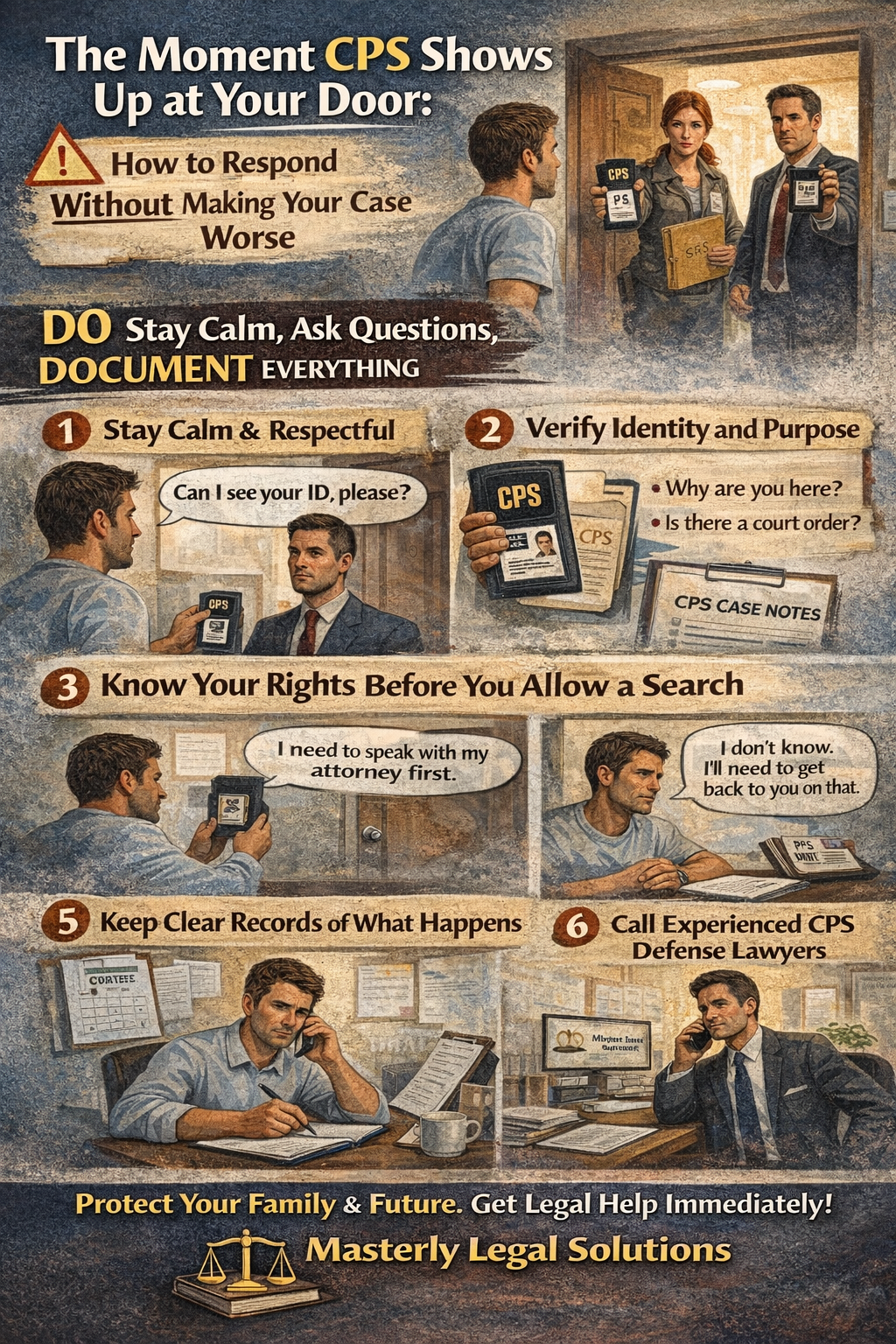
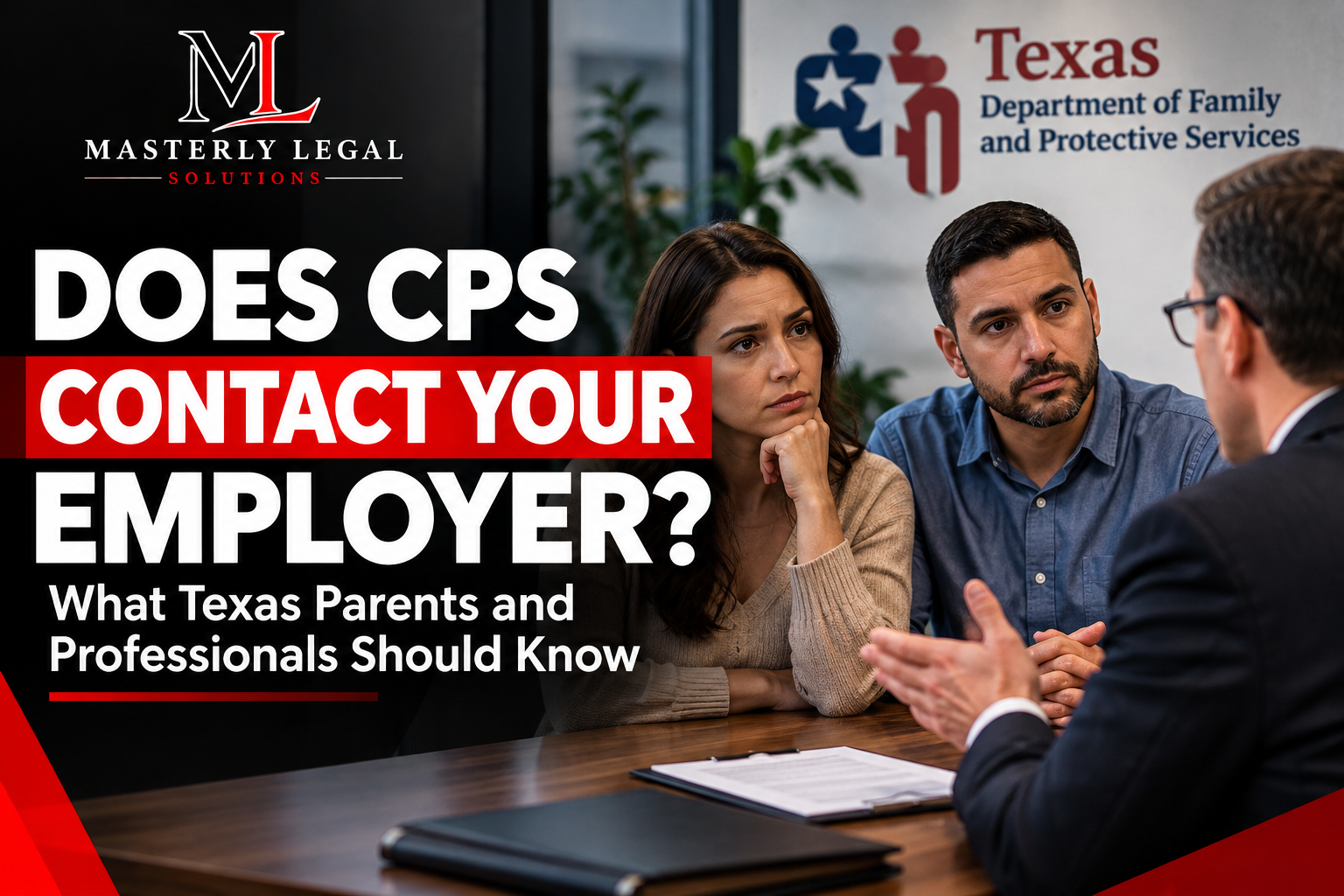
The Moment CPS Shows Up at Your Door: How to Respond Without Making Your Case Worse
The knock on the door can feel louder than it should. Even if you’ve never had any involvement with child protective services, it is one of those moments that instantly changes the temperature of your entire day. Your mind starts racing, your heart starts pounding, and your first instinct is to either explain everything as fast as possible or refuse to say anything at all.
If you are a parent, caregiver, guardian, or professional responsible for a child, that moment can feel like your whole life is suddenly being judged in real time. You may be thinking about your job, your custody, your reputation, and whether your family will be separated. You may also worry that the wrong words could make the cps investigation worse.
At Masterly Legal Solutions, we help families handle cps cases strategically and calmly, with a focus on preparation, documentation, and protecting parental rights. We provide proactive support during child protective services cps involvement so clients do not accidentally create new risks while trying to “cooperate.” This article explains exactly how to respond when cps shows up, what to avoid, and how to protect your child’s safety and your future.
What It Means When CPS Appears at Your Home
When cps comes to your door, it usually means they received a report and are investigating reports of possible child abuse or neglect. The report may be accurate, exaggerated, misunderstood, or completely false. But the key point is that the government agency is now involved, and your responses can shape what happens next.
A visit does not automatically mean your child will be removed. In most situations, child protective services is gathering information to assess risk, clarify allegations, and determine whether there are immediate safety concerns. Still, this is not a casual wellness check. It is an investigation that can affect your record, your custody, and your long-term rights as a parent.
Because cps determines the direction of the case based on what they observe, what is said, and what is documented, it is important to respond thoughtfully. The goal is to protect your child’s well being, not to “win an argument” at the door.
The Emotional Trap That Makes People Accidentally Harm Their Own Case
Most people respond emotionally because the situation feels personal. You may feel insulted, embarrassed, or angry that anyone would accuse you of abuse or neglect. You may also feel afraid that your child could be taken to foster care even if you did nothing wrong.
Unfortunately, strong emotions often push people to speak too much, explain too fast, or guess at details under pressure. That can lead to inconsistent statements that later look suspicious. Even responsible parents can accidentally create problems by trying to fill silence or “clear things up” without knowing what the allegations are.
This is why having an experienced cps defense attorney can matter early. Legal guidance helps you stay focused on what is appropriate, what is safe, and what protects you from unnecessary escalation.
The Reality of CPS Authority and the Limits of Their Power
One of the biggest misunderstandings is thinking cps can do anything they want. CPS has authority, but they also have rules, limitations, and procedures they must follow.
They may ask to enter your home, interview your child, look at sleeping arrangements, and discuss household routines. They may also ask about discipline, supervision, and whether there are any risks tied to child abuse and neglect concerns.
But many actions require consent, documentation, or a court order depending on the situation. Knowing what you can and cannot refuse is a major part of smart cps defense.
What CPS Is Looking for During the First Doorstep Contact
The first encounter is often about immediate impressions. A cps caseworker is observing your demeanor, your home environment, and how you respond under pressure. That does not mean you must “perform” for them, but it does mean you should take the moment seriously.
They may be looking for signs of unsafe conditions, lack of supervision, or indicators of abuse or neglect. They may also look for injuries, visible hazards, substance impairment, or aggressive conflict in the home.
Because the child’s well being is the focus of child protective services, their first question is usually whether there is any immediate danger. Your goal should be to remain calm, respectful, and clear, without volunteering extra information that is not required.
First Step: Stay Calm, Be Respectful, and Slow the Moment Down
When cps arrives, do not slam the door, shout, or panic. Even if the report is unfair, your reaction can become part of their notes and later influence decisions.
A respectful tone helps you protect yourself because it prevents the caseworker from framing you as hostile or unstable. You do not need to be overly friendly, but you do need to be controlled.
You can take a breath, ask for identification, and confirm who they are. This simple step helps you regain balance and shows that you are taking the situation seriously without being confrontational.
Second Step: Confirm Their Identity and Purpose Before You Speak
It is appropriate to ask for the caseworker’s name, badge or ID, and the department they represent. You should also ask what type of investigation is taking place and whether it involves an allegation of child abuse, neglect, or another safety issue.
You do not need to argue the facts at the door. You do not need to “prove” innocence right away. What you need is clarity on what they are there to do, what they want to see, and what they want from you.
This is where a cps attorney or cps defense attorney can step in quickly. A short legal conversation can help you respond properly without creating new problems.
Third Step: Ask If They Have a Court Order
This is a critical question. A court order is not the same as a casual request, and you should know whether they have legal paperwork compelling entry, interviews, or removal actions.
If they do not have a court order, you may still choose to cooperate. But cooperation should be informed, controlled, and strategic.
If they do have a court order, you should not interfere with enforcement. In that situation, your focus should shift to documentation, legal response, and protecting your child through proper legal channels.
Fourth Step: Do Not Lie, Do Not Guess, and Do Not “Fill the Silence”
Many people think they need to answer everything immediately, even when they are unsure. That is one of the fastest ways to damage credibility. If you do not know an answer, it is okay to say you do not know.
Guessing about dates, events, injuries, or reports can create inconsistencies that later look intentional. And once something gets written into a report, it can be difficult to correct. This is why attention to detail is crucial, especially in estate planning with revocable living trusts, where accuracy can help protect your assets and secure your family's future.
If you are dealing with serious allegations like alleged child abuse, you need to protect yourself by being accurate and careful. It is always better to pause and seek counsel than to rush into the wrong explanation.
Fifth Step: Understand the Risk of Over-Explaining
Over-explaining often comes from fear. People think, “If I just tell them everything, they’ll understand.” But in a cps investigation or situations involving student privacy issues in higher education, too much information can create new questions, new concerns, and new misunderstandings.
A cps caseworker may document details in a way that does not match your intention. Even normal parenting choices can be framed negatively when the situation is already under scrutiny.
Your best approach is to answer what is asked, stay factual, and avoid emotional speeches. Protecting your case means controlling the amount of risk you introduce.
When CPS Wants to Interview Your Child
CPS may ask to speak to your child privately. This part can make any parent feel powerless, and it often causes panic.
You should not coach your child or pressure them to say certain things. That can be seen as interference and may make the case worse. But you can remain calm, ask what the interview will involve, and request that the discussion remain appropriate for the child’s age.
If you are concerned about how the interview will be handled, legal representation helps protect your family. A defense attorney can advise on next steps and ensure the process stays fair.
What a Safety Plan Really Means and Why It Matters
A safety plan may sound like a helpful agreement, but it can function like a temporary restriction on your rights. Sometimes it requires a parent to leave the home, limit contact, or follow strict supervision rules.
Many people sign a safety plan because they feel trapped or scared. They believe refusing will lead to removal. But signing without understanding the terms can hurt your long-term position.
A safety plan can shape the entire investigation, especially if the plan implies that cps determines there was a real threat. Before signing anything, it is smart to speak with a cps defense attorney who can evaluate the risk.
Home Conditions CPS May Document During an Investigation
CPS is not looking for perfection, but they do document what they see. They may note cleanliness, food availability, sleeping arrangements, and basic hazards.
They may also document medication storage, weapons storage, pets, and whether the home environment supports the child’s well being. If there are concerns about supervision, they may pay close attention to who lives in the home and who has access to the child.
If there are valid issues, you do not need to deny them. You need to show you are committed to fixing them. A proactive approach can protect the family and reduce escalation.
How Injuries and Medical Issues Can Become Child Abuse Allegations
Many child abuse allegations begin with injuries that are misunderstood. Teachers, doctors, or neighbors may report bruises, marks, or statements made by a child.
Not every injury is abuse. But CPS must investigate, and their documentation can impact the outcome. If a caseworker believes an injury suggests child abuse or neglect, they may push for further action.
This is where evidence matters. Medical records, timelines, and witness statements can protect you. A strong cps defense strategy is built on facts, not panic.
Neglect Is Not Always Obvious, and That’s What Makes It Dangerous
Many people think neglect only means extreme situations. In reality, neglect claims can be based on supervision concerns, living conditions, or repeated exposure to risk.
Neglect cases often involve allegations that the home was unsafe, the child lacked proper care, or the caregiver failed to provide stable conditions. Some neglect reports are fair, but others are exaggerated or based on one moment taken out of context.
Since neglect can be interpreted broadly, it is important to respond professionally. A strategic plan can help you protect your child, defend yourself, and avoid unnecessary findings.
Domestic Conflict and Safety Concerns That Trigger CPS Reports
CPS involvement may arise when there are concerns involving domestic violence, substance abuse, or unsafe living conditions. Even if the child was not directly harmed, CPS may treat exposure to conflict as a safety issue.
This does not mean you are automatically accused of child abuse, but it can still become a serious administrative situation. CPS may focus on whether the parent took steps to protect the child from future harm.
If you are dealing with difficult circumstances, counseling, community resources, and professional support can help. You do not have to go through it alone, and legal help can guide your next steps.
Substance Allegations and the Fastest Way Cases Escalate
Substance-related allegations are taken seriously because they can be tied to supervision, stability, and risk. A caseworker may ask whether there is alcohol misuse, illegal substances, or impairment while caring for a child.
If CPS believes there is an immediate danger, they may push for removal or restrictions. These situations can move quickly, and misunderstandings can become serious consequences.
If you are facing this type of claim, early legal support is critical. An experienced attorney can help you respond appropriately, gather records, and protect your rights.
When CPS Mentions Foster Care and What You Should Understand
The word foster care can feel like a threat, even when it’s being mentioned as “just a possibility.” CPS may bring it up when they believe a child cannot safely remain in the home.
Not every CPS visit results in removal. But if removal is on the table, you need to act quickly. The decisions made in the early stage can influence what happens in court and whether reunification is possible.
Legal representation can help you protect your parental rights and prepare for the next steps. A proactive plan can often prevent worst-case outcomes.
Court Orders, Emergency Removal, and What CPS Must Show
If CPS wants to remove a child, they usually need legal authority. That might involve consent, emergency action, or a court order depending on the urgency.
If the situation escalates into formal proceedings, the case may involve court hearings and potentially a juvenile dependency court process. These cases are highly fact-driven and move on timelines that can feel overwhelming.
A defense attorney can help you prepare, gather evidence, and present compelling arguments. The goal is to keep your family together while protecting safety.
Understanding Juvenile Dependency and How It Impacts Families
Juvenile dependency is the legal framework that can determine whether a child remains at home, is placed with relatives, or enters foster placement. These matters can progress quickly and include ongoing monitoring.
Even if the case starts as an investigation, it can turn into formal dependency proceedings that impact your life for months or longer. During juvenile dependency, CPS may propose services, conditions, and restrictions that affect day-to-day parenting.
The best approach is strategic, not reactive. You need a plan that protects your rights and demonstrates stability and responsibility.
How Evidence Shapes CPS Cases More Than Opinions
CPS decisions are heavily influenced by evidence. That includes documents, photos, medical records, witness statements, and written communications.
You may feel like the truth is obvious, but CPS doesn’t work on feelings. Their records become the foundation of the case, and those records can influence court outcomes if the matter escalates.
That is why you must document events while they are fresh. When a cps investigation begins, your ability to defend yourself is often tied to how well you can support your position with evidence.
What to Document Right After CPS Leaves Your Home
Once the visit ends, you should write down what happened while it is still clear in your mind. This is not about paranoia. It is about protecting accuracy.
Document what the caseworker said, what they asked, who was present, and what areas they inspected. Also note any documents provided and any deadlines mentioned.
This helps you stay organized and prevents confusion later. It also strengthens your ability to work with a cps attorney or cps defense attorney effectively.
Talking to Your Child Without Coaching or Creating Problems
After CPS contact, many parents want to talk to their child right away. That is natural, but you must be careful. Your goal is to support your child, not interrogate them.
Avoid asking leading questions like, “Did you tell them I hit you?” or “You didn’t say anything bad, right?” Those questions can create anxiety and confusion.
Instead, focus on comfort and stability. Keep routines normal, offer reassurance, and seek professional guidance if needed. Your child’s well being matters, and so does protecting the case.
Services CPS May Recommend and How to Approach Them Strategically
CPS often recommends services like parenting classes, counseling, home support, or substance-related evaluations. Sometimes these recommendations are reasonable. Sometimes they feel unnecessary.
It is important to understand that agreeing to services can be used in different ways. In some cases, it shows you are proactive and committed. In other cases, it can be framed like an admission of guilt.
This is where legal strategy matters. A cps defense plan can help you decide what to accept, what to challenge, and how to protect your rights throughout the investigation.
When “Cooperation” Turns Into Losing Control of Your Case
CPS often encourages cooperation, and many people assume cooperation means saying yes to everything. But cooperation without boundaries can create a situation where you lose control quickly.
Allowing repeated interviews, home entries, and open-ended questions can cause the investigation to expand. The caseworker may interpret normal issues as growing concerns simply because they keep seeing new details.
Cooperation should be structured. You can cooperate while still protecting yourself, especially when you have legal representation guiding your responses.
How CPS Determines the Outcome of an Investigation
Many parents ask, “How does CPS decide?” The answer is usually based on multiple factors: safety observations, statements, documentation, and risk history.
Cps determines whether the allegation is supported, what services are required, and whether the case should be closed or escalated. They may also determine whether a family needs ongoing supervision or court involvement.
Even if you disagree with the allegations, the administrative record matters. A well-prepared response can shift the outcome and reduce long-term consequences.
The Risk of Accusations Turning Into Long-Term Records
One of the most frustrating parts of CPS involvement is the fear of a permanent label. Even when accusations are false, the fact that there was an investigation can leave anxiety for years.
That is why clients need proactive support. You want to protect your record, your reputation, and your ability to move forward without constant fear.
Masterly Legal Solutions helps clients respond professionally so the record reflects responsibility, clarity, and appropriate action. That approach protects families and reduces unnecessary escalation.
What Court Hearings Can Look Like If the Case Escalates
If a case escalates, you may face formal proceedings and court hearings. These hearings can move quickly, and they can involve restrictions on parental contact or living arrangements.
Courts often rely on CPS documentation, which is why early communication and evidence matter. A small note in a report can become a big issue later.
A strong defense attorney can help protect you, ensure your voice is heard, and present compelling arguments that support family stability and safe parenting.
Juvenile Dependency Court and the Importance of Early Legal Help
If CPS involvement becomes formal, you may find yourself in juvenile dependency court where decisions about placement, services, and reunification are made.
This can be overwhelming for any parent, especially one who has never been through legal proceedings. The court process is not designed to feel comfortable. It is designed to resolve safety and placement questions quickly.
Early legal representation matters because it positions you before the case becomes “officially against you.” A proactive defense often prevents the worst outcomes.
How Parents Can Protect Parental Rights Without Becoming Confrontational
Protecting parental rights does not mean yelling at a caseworker or refusing everything. It means responding with clarity, documentation, and strategy.
You can protect your child while also protecting yourself. You can ask questions, request clarification, and slow the process down enough to understand what is happening.
That approach reduces risk and prevents misunderstandings. It also shows the caseworker that the family is stable, aware, and capable of safe decision-making.
How a CPS Defense Attorney Helps You Respond Without Panic
A cps defense attorney helps you understand what is normal, what is dangerous, and what requires immediate action. They help you avoid mistakes that can worsen your case.
They can communicate with the agency on your behalf, guide you on documentation, and help ensure your words are not twisted or misunderstood. A good defense attorney also helps clients prepare for interviews, home visits, and follow-up requests.
Masterly Legal Solutions focuses on proactive, investigation-focused defense. We are not fear-driven, and we do not push clients into unnecessary courtroom battles when administrative strategy can protect the family more effectively.
What Makes Our Approach Different at Masterly Legal Solutions
Many people assume the only option is to “fight CPS in court.” That can be expensive, stressful, and not always the best first move. Our approach is administrative, proactive, and focused on controlling the investigation before it becomes litigation-heavy.
We help clients build a clear record, present facts properly, and respond in ways that reduce the chance of escalation. We also help families understand services, safety plans, and next steps without feeling pressured to accept everything blindly.
Our team works to protect the child, protect the parent, and protect the future—while keeping the process as stable as possible for everyone involved.
A Clear Checklist for the Moment CPS Shows Up
If cps knocks on your door, your response should be calm and structured. Here is a practical approach that protects you without creating unnecessary conflict:
- Ask for identification and document the caseworker’s name
- Ask what the investigation involves and whether there is a court order
- Avoid guessing, arguing, or giving long explanations
- Do not sign a safety plan without understanding the impact
- Keep your child calm and do not coach their answers
- Document what happened immediately after the visit
- Contact a cps attorney if the allegations involve child abuse, neglect, or removal risk
This checklist is not about hiding anything. It is about responding in a way that protects your family during a stressful investigation.
A Note About “West Palm Beach Child Protective Services” Searches
Many people search online using phrases like west palm beach child protective services because they are trying to find help quickly in a crisis. But CPS processes vary widely by state, and the rules in Texas are not the same as what you may read in articles about Orange County, Southern California, or San Bernardino.
If you are dealing with a Texas case, you need Texas-specific strategy. You also need a team that understands how CPS works at the investigation level and how to protect your rights early.
Masterly Legal Solutions provides strategic CPS defense and administrative appeal representation exclusively for Texas CPS cases. We help clients respond appropriately to allegations, protect records, and keep the situation from spiraling.
Proven Track Record in CPS Defense and Protecting Families
When CPS involvement threatens your home, your rights, and your child’s future, results matter. At Masterly Legal Solutions, we focus on proactive CPS defense strategies backed by a proven track record of helping families respond appropriately during high-pressure investigations. We understand how quickly misunderstandings can turn into serious allegations, and we work to protect parents from unnecessary escalation. Our goal is to keep your case organized, your documentation strong, and your family positioned for the best possible outcome.
Family Services, Support Plans, and What CPS May Require
Many CPS cases involve recommended or required family services such as parenting classes, counseling, supervision plans, or home safety improvements. While some services can be genuinely helpful, others may be unnecessary or overly burdensome depending on the allegations. CPS may present these steps as “voluntary,” but they can still shape the outcome of the investigation. With the right legal strategy, families can respond in a way that protects their child’s well-being without giving up important legal rights.
The Role of a Lawyer During a CPS Investigation
A CPS investigation is not the time to “hope it works out.” Having a lawyer involved early can prevent small mistakes from becoming permanent consequences. A lawyer can help you understand what CPS is asking for, what you are legally required to do, and how your statements may be documented. Just as importantly, legal counsel can communicate with CPS on your behalf, helping you stay calm, focused, and protected. When your family is under scrutiny, having professional legal support can make a major difference.
When You Should Hire a CPS Defense Attorney
Many parents wait too long to hire legal counsel because they believe cooperation alone will close the case. Unfortunately, CPS investigations can change direction quickly, especially when allegations involve safety concerns, child abuse, or neglect. The earlier you hire a CPS defense attorney, the more control you can keep over the narrative, the documents, and the timeline. Legal support is not about being combative—it is about protecting your rights before the situation becomes harder to fix.
Getting Assistance Before the Case Gets Worse
When CPS becomes involved, the right assistance can protect your family from panic-driven decisions. Parents often feel pressured to sign paperwork, accept restrictions, or agree to plans without knowing the long-term impact. Professional guidance helps you stay organized, respond appropriately, and avoid creating new risk during the investigation. With the right plan in place, families can move through the process with clarity instead of fear.
Conduct, Communication, and How CPS Interprets Your Behavior
Your conduct during the investigation matters more than many people realize. CPS caseworkers often document demeanor, cooperation level, and communication style, and those impressions can affect how the case is classified. Staying calm, respectful, and consistent helps protect you from being labeled as hostile or unfit. Even if you strongly disagree with the allegations, strategic communication can reduce escalation and help keep the case under control.
Youth Protection and CPS Focus on Safety Concerns
CPS exists to protect youth from unsafe conditions and serious risk, which means their attention is always centered on child safety and stability. Even when allegations are exaggerated or false, CPS may treat the situation as urgent until they feel confident the child’s environment is safe. Parents should understand that CPS is looking for risk factors, not perfection, and their decisions can affect the entire household. A strong defense strategy helps families show stability while protecting rights throughout the process.
Understanding the Law and Your Rights in CPS Cases
CPS investigations are shaped by law, not just opinions or accusations. The rules that apply can affect whether CPS can enter your home, interview your child, demand services, or seek a court order. Understanding your legal rights early can prevent mistakes that make the case harder to defend later. At Masterly Legal Solutions, we help families navigate CPS involvement with clarity, preparation, and legally sound strategy—so you are protected at every step.
Contact Masterly Legal Solutions for a Free Consultation
If cps has shown up at your door, you do not have to guess your way through the next steps. A single mistake in the first conversation can change how the agency frames the entire investigation, especially in cases involving child abuse, neglect, or concerns about ongoing safety.
Even if you found this page while searching west palm beach child protective services, the most important thing is getting the right support for your Texas CPS situation. Our firm is committed to helping families protect parental rights, respond strategically, and avoid decisions that accidentally make the case worse. We offer calm, professional legal services designed to protect your child’s well being and your future.
Call Masterly Legal Solutions at (972) 236-5051 to schedule a free consultation. We will listen to your situation, explain your options, and help you move forward with a defense strategy that is proactive, clear, and focused on protecting your family.
Disclaimer: This article is for educational purposes only and does not constitute legal guidance or legal advice. Every case is different, and you should speak with a qualified attorney about your specific circumstances.
Teacher Rights When Assaulted by a Special Needs Student: Safety, Reporting and Investigation Issues


Looking for Legal & Business Solutions? Contact Us Now
Fill in the form or call us to set up a meeting