

Texas CPS Investigation Defense Timeline: What Happens After the First Call and How to Protect Your Rights Fast
The first call from child protective services can make your heart race in a way you didn’t think was possible. Even strong, loving parents can feel powerless when someone says there’s a report involving abuse or neglect and that a case has been opened. In that moment, it’s easy to spiral into questions: Who called? What did they say? Are they going to take my child? What matters most is what you do next, because the early hours of a CPS case often shape everything that comes after.
At Masterly Legal Solutions, we help parents, guardians, and caregivers respond to CPS investigations with speed, clarity, and strategy. We know the system can feel one-sided, and families are often pressured into decisions before they even understand the allegations. Our goal is to protect your parental rights, preserve your home stability, and keep the situation from escalating into unnecessary court proceedings. When you act quickly, you can reduce risk, avoid common traps, and protect your family’s future.
This article walks you through a realistic CPS investigation timeline, from the first call to possible outcomes like administrative closure or court involvement. You’ll learn how the CPS investigation process works, what a caseworker is looking for, and how to protect your rights fast. You’ll also see where legal strategy can prevent missteps that can lead to temporary custody issues or long-term records. If you’ve received initial contact from child protective services CPS, the time to get organized is now.
The First Call and the Moment Everything Changes
The first call is usually short, vague, and intimidating. A worker might say they’re involved with child protective services and need to talk about a report involving your child’s home. They might mention suspected abuse, suspected child abuse, or a concern that neglect occurred, without giving enough detail to respond confidently. This initial pressure is part of the reality of the system, not a sign that you’ve already lost.
Your first priority is to slow the moment down without escalating conflict. You do not have to guess what to say, and you should not try to “explain everything” while panicked. The safest move is to stay calm, take notes, and avoid volunteering extra details. If the allegation includes child abuse, sexual abuse, or serious injury claims, your response should be even more guarded because the risk level rises fast.
What CPS Means by “Child Protective Investigations”
Families often assume the call means there’s a formal legal case already underway in court. In many situations, the call means CPS has opened child protective investigations to decide whether the report has credibility and whether the child might be at risk. This is a fact-finding stage, but it is not neutral in how it feels. The worker may already be measuring your reactions as part of their assessment.
During this period, CPS is collecting information quickly. They may look at household composition, prior involvement, and whether the report suggests immediate danger or immediate risk. This is the start of the investigation stage, and it often moves faster than a family expects. Taking the first steps seriously is how families protect stability.
Understanding the CPS Process Without Getting Trapped
The CPS process is built around risk management, not comfort. CPS is part of a broader set of protective services that makes decisions based on perceived danger and patterns. Even when parents believe the allegation is ridiculous, CPS may still press forward because their system prioritizes caution. That approach can make families feel like they are presumed guilty, even before any evidence is reviewed.
This is why knowing the investigation process matters. You’re not only responding to questions—you’re building a record that may influence everything from services to court outcomes. A parent’s tone, wording, and actions may be used to support a finding later. Strategic defense is not about hiding facts; it is about controlling how facts are presented and interpreted.
The First 24–48 Hours: Protect Your Home, Your Words, and Your Timeline
The first two days after contact are critical because families often act on emotion. Many parents start calling relatives, arguing with an ex, posting online, or demanding to know who reported them. Unfortunately, those reactions can create new risks, especially if CPS is already looking for instability. Your best move is to create structure and document what’s happening.
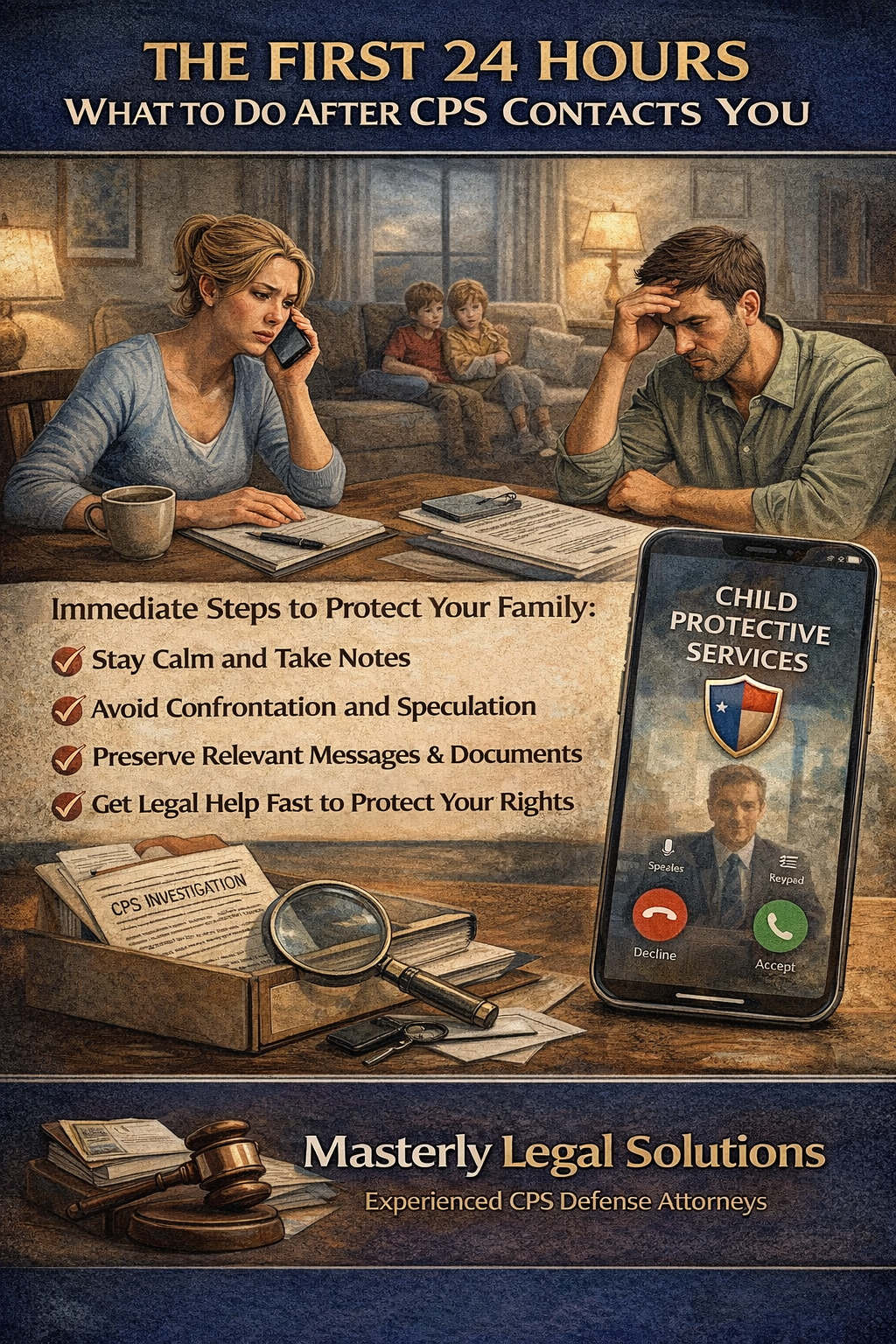
Here are fast actions that usually help families stay protected:
- Write down the date and time of the call, what was said, and who called
- Save all texts, emails, and voicemail messages related to the complaint
- Avoid discussing the allegations with people who may repeat your words
- Keep the home calm and consistent for the child’s safety
- Reach out for legal counsel before signing or agreeing to anything
This is also when an experienced attorney can start building your defense plan. When the case is new, there are more opportunities to prevent escalation. Waiting often allows the file to form without your input.
The Home Visit: What CPS Looks For in the Child’s Home
A home visit often happens early, and it’s one of the most misunderstood parts of CPS investigations. CPS is not only checking cleanliness; they are observing safety, supervision, routines, and the emotional atmosphere. They may note the condition of bathrooms, kitchens, sleeping areas, and hazards that could be described as safety concerns. Even a normal home can be mischaracterized if the worker is looking for problems.
The child’s home is evaluated through the lens of risk. CPS may ask where the child sleeps, who lives there, and who regularly comes in and out. They may also ask questions about discipline, supervision, and household conflict. A calm approach helps because defensiveness can be misread as concealment.
Interviews: How “Just Answering Questions” Creates New Problems
CPS interviews are not casual conversations. They are evidence-building steps, especially if the report suggests abuse or neglect or identifies an alleged perpetrator. CPS may ask the same question multiple times in different ways to test consistency. Parents who are scared often over-explain, and over-explaining can create contradictions.
CPS may interview adults and children and may request to speak with the child privately. Parents often feel insulted by this, but the system treats private interviews as standard. If a parent explodes during the process, it can become part of the record. Strategic defense keeps your communication steady, short, and clear.
The CPS Investigator and How the Narrative Gets Written
A CPS investigator has tremendous influence because they control how the story is summarized. They decide what facts seem important, what concerns are “verified,” and what recommendations are made. Even if they are polite, they may document your situation in a way that frames you as risky. That’s why families should treat every contact as part of the official file.
Many families don’t realize how much power the written summary holds. The investigator’s notes can influence whether CPS believes services are needed, whether a safety plan is required, and whether court action is pursued. A strategic response aims to prevent inaccurate assumptions from becoming permanent “facts.” The earlier legal strategy starts, the easier it is to influence the narrative.
Risk Assessment: How CPS Thinks About Future Danger
CPS does not only look for proof that something happened. They also focus on whether they believe there could be future abuse or continuing danger. This is where risk assessment becomes central. CPS may look for stressors, conflict patterns, substance use issues, unsafe supervision, or uncontrolled household volatility.
CPS evaluates risk factors like past history, current stress, and the seriousness of the allegation. A weak report can still lead to services if CPS believes the environment is unstable. This is frustrating for parents because it can feel like “punishment without proof.” Strategy matters because your job is to demonstrate safety and stability, not to argue emotionally.
Safety Plans: When “Voluntary” Doesn’t Feel Voluntary
A safety plan is one of the most common pressure points in a CPS case. CPS may say it’s voluntary, but families often hear a threat underneath it: “Sign this or we’ll go to court.” Safety plans can include restrictions on who can live in the home, who can be around the child, and how supervision will happen. A safety plan can reshape your daily life overnight.
Many parents sign a safety plan just to make CPS leave. That is risky because the plan can become evidence later that the household was unsafe. It can also create long-term restrictions that are difficult to unwind. An attorney helps you evaluate whether the safety plan is appropriate and negotiate terms that protect the child without damaging your rights.
Safety Plan Terms That Families Should Understand Before Agreeing
A safety plan can include requirements that look simple but create serious consequences. Some plans require a parent to leave the home, prohibit contact between the child and an adult, or require supervised interactions. Some plans require counseling, classes, or monitoring that feels intrusive. Even when families intend to cooperate, the fine print matters.
Common safety plan provisions include:
- Supervision rules for the child’s care
- Restrictions involving the alleged perpetrator
- Monitoring requirements for overnight stays
- Communication rules with family members
- Temporary changes in who can transport or supervise children
If CPS is pushing hard for restrictions, you should treat that as a sign the agency is considering escalation. A careful response protects the child’s safety while protecting your future in the case.
Voluntary Services and Support Services: Helpful or Harmful?
CPS may offer voluntary services and other support services to “help the family.” These may include parenting classes, counseling, mental health evaluations, or home-based services. In some cases, services can genuinely help a family stabilize. In other cases, services create a record that can be used against the parent if they are misunderstood or applied unfairly.
The key issue is how services are framed. Sometimes CPS offers services when they lack strong evidence but still want leverage. Accepting services may be interpreted as an admission that abuse or neglect occurred. Legal strategy helps families decide what to accept, how to document participation, and how to avoid accidental self-incrimination.
Voluntary Agreement and the Pressure to Comply
CPS often pushes a voluntary agreement that feels mandatory. The worker may say the agreement is needed to keep the child safe, and that refusal could result in court action. Families often sign to avoid conflict, especially when they are exhausted or scared. But voluntary agreements can change the case’s direction in serious ways.
A voluntary agreement may affect living arrangements, contact, or ongoing monitoring. It may also create a paper trail that makes future court action easier for CPS. Before you sign anything, it is wise to talk with a lawyer who understands how these documents are used later. Once signed, they can be difficult to challenge.
Drug Test Requests and How They Affect the Case
A requested drug test is common in many CPS cases, even when drugs were not mentioned in the report. CPS may use testing as part of their risk assessment, or as a way to rule out certain issues. Parents often assume refusing is automatically harmful, so they agree without thinking. The right approach depends on the facts and the risk level of the case.
Drug testing can create problems if the test is mishandled, if medications are misunderstood, or if parents are pressured into admissions. If the allegation involves substance use or household instability, testing becomes even more sensitive. Legal representation helps parents respond without increasing risk. Strategy prevents misunderstandings from becoming evidence.
When CPS Involves the Texas Department and Other Agencies
CPS operates within a larger system, often described broadly as the Texas department structure for child welfare and family protective work. Sometimes investigations involve other agencies or referrals. In certain cases, law enforcement becomes involved, which changes the stakes immediately. A parent can face both CPS scrutiny and legal exposure at the same time.
Even when law enforcement is not involved, CPS may communicate with schools, doctors, or service providers. This can affect the child’s education and family privacy. The more agencies involved, the more careful families must be about communication and documentation. Legal counsel becomes even more important when multiple systems are interacting.
Criminal Investigation Risk and High-Stakes Allegations
Some CPS reports create the possibility of a criminal investigation, especially when allegations include serious physical injury, sexual abuse, or severe neglect claims. Parents often don’t realize that what they say to CPS can be shared with law enforcement. Even innocent explanations can be twisted if poorly worded. This is why high-stakes cases require immediate legal strategy.
If the report involves suspected child abuse or serious harm, families should assume the risk level is elevated. CPS may treat the case as urgent and may push for removal or court orders faster. In these situations, do not try to “talk your way out of it” alone. A defense plan should protect your rights from both CPS consequences and criminal exposure.
Domestic Violence Allegations and How CPS Interprets Risk
Reports involving domestic violence often trigger aggressive CPS responses. Even if the child was not directly harmed, CPS may argue that exposure to violence creates immediate risk. Families sometimes feel shocked because CPS treats the household environment as dangerous even when the parent is trying to escape a harmful situation. The system can be harsh and sometimes lacks nuance.
Domestic violence allegations may lead to safety plan demands, removal threats, or court involvement. Parents may also be pressured to separate from a partner quickly, even when financial realities make it difficult. A defense plan should protect the child’s safety while recognizing the family’s reality. Legal representation can help prevent unreasonable demands from turning into court action.
Court Orders: When CPS Moves From “Investigation” to “Action”
When CPS pushes for a court order, the case enters a more formal, high-stakes phase. CPS may seek an order to remove the child, restrict contact, or require services. Families often feel blindsided because they assumed cooperation would prevent court involvement. Sometimes, CPS seeks court orders because they believe the child is in immediate danger; other times, they do it because they believe the parent is not complying.
Court orders change the case dramatically because they can legally compel behavior. A parent can lose control of their household routines quickly once an order is issued. This is why preventing escalation before court is a core goal of early defense strategy. Acting quickly can reduce the risk of court orders being sought.
Court Hearing Reality: What Parents Should Expect If It Escalates
If CPS seeks action, the family may face a court hearing that happens quickly. The hearing is often emotional, fast-moving, and overwhelming for parents who have never been in court. The judge may rely heavily on CPS summaries and risk language. Parents who come unprepared are at a disadvantage.
A strong defense begins long before the hearing date. The attorney helps organize records, clarify the timeline, and challenge claims that lack evidence. They also help parents communicate in a way that supports credibility. If court becomes unavoidable, preparation is what protects your rights.
Juvenile Dependency Court and the Long Road Families Fear
Many CPS cases that escalate move into juvenile dependency court, where the court supervises the child’s placement and the parent’s obligations. This is a serious system that can control a family’s life for months. Parents may be ordered into services, evaluations, or monitored visitation. The case can reshape the family’s routine in ways that feel invasive and exhausting.
In juvenile dependency court, CPS often argues that the child needs protective oversight. The parent must show stability, safety, and compliance without surrendering their identity or dignity. A defense strategy focuses on minimizing damage and moving the case toward resolution quickly. Every week matters in a dependency case.
Temporary Custody and Child’s Removal: The Moment to Act Fastest
The threat of temporary custody is what keeps most parents awake at night. If CPS believes the child is in immediate danger, they may pursue child’s removal from the home. Parents often think removal only happens with clear proof, but CPS decisions are often based on risk perception. Even a weak report can lead to removal if CPS believes the household is unstable.
Removal can place a child into foster care or with relatives depending on the circumstances. It disrupts routines and creates emotional trauma for the child and the family. If removal is being discussed, you need legal representation immediately. The best chance to stop removal is often before CPS takes action.
Foster Care and Child’s Placement: Understanding the Consequences
If a child is removed, foster care becomes a real possibility. CPS may attempt child’s placement with relatives first, but that is not guaranteed without planning. Placement decisions can be made quickly, sometimes with incomplete information. Parents often feel like they have no voice once the child is gone.
Foster care can affect the child’s well being, school stability, and emotional safety. It can also complicate reunification timelines because services and court requirements increase. A defense strategy aims to prevent foster care placement when possible. If placement happens, the strategy shifts to reunification and damage control.
Family Services, Child and Family Services, and Voluntary Placement Options
CPS may refer families to family services or child and family services for support and monitoring. These may include counseling, parenting programs, or home-based services. Sometimes CPS proposes voluntary placement, where the child stays temporarily with a relative while CPS continues the investigation. Families often accept voluntary placement to avoid foster care, but it still has consequences.
Voluntary placement can create a record that the home was unsafe, even if parents disagree. It can also change the child custody dynamics and affect future decisions. Any voluntary placement should be carefully evaluated with legal counsel. A strategic approach protects the child while protecting your rights.
Family Law and Child Custody: How CPS Cases Ripple Into Your Future
A CPS investigation often becomes part of the family’s legal history and can affect future family law issues. Custody disputes, divorce cases, and modification actions often use CPS records. Even if CPS closes the case, the documentation may still be referenced later. This is why parents should treat the CPS process as legally serious from the beginning.
CPS involvement can directly affect child custody decisions if the case is ongoing during a court dispute. It can also influence the judge’s perception of stability and safety. Strategic legal representation helps protect your position now and later. The best defense plan considers both the short-term investigation and long-term family impact.
Family and Community Resources That Can Support Stability
Many families benefit from family and community resources that help stabilize the household during stressful times. Resources may include counseling, parenting support, safe housing options, or community programs. Used correctly, these resources can strengthen a family’s case by showing proactive stability. Used incorrectly, they can be framed as an admission that neglect occurred.
The key is choosing resources that support families without creating unnecessary risk. Your attorney can help you document progress and present it properly. When community resources are aligned with a defense strategy, they can reduce CPS pressure. Stability is the strongest language CPS understands.
Community Resources and Legal Aid Options
Some families need immediate help and consider legal aid resources. Depending on your situation, organizations like the Texas Legal Services Center may be a starting point for information or referrals. Legal aid can be valuable for certain families, especially when resources are limited. However, CPS cases can move quickly, and not all services can provide rapid individualized strategy.
If you pursue legal aid, act fast and keep documentation organized. The timeline doesn’t pause while you search for help. Whether through legal aid or private representation, you need clear guidance. CPS investigations demand timely decisions and a structured plan.
Investigation Results, Written Notice, and What Happens at the End
When CPS reaches the end of the investigation, you will typically receive investigation results and sometimes written notice about findings. The results may include whether the allegations were ruled out, whether services are recommended, or whether further steps are needed. Some families are relieved when the case closes, but still worry about the record. Others are shocked when CPS makes a negative finding without what the family views as real proof.
Families should read written notice carefully and preserve it. Deadlines, appeal information, and case status can be tied to that notice. If CPS findings feel inaccurate, your defense may need to continue. The case may be closed administratively, or it may shift into court-related action depending on the result.
Administrative Closure: When CPS Closes the Case and What It Means
The best outcome in many investigations is administrative closure, meaning CPS ends active involvement without court escalation. Closure can feel like taking a breath again, but families still have lingering stress. Parents often wonder if CPS will come back or if the report will follow them. Those concerns are normal because CPS involvement is deeply disruptive.
Administrative closure does not always erase records, and it does not always stop future reports. It simply ends the current case activity. Families should still keep their documentation and understand what the case outcome means. A strong attorney can help you interpret closure and protect your long-term stability.
Complete Investigations: The Moment CPS Determines the Case Direction
CPS eventually moves to complete investigations, and this is where the agency evaluates risk, evidence, and the family’s response. This is also where CPS determines whether to recommend services, seek court orders, or close the case. A family’s cooperation, documentation, and stability can strongly influence this outcome. So can the seriousness of the allegation and perceived immediate risk.
Parents often feel like CPS decides the outcome based on the worker’s opinion rather than facts. While that can happen, the best defense strategy focuses on creating a factual record that makes it harder to mischaracterize the family. Evidence, documentation, and calm communication matter. This is the stage where strong legal representation can prevent unfair outcomes.
Legal Protections and the Role of Ethical Legal Representation
Parents facing CPS scrutiny deserve legal protections and ethical advocacy. Even though this article focuses on Texas CPS defense, families should understand that professional ethics matter in every state. The Michigan Rules of Professional Conduct reflect core standards clients should expect anywhere: loyalty, competence, communication, and confidentiality. In CPS cases, those principles are vital because your attorney must protect your privacy while pushing for the best possible outcome.
At Masterly Legal Solutions, we treat your case as personal, not procedural. We guide families through intense moments with clarity and calm strategy. We work to reduce escalation, protect parental rights, and keep the focus on safety and stability. When the system feels overwhelming, ethical legal representation creates structure and protection.
Well Being and the Hidden Cost of CPS Investigations
A CPS investigation can affect your family’s well being in ways that outsiders don’t understand. Parents lose sleep, children feel tension, and the household becomes anxious even when nothing unsafe happened. This stress can cause people to overreact or make choices that harm the case. Protecting well being is part of protecting the family’s future.
Families should prioritize calm routines, stable caregiving, and open support for children. Avoid exposing children to adult panic and legal fear. When possible, keep life consistent and grounded, including school routines. A defense plan should protect both your legal position and your family’s emotional stability.
Reasonable Accommodations and Families With Special Circumstances
Some families navigating CPS involvement also deal with disabilities, medical conditions, or special needs caregiving. In certain cases, requesting reasonable accommodations may be necessary to complete services or attend meetings. Families should not be penalized for needing flexibility or support. CPS should evaluate safety and stability with realism, not rigid assumptions.
A strategy can include documenting the family’s support network and caregiving plan. It can also include showing how the home remains safe even with special circumstances. The goal is always child’s safety and stability, with fairness and accuracy. A good attorney can help present these details in a way CPS cannot easily misinterpret.
Texas Family Code Rules That Guide CPS Investigations
In Texas, CPS authority is not unlimited—it comes from the Texas Family Code, which sets the legal framework for how family and protective services can act during an investigation. That framework matters because it shapes what CPS can request, how fast they can move, and when they must seek a court order instead of relying on pressure. When a report involves child abuse or neglect, the Texas Family Code influences how CPS evaluates risk, what standards apply, and what procedural safeguards parents can rely on. Understanding these rules helps families respond strategically, especially when CPS starts investigating allegations with limited context or incomplete information.
How CPS Workers Build a Case From Alleged Abuse Claims
Many families are surprised by how quickly CPS workers begin documenting details after the first call, especially when the report includes alleged abuse or concerns about supervision. CPS workers often gather statements, interview contacts, review records, and summarize the household environment while investigating allegations that may be exaggerated or simply wrong. Because their notes can shape the direction of the case, families should treat every interaction as part of the official record and respond with calm, structured communication. When these cases involve child abuse or neglect allegations, early legal strategy can prevent misunderstandings from turning into actions that disrupt the family’s stability.
Contact Masterly Legal Solutions for a Free Consultation
If you’ve received that first call from child protective services, the clock is already moving. CPS investigations can turn serious quickly, especially when a safety plan is pushed, a court order is threatened, or allegations are misunderstood and repeated. The most important part of the CPS investigation timeline is the beginning—because early mistakes can lead to removal threats, dependency court escalation, or long-term records that follow your family. You do not have to face this process alone, and you should not have to guess your way through decisions that affect your child and your family’s life.
At Masterly Legal Solutions, we provide focused legal representation for parents, guardians, and caregivers who need immediate guidance during CPS investigations. We help you protect your parental rights, respond strategically to interviews and home visits, and push back against unfair narratives before they harden into official findings. If you want a structured plan and ethical advocacy grounded in professional standards, our team is ready to help you take control of the situation.
Call (972) 236-5051 today for a free consultation, and let’s talk about how to protect your rights fast.
Disclaimer: This article is for educational purposes only and does not constitute legal advice or legal guidance. Every CPS case is different, and outcomes depend on the specific facts, timelines, and applicable law. For legal advice about your situation, consult a qualified attorney directly.


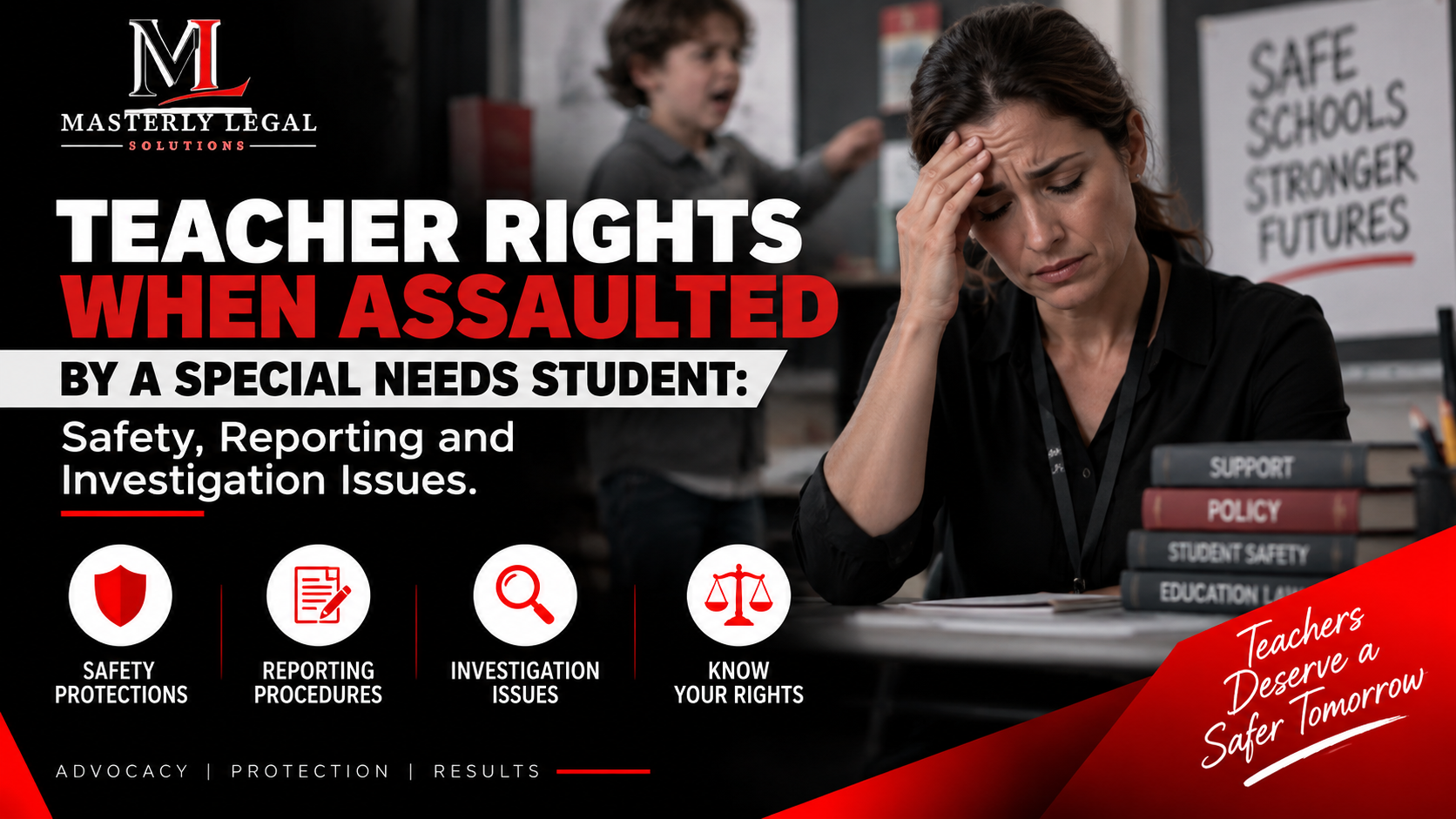
Teacher Rights When Assaulted by a Special Needs Student: Safety, Reporting and Investigation Issues



Looking for Legal & Business Solutions? Contact Us Now
Fill in the form or call us to set up a meeting