
How Administrative Appeals Work After a Washington County CPS Finding
Getting a CPS finding against you can feel like the ground just shifted under your feet. One day you are living your normal family life, and the next day you’re staring at paperwork that makes you sound like a danger to your own child. In Washington County, many parents are shocked to learn that CPS decisions can follow them long after the cps investigation ends—impacting custody, employment, and even how future agencies view your household. What makes it even harder is that families often don’t realize they may have an appeal option until the clock is already running out.
At Masterly Legal Solutions, we work with families who feel blindsided by child protective services decisions that don’t reflect what actually happened at home. Sometimes the allegations are exaggerated. Sometimes the evidence is thin. Sometimes a cps caseworker made a decision based on incomplete information during the cps investigation process. If you’ve received a CPS finding and feel like the system moved too fast, the administrative appeal process may be one of the most important tools you have to defend your name and protect your family's future.
What a CPS “Finding” Really Means in Washington County
A CPS finding is not just a comment in a file. It can become an official record that affects your parental rights, your reputation, and your access to children in the future. A finding may suggest abuse or neglect even when the facts are unclear or disputed. For many families, the most painful part is seeing a one-sided story written as if it is final.
In Washington County, protective services findings can shape future child welfare cases, whether you ever face CPS involvement again or not. That is why families should take these findings seriously and respond quickly. A CPS finding may feel like a life sentence, but an appeal can be a second chance.
Why Families Don’t Know Administrative Appeals Exist
Most parents assume that once child protective services makes a decision, that is the end. CPS workers often communicate in a way that sounds final, especially when a case is closed. Even when parents ask questions, the answers can feel vague or rushed. This is why so many families don’t realize they may be able to challenge a finding.
Administrative appeals are not always explained clearly during a cps investigation. Parents may be overwhelmed, emotional, and focused on keeping their child safe in the moment. When the dust settles, they start to realize the long-term damage that can come from a CPS record. That’s often when they start searching for legal help.
The Hidden Consequences of a CPS Finding
Even if CPS does not remove your child, a finding can still create serious harm. It can lead to supervised visitation, future court intervention, or long-term restrictions that feel unfair. Some parents discover the damage when they try to move forward with custody modifications or rebuild stability at home. Others find that they are treated as “high risk” in future child protective services cases.
A finding may also create problems in professional licensing or background checks depending on the state and the situation. In some cases, a CPS finding can even overlap with criminal charges, especially when allegations involve child abuse or domestic violence. That is why defending families is not just about the present—it is about your family’s future.
Understanding the Difference Between Administrative Appeals and Court
An administrative appeal is not the same thing as going to court. This process typically happens within the structure of the government agency itself. It is meant to review whether the CPS decision was supported by sufficient evidence and whether the process was fair. It is not the same as a courtroom trial, but it can still feel intense.
Court proceedings may happen separately in juvenile dependency matters or custody disputes. However, even if your situation never reaches a judge, an administrative finding can still follow you. That’s why families should not ignore the administrative process. The appeal may be the best opportunity to challenge the record early.
What Triggers the Right to Appeal After a CPS Finding
An appeal typically comes into play after CPS determines a finding related to child abuse, neglect, or abuse or neglect concerns. Sometimes CPS decides a child was abused based on statements that weren’t fully investigated. Other times a neglect case is labeled severe even when the situation was temporary or misunderstood. In many cps cases, the “finding” becomes the official narrative.
If you believe the allegations were unfair, unsupported, or taken out of context, you may have a basis to appeal. Parents should understand that this is not about being emotional—it is about challenging flawed conclusions. A successful appeal can protect parental rights and reduce long-term harm.
Why Timing Matters More Than Most Families Realize
Administrative appeals often have deadlines. Families who wait too long may lose the chance to fight the finding at all. This is one of the hardest parts of CPS matters because families are still recovering emotionally while the clock is ticking. The sooner you speak with an experienced attorney, the more options you may have.
The appeal process can require formal steps like submitting documents, responding to notices, and preparing evidence. It can also involve legal arguments that are difficult without legal representation. A law firm can help families act quickly without making costly mistakes.
What the CPS Investigation Process Looks Like Before a Finding
Most cps investigation process steps begin with investigating reports. CPS may receive a report from a school, medical provider, neighbor, or family member. The caseworker then interviews parents, children, and other involved individuals. They may conduct a home visit and document what they observe.
The problem is that early impressions can shape the final report. If a parent is nervous or confused, CPS may misinterpret that conduct as evasive. If the caseworker does not fully review the facts, the finding may be based on assumptions. That is why many families feel the investigation was unfair.
Why CPS Findings Don’t Always Reflect the Full Story
CPS cases move quickly, and caseworkers are often managing heavy workloads. That means the record can sometimes be incomplete or inaccurate. Parents may feel like CPS believed the report before hearing the family’s side. If a family was investigated during a stressful time, the situation might look worse on paper than it truly was.
This is why evidence matters so much. Families should not assume CPS will “correct” the record later. Instead, the administrative appeal process becomes the place to challenge the narrative directly. A defense attorney can help build compelling arguments supported by facts.
How CPS Defines Child Abuse and Neglect in Findings
CPS findings often rely on definitions of child abuse or neglect that families don’t fully understand. Some situations involve clear abuse, but others involve gray areas such as supervision issues, medical misunderstandings, or discipline concerns. Neglect can be interpreted broadly, especially when safety concerns are raised. Even a well-meaning parent can be accused under a strict interpretation.
CPS may also evaluate whether the child faced danger, whether the child’s health was threatened, or whether there was exploitation risk. The issue is not always what happened, but what CPS believes could have happened. That distinction can lead to findings that feel unfair. Appeals are often about correcting that interpretation.
The Role of Evidence in CPS Appeals
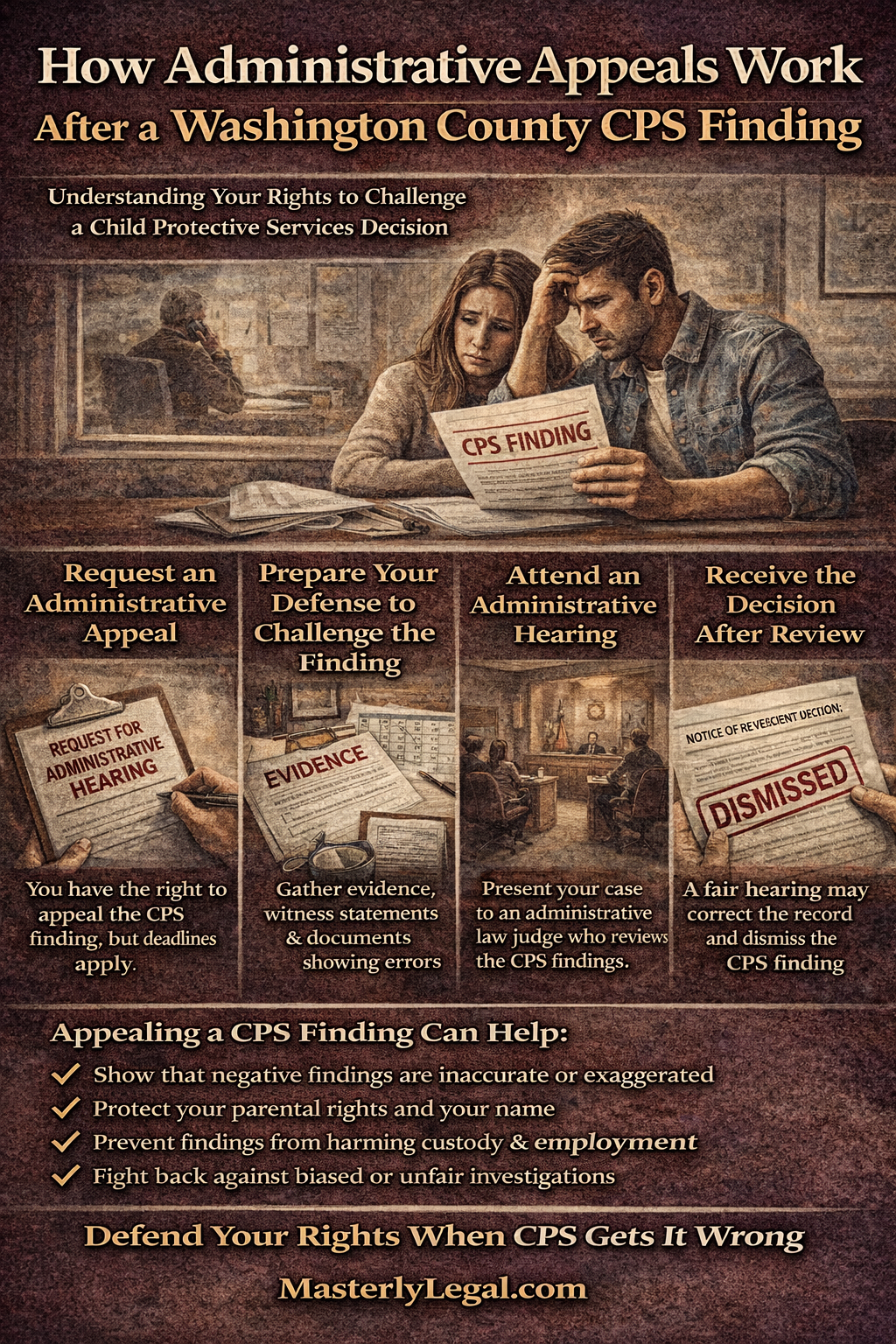
Evidence is the foundation of an appeal. Families may need to provide documentation that shows what actually occurred. This can include medical records, school records, witness statements, photos, texts, or other information that proves the finding is inaccurate. Evidence can also reveal whether CPS relied on incomplete or misleading reports.
In many cases, CPS claims it had sufficient evidence, but families believe the evidence was weak or misunderstood. An appeal creates the opportunity to challenge that. The goal is to show the finding should be changed, reduced, or removed. This can protect your record and help you move forward.
Why Witness Statements Matter More Than Parents Think
Many parents assume their own statement should be enough. But in CPS cases, independent witness statements can be powerful. This may include teachers, counselors, doctors, neighbors, or relatives who can confirm what the home environment is really like. If the allegation was based on conflict, a neutral witness can make a difference.
A family member statement can help clarify key facts, especially in custody-related disputes. However, it must be credible and consistent. A cps defense attorney can help families gather the right statements without creating contradictions. Strong witness support can shape appeal outcomes significantly.
How Domestic Violence Allegations Complicate CPS Findings
Domestic violence allegations often create immediate CPS concern, even when children were not physically harmed. CPS may claim the child’s safety was threatened by exposure to violence. Some families are surprised that this can lead to a neglect finding. Others feel the caseworker ignored important details, such as who was actually trying to protect the child.
These cases are emotionally complex and legally sensitive. They may involve protective orders, custody disputes, and criminal charges. An experienced attorney can help defend parents from unfair conclusions while focusing on ensuring child safety. Administrative appeals are especially important when the record could impact future custody decisions.
What Happens When a CPS Finding Affects Custody
Even outside juvenile dependency court, a CPS finding can influence custody decisions. Judges often review CPS records when deciding what is in the best interest of the child. A finding can make a parent look unsafe even if the situation was misunderstood. That can lead to supervised visitation or restricted parenting time.
Families often learn this after the fact, when they are already fighting uphill in court. Administrative appeals can help reduce that harm by correcting the record earlier. If you are facing custody issues, the appeal process is not optional—it can be essential. Protecting your record protects your relationship with your child.
How Supervised Visitation Can Become the Default Outcome
When CPS believes there are safety concerns, supervised visitation can become the default recommendation. Families often feel devastated because it changes daily life and creates financial and emotional burdens. It can also create a narrative that you are a dangerous parent. Even after the investigation ends, supervised visitation can linger through court orders.
Appeals can be used to challenge the basis for this recommendation. If supervised visitation is based on weak evidence or misunderstandings, an appeal can highlight those flaws. A cps defense attorney can help build the case for restoration of normal parenting time. Families deserve a fair process, not automatic penalties.
Why Court Intervention Isn’t the Only Risk
Many parents focus on avoiding court, but the administrative record can still harm them long-term. Even without court intervention, CPS findings can follow families into future child protective services cps encounters. It can also affect work opportunities depending on the field. The finding becomes a permanent shadow over your family life.
That is why administrative appeals are so important. They are about protecting your family’s future, not only avoiding a hearing. Once you understand how the system works, the urgency becomes clear. Appeals give families a real path forward.
The First Step: Requesting the Administrative Appeal
The appeal process usually begins with a formal request. This request may need to be filed within a specific timeframe after you receive notice of the finding. It may include identifying the finding you are challenging and explaining that you want review. Many families miss this step because they think the letter is just informational.
This is where legal representation becomes valuable immediately. A law firm can help you meet deadlines and avoid incorrect filings. The goal is to get your appeal accepted so you can fight the finding properly. Once the request is submitted, the process becomes more structured.
What “Administrative Review” Means in Practice
An administrative review is often an internal process where CPS or the agency evaluates whether its decision was supported. This may involve reviewing the case file, the evidence, and the investigator’s notes. In some systems, you may be allowed to provide new information. In others, the review is limited.
Families should not assume the review will be neutral. CPS may be reviewing its own work, which can create bias. That’s why a defense attorney can help frame your arguments clearly and force attention to contradictions. Compelling arguments often change outcomes when presented strategically.
What Happens at an Administrative Hearing
Some appeals include a hearing where evidence is discussed. This may not look like a traditional court trial, but it can still involve testimony, documents, and credibility analysis. The hearing may focus on whether CPS met the standard for its finding. It may also involve questioning about conduct, parenting decisions, and the child’s well-being.
Families often feel overwhelmed in hearings because it feels formal and intimidating. The stakes are high, and the outcome can impact parental rights. Having an attorney can make the difference between stumbling through the process and presenting a clear defense. In child welfare cases, preparation is everything.
Preparing for the Appeal Like Your Family Depends on It
Families should prepare as if the outcome will shape their future—because it often will. Preparation includes organizing evidence, creating timelines, and identifying inconsistencies in CPS reports. It also includes understanding what CPS believes happened versus what actually happened. Even small details can matter.
Preparation is not about attacking CPS workers personally. It is about challenging errors and showing the truth. An experienced attorney can help families prepare without creating contradictions. A proven track record often comes from disciplined preparation, not emotion.
What CPS Looks for When Deciding an Appeal
CPS often focuses on whether there was enough evidence to support its finding. They may review whether the report showed danger, whether neglect was present, or whether a child’s health was compromised. They may also evaluate whether the parent cooperated with services and whether safety plans were followed. In many cases, CPS believes the initial decision was correct unless proven otherwise.
This is why families must present evidence clearly. Appeals are not about “explaining feelings.” They are about demonstrating the finding was not supported by sufficient evidence. A cps defense attorney can help present the facts in a way that addresses the agency’s concerns directly.
Why “Sufficient Evidence” Is Often the Battle Line
Sufficient evidence does not mean perfect evidence. It often means enough information for CPS to justify its conclusion under administrative standards. However, many families feel CPS relied on assumptions, incomplete interviews, or biased sources. When that happens, sufficient evidence may not truly exist.
Appeals focus heavily on this point. If the case file is missing key information or contains contradictions, it may weaken the finding. The defense must highlight gaps clearly and respectfully. Strong appeals often succeed because they expose how thin the evidence really was.
When New Evidence Can Change the Outcome
Sometimes families gain access to evidence only after the finding is issued. This could include medical clarifications, school statements, or documentation that CPS did not review. New evidence can be powerful because it challenges the foundation of the finding. It can also show CPS misinterpreted the situation.
However, evidence must be organized and credible. Throwing in random paperwork can weaken your position. A law firm can help you choose the best evidence and present it effectively. This is where expertise matters most.
Why Families Should Avoid Common Appeal Mistakes
Many families approach appeals emotionally, which is understandable but risky. Some parents focus on anger rather than facts. Others provide inconsistent explanations, which CPS may interpret as dishonesty. Some families also miss deadlines or fail to submit required documents.
These mistakes can cost you the appeal before it truly begins. A defense attorney helps keep the process structured and professional. The goal is success, not venting frustration. Appeals require strategy, not improvisation.
How Foster Care Concerns Can Shape Appeal Urgency
Even when children were not removed, families may fear foster care placement if CPS reopens the case. A finding can be used later to justify removal in a future incident, even if unrelated. That fear is real and valid. It makes appeals an urgent step for long-term protection.
Families should not wait until removal is threatened. Protect your record now so it cannot be used against you later. Appeals help reduce future risk by correcting the official narrative. That matters deeply for protecting children.
The Role of Juvenile Dependency in CPS-Related Cases
In some situations, CPS matters intersect with juvenile dependency systems. These cases may involve court proceedings where the state seeks legal authority over the child. Even if your appeal is administrative, the outcome may affect what happens in court. Records can travel between systems.
Parents should understand that administrative findings can influence judicial decisions. A judge may view the CPS record as credible unless challenged. This is why a coordinated strategy is important. A cps defense attorney can help connect these moving parts.
Why the “Best Interest” Standard Affects Everything
The best interest standard guides many decisions involving children. CPS often claims its actions are meant to protect children and ensure safety. Courts and agencies frequently defer to this language. However, what CPS believes is “best” may not reflect reality or fairness.
Administrative appeals can help families demonstrate that a finding is not aligned with the child’s best interest. For example, an inaccurate finding can harm stability, relationships, and emotional security. Protecting the truth protects the child too. Appeals are about restoring fairness to the record.
What Parents Should Expect During the Appeal Timeline
Administrative appeals can take time. Families may wait weeks or months depending on the system. During that period, stress can build because the case feels unresolved. Parents may worry about future consequences, custody issues, or work impacts. This is why staying organized is essential.
Families should document everything during the appeal period. Keep copies of notices, communications, and any services completed. Consistency matters. The better your organization, the stronger your defense becomes.
How Counseling and Services Can Affect Appeals
Sometimes CPS recommends counseling or other services even after a finding is issued. Families may wonder if accepting services will help the appeal or make them look guilty. The answer depends on the facts and how it is framed. In some cases, services show commitment to safety and stability.
In other situations, unnecessary services can create confusion. That is why legal help is important before agreeing to everything. A defense attorney can guide whether services support your position or weaken it. The goal is protecting your parental rights, not accepting endless requirements.
Why Conduct During the Case Still Matters After the Finding
Even after a finding, CPS may still monitor behavior and responsiveness. Your conduct during the appeal period can influence perceptions. If you act aggressively or inconsistently, CPS may use that to justify continued concerns. If you act stable, respectful, and organized, it strengthens your credibility.
This is hard for families who feel overwhelmed. But your discipline now can protect your future. The appeal is not only about paperwork—it is about demonstrating stability. A structured approach supports better outcomes.
What If CPS Involvement Expands During the Appeal?
Some families fear CPS will reopen or expand the case while the appeal is pending. While not every case expands, it can happen if new reports arise. That is why families must remain cautious about household stability. It is also why protecting children’s safety remains important at every stage.
If CPS expands the case, your appeal strategy may need adjustment. Legal representation helps families navigate these shifts. A law firm can defend against escalation while continuing the appeal. The goal is to protect your child and your record simultaneously.
How a Defense Attorney Builds Compelling Arguments
A defense attorney builds compelling arguments by focusing on facts, timelines, and evidence. They look for contradictions in CPS documentation and gaps in investigating reports. They also evaluate whether CPS exceeded authority or failed to follow its own process. These points can become powerful in administrative review.
This approach requires legal knowledge and strategic discipline. Families should not rely on hope alone. A cps defense attorney creates a structured defense that meets the agency’s standards. Strong arguments often lead to changes or reversals.
Why Legal Representation Can Change the Outcome
Legal representation matters because the system is built to move fast and protect the agency’s decisions. Parents often feel outmatched because they are emotional and overwhelmed. A law firm provides structure, clarity, and strategic planning. It also helps avoid mistakes that weaken credibility.
At Masterly Legal Solutions, we focus on defending families with respect and purpose. We understand that families deserve to be heard and protected. Our job is to fight for fairness and prevent long-term damage. Appeals can be a turning point with the right support.
What to Know About “Orange County” and “Southern California” References
Some families searching online will see references to orange county and southern california systems for child protective services cases. Those systems can look similar in language, but every county and state may have different rules. The confusion is one reason families miss deadlines or misunderstand options. Online information can create false confidence.
Administrative appeals require local accuracy and careful handling. What applies in one county may not apply in Washington County. That is why tailored legal help matters. Your family deserves a defense strategy that fits your actual case.
Choosing the Right Law Firm for CPS Appeals
Not every attorney handles CPS cases effectively. Families need a law firm that understands child welfare cases, administrative appeals, and court risks. They need a team with experience and a proven track record. They also need communication that feels supportive and clear.
A strong attorney-client relationship starts with listening. Your story matters, and your family’s future matters. You should feel respected, not judged. When the stakes involve children and parental rights, the right choice is critical.
Why Initial Consultation Can Provide Immediate Relief
An initial consultation often helps families feel grounded again. It allows you to explain what happened and hear what your options truly are. Instead of guessing, you receive structured advice. That clarity can reduce stress and stop panic-driven decisions.
At Masterly Legal Solutions, we believe families deserve answers without shame. The earlier you seek consultation, the more options you may have. Even if you feel overwhelmed, there is a process and there is a path forward. You don’t have to handle this alone.
What Families Should Do Right Now After a CPS Finding
If you received a finding, the most important step is not to ignore it. You should gather documents, review the notice carefully, and take deadlines seriously. Keep a written timeline of events, including dates, names, and what was said. Save any messages or documents related to the case.
You should also avoid discussing the case casually with people who may misunderstand it. Keep communication focused and consistent. If you have safety concerns, address them responsibly and document improvements. Protecting your record starts with your actions today.
How We Defend Families at Masterly Legal Solutions
Masterly Legal Solutions is committed to defending families facing CPS findings and child protective services decisions. We focus on protecting parental rights, ensuring child safety, and challenging findings that lack sufficient evidence. We understand how quickly a CPS record can affect custody, employment, and stability. Our work is built on knowledge, expertise, and serious commitment to each family we represent.
We help clients prepare for appeals, organize evidence, and present compelling arguments. We also help families understand the process and avoid common mistakes. Our goal is simple: protect your family’s future and fight for a fair outcome. When families feel powerless, we bring structure and strategy.
Contact Masterly Legal Solutions for a Free Consultation
If you are facing a CPS finding in Washington County and feel like the system decided your case without hearing the whole truth, you may have an appeal option. The administrative appeal process can be confusing, time-sensitive, and emotionally exhausting, especially when child protective services and protective services records are at stake. A cps defense attorney can help you understand your legal rights, challenge weak evidence, and defend your name before a finding damages your custody, family life, or future opportunities. Call Masterly Legal Solutions at (972) 236-5051 to schedule your free consultation, and let our team explain how we can assist with cps defense and legal representation when it matters most.
This article is for educational purposes only and does not constitute legal advice. Reading this content or contacting Masterly Legal Solutions does not create an attorney-client relationship. If you require legal representation regarding education-related matters, consider consulting our education lawyers. Every case is different, and outcomes depend on specific facts, evidence, and applicable law.


Teacher Rights When Assaulted by a Special Needs Student: Safety, Reporting and Investigation Issues


Looking for Legal & Business Solutions? Contact Us Now
Fill in the form or call us to set up a meeting