Reporting Misconduct at School: How to Protect Yourself Before You Speak Up
Why Speaking Up Feels Risky for School Employees
Walking into a situation where something feels wrong at your school can create a heavy sense of responsibility. Many employees know when something crosses a line, whether it involves workplace discrimination, sexual harassment, or other illegal acts. Still, fear often takes over before action is taken. These fears are not unfounded, especially when workplace retaliation is a real concern in many employment cases.
For many employees, the hesitation comes from legitimate fears about what might happen next. Concerns about job security, reputation, and even future employment opportunities can make someone pause. Understanding how to protect yourself before you report misconduct is essential to preserving your workplace rights and strengthening any future legal claim.
Understanding What Counts as Protected Activity
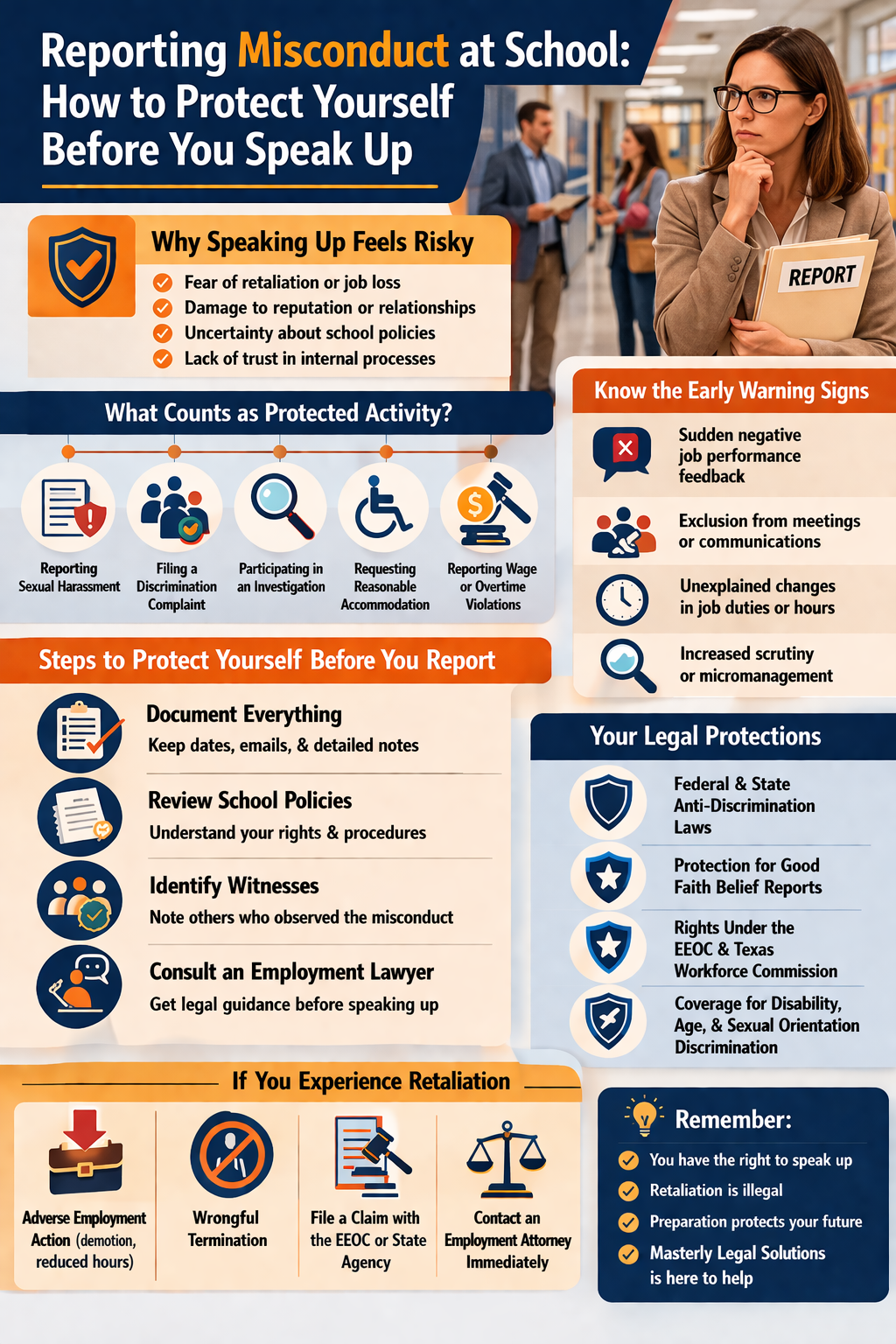
Before taking any steps, it is important to understand what qualifies as protected activity under employment law. A protected activity includes actions like reporting misconduct, filing complaints, or participating in investigations involving employer wrongdoing and retaliation claims.
Common Examples of Protected Activity
- Reporting sexual harassment or workplace discrimination
- Filing discrimination claims with a government agency
- Participating in an internal investigation
- Requesting reasonable accommodation for a disability
- Reporting unpaid overtime or minimum wage violations
When an employee engages in these actions with a good faith belief that misconduct occurred, federal laws and state law protections apply.
The Reality of Workplace Retaliation in Schools
Workplace retaliation often begins in subtle ways. An employer retaliated against an employee may not do so openly at first. Instead, retaliatory acts may include exclusion, changes in job duties, or increased scrutiny of job performance, especially in school and education workplace settings.
Over time, these actions can escalate into adverse employment action, including wrongful termination. This is why preparation before reporting misconduct is not about hiding behavior—it is about protecting yourself under labor and employment law.
Recognizing Early Warning Signs Before You Report
Many employees notice changes even before they officially file a complaint. These signs may indicate a hostile work environment or the early stages of employer retaliation.
Subtle Warning Signs to Watch
- Sudden negative feedback on job performance
- Being left out of meetings or communications
- A shift in workplace policies affecting only certain employees
- A manager questioning your credibility without reason
Recognizing these patterns can help you act quickly and document what is happening.
Why Documentation Is Your Strongest Protection
One of the most effective ways to protect yourself is to create a clear record of events. Documentation can support retaliation claims and strengthen your position if legal action becomes necessary, particularly when working with employment and education law attorneys.
What You Should Document
- Dates and details of incidents
- Emails or written communication with supervisors or human resources
- Changes in job duties or hours
- Witness names and interactions
Even small details can become important evidence in complex litigation.
Understanding the Role of Human Resources
Many employees believe human resources exists solely to protect them. While HR can be helpful, their primary role is to protect the employer and ensure compliance with workplace policies, often with support from HR consulting and training services.
Before reporting misconduct internally, consider how your complaint will be handled. In some cases, an employee’s participation in an investigation may lead to increased scrutiny or unintended consequences.
How Federal and State Laws Protect You
Federal and state laws provide important protections for employees who report misconduct. Laws such as the Civil Rights Act, Disabilities Act, and Pregnancy Discrimination Act are designed to prevent unlawful discrimination and unlawful retaliation, and they are often reflected in carefully drafted employee handbooks and workplace policies.
These laws make it illegal for an employer to take adverse employment action against an employee who engages in protected activity. They also cover a wide range of issues, including discrimination based on age, sexual orientation, and medical condition.
The Importance of a Good Faith Belief
When reporting misconduct, you do not need to prove that the violation occurred. Instead, you must have a good faith belief that the conduct you are reporting is unlawful.
This standard protects employees who speak up honestly, even if the investigation does not ultimately confirm the misconduct. Acting in good faith is a key factor in building a viable retaliation claim.
Preparing Before Filing a Complaint
Taking time to prepare before filing can make a significant difference. Acting too quickly without a strategy can leave you vulnerable.
Steps to Take Before You Speak Up
- Gather documentation and evidence
- Review workplace policies and procedures
- Identify witnesses or other employees who may support your account
- Consider speaking with an employment lawyer
Preparation helps you maintain control of the situation and reduces the risk of employer retaliation.
When Workplace Discrimination Is Involved
Workplace discrimination can take many forms, including discrimination based on age, disability, or sexual orientation. In schools, these issues may also intersect with workplace retaliation, especially within colleges, universities, and higher education institutions.
For example, a disabled employee requesting reasonable accommodation may later face changes in job duties or denial of opportunities. These actions can form the basis of both discrimination claims and retaliation claims.
Understanding Adverse Employment Action
An adverse employment action is any action that would discourage a reasonable employee from reporting misconduct. This includes termination, demotion, reduced hours, or denial of promotion.
Even less obvious actions, such as adjusting job duties or limiting access to resources, may qualify. The key question is whether the action has a negative impact on the employee.
Filing with the Equal Employment Opportunity Commission
A federal organization called the Equal Employment Opportunity Commission looks into allegations of retaliation and discrimination. Filing with the EEOC is often a necessary step before pursuing legal action.
The EEOC reviews complaints, gathers evidence, and determines whether there is a violation of federal laws. This process can help establish a strong foundation for a legal claim.
The Role of the Texas Workforce Commission
For Texas employees, the Texas Workforce Commission also plays a role in handling employment disputes. This state-level government agency works alongside federal agencies to address workplace issues.
Filing with the Texas Workforce Commission may be required depending on the nature of the claim. Understanding these procedures is essential when pursuing employment claims.
When Employer Retaliation Crosses the Line
There is a clear line between management decisions and unlawful retaliation. When an employer retaliated against an employee for engaging in protected activity, it may violate anti discrimination laws.
Examples of unlawful retaliation include being fired, denied promotion, or reassigned to a less favorable role after reporting misconduct. These actions may support a viable retaliation claim.
Protecting Yourself During an Investigation
Once a complaint is filed, the investigation process begins. During this time, it is important to remain professional and continue performing your job duties.
At the same time, stay alert for retaliatory acts. Document any changes and maintain communication records. Your employee’s participation in the investigation should not result in punishment.
How Workplace Policies Can Impact Your Case
Workplace policies often outline procedures for reporting misconduct. Following these policies can strengthen your position and show that you acted appropriately, particularly when your employer relies on ongoing general counsel and compliance services.
However, if workplace policies are not followed by the employer, this may further support your legal claim.
The Risk of Wrongful Termination
One of the most serious forms of workplace retaliation is wrongful termination. If an employee waits to act until after termination, it may be more difficult to gather evidence.
Taking steps early can help protect your employment and preserve your rights.
Special Considerations for Medical Leave and Accommodation
Employees seeking leave under the Medical Leave Act or requesting personal medical leave may face additional risks. A medical condition or request for reasonable accommodation should not result in retaliation.
If a disabled employee experiences changes in job duties or reduced hours after requesting accommodation, this may indicate unlawful discrimination.
Union Organizing and Protected Activity
Union organizing is also considered protected activity under labor laws. Employees involved in organizing efforts are protected from employer retaliation.
Any adverse employment action taken in response to union organizing efforts may violate federal laws.
Why Legal Guidance Matters Before You Act
Speaking with an employment lawyer before reporting misconduct can provide clarity and protection. An experienced attorney can help you understand your rights and develop a strategy.
At Masterly Legal Solutions, our board certified attorneys focus on labor and employment law and represent workers facing workplace retaliation and discrimination.
Choosing the Right Legal Team
Not all attorneys have the same legal specialization. When selecting a law firm, look for professionals with experience in employment law and complex litigation.
Board certified attorneys bring an added level of expertise and credibility. This can make a difference when handling sensitive employment cases.
How Dallas Employment Lawyers Support Workers
Dallas employment lawyers play a critical role in protecting workplace rights. They help clients navigate filing procedures, gather evidence, and pursue legal action when necessary.
Whether you are dealing with workplace discrimination or retaliation claims, having experienced dallas employment attorneys on your side can provide peace of mind.
Building a Strong Legal Claim
A strong legal claim includes clear evidence, documentation, and a connection between the protected activity and the adverse action. This is essential for both discrimination claims and retaliation claims.
Working with a workplace retaliation attorney can help ensure your claim is properly developed and presented.
The Long-Term Impact of Workplace Retaliation
Workplace retaliation does not just affect one employee. It can impact many employees and damage overall morale within the organization.
Addressing these issues helps create a safer environment and reinforces the importance of workplace rights.
How Masterly Legal Solutions Represents Workers
At Masterly Legal Solutions, we represent workers who have faced unlawful retaliation, workplace discrimination, and employer misconduct. Our law firm is committed to protecting employees and holding employers accountable.
We understand the challenges faced by dallas workers and provide guidance tailored to each unique situation.
Taking Control Before You Speak Up
Preparation is not about fear—it is about empowerment. By understanding your rights, documenting events, and seeking guidance, you can take control of your situation.
You deserve to work in an environment free from harassment, discrimination, and retaliation. Taking the right steps early can protect your future.
How Employment Discrimination Laws Apply to School Reporting Situations
Employment discrimination laws are designed to protect workers from unfair treatment based on protected characteristics such as age, disability, or other legally recognized factors. Under the employment act and related federal laws, employers are prohibited from engaging in unlawful discrimination or retaliation when an employee speaks up. Most anti discrimination laws, including the Civil Rights Act and protections under the Disabilities Act, ensure that full time employees and other workers are treated fairly, even when they raise concerns about misconduct. Whether the issue involves age discrimination, workplace bias, or an employer’s discrimination practices, these laws create a framework that holds employers accountable.
In many cases, problems arise when an employer participating in an investigation begins treating the reporting employee differently. This can be especially concerning in environments like schools or medical care institutions, where professional standards are high and reputations matter. Agencies such as the Texas Board and other regulatory bodies may become involved when violations occur, particularly in situations where workers believe they were underpaid or affected by practices similar to united states underpay concerns. Understanding these protections can help employees recognize when their rights are being violated and take appropriate action.
Speak With a Retaliation Lawyer Dallas Professionals Trust
If you are thinking about reporting misconduct or have already experienced workplace retaliation, now is the time to protect yourself. The decisions you make early can shape the outcome of your case, and contacting our Dallas–Fort Worth employment law offices is an important first step.
At Masterly Legal Solutions, our team of board certified professionals and experienced dallas employment lawyers is here to guide you. We provide personalized support, help evaluate your situation, and explain your options clearly.
Call (972) 236-5051 for a free initial consultation. Our team is ready to help you understand your rights, determine whether you have a viable retaliation claim, and take the next steps with confidence.
Disclaimer: This article is for informational purposes only and does not constitute legal advice. Every situation is different, and you should consult with a qualified employment lawyer regarding your specific circumstances.


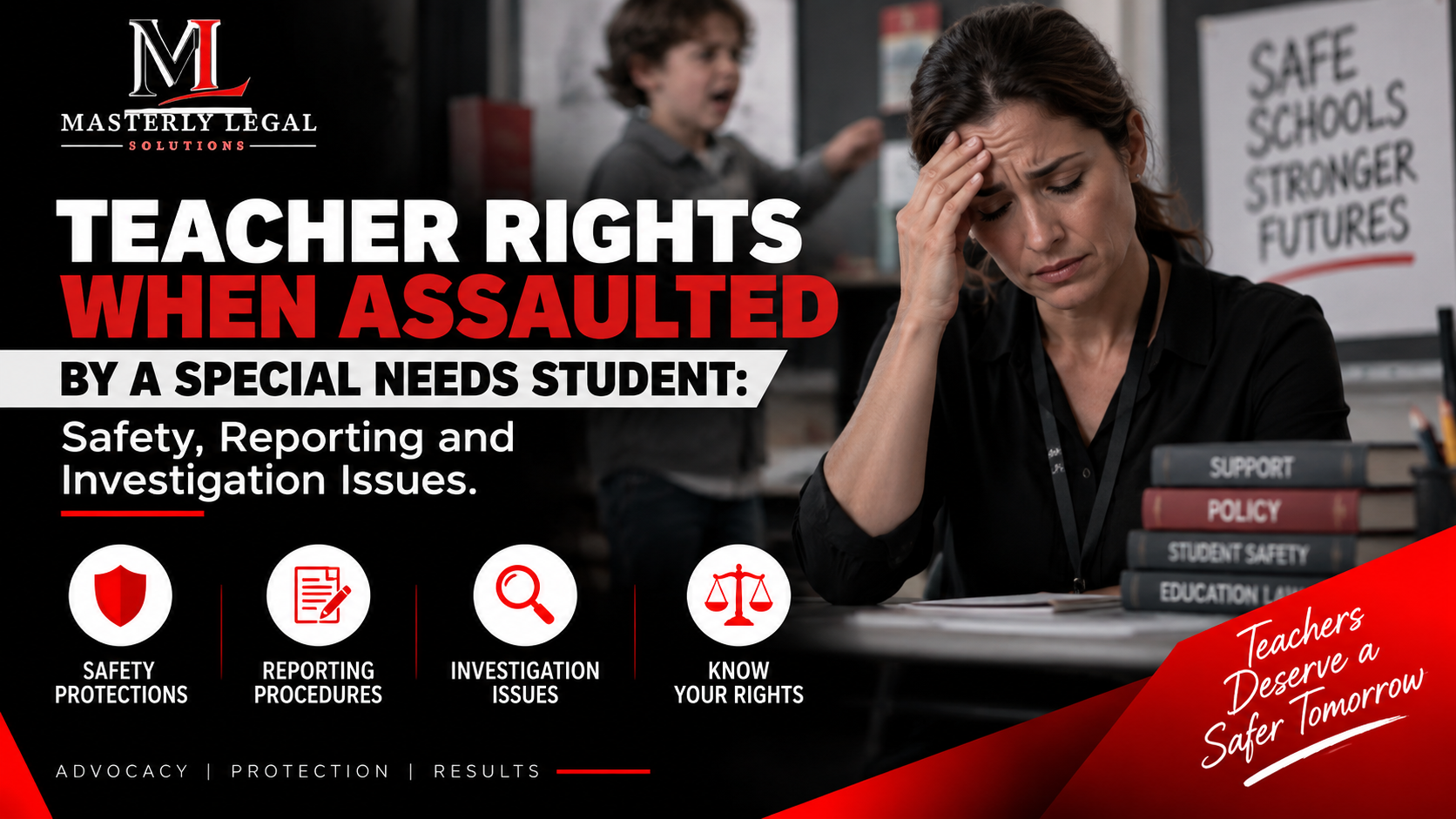
Teacher Rights When Assaulted by a Special Needs Student: Safety, Reporting and Investigation Issues


Looking for Legal & Business Solutions? Contact Us Now
Fill in the form or call us to set up a meeting