

Signs You’re Being Retaliated Against During a School Investigation (And What to Do Immediately)
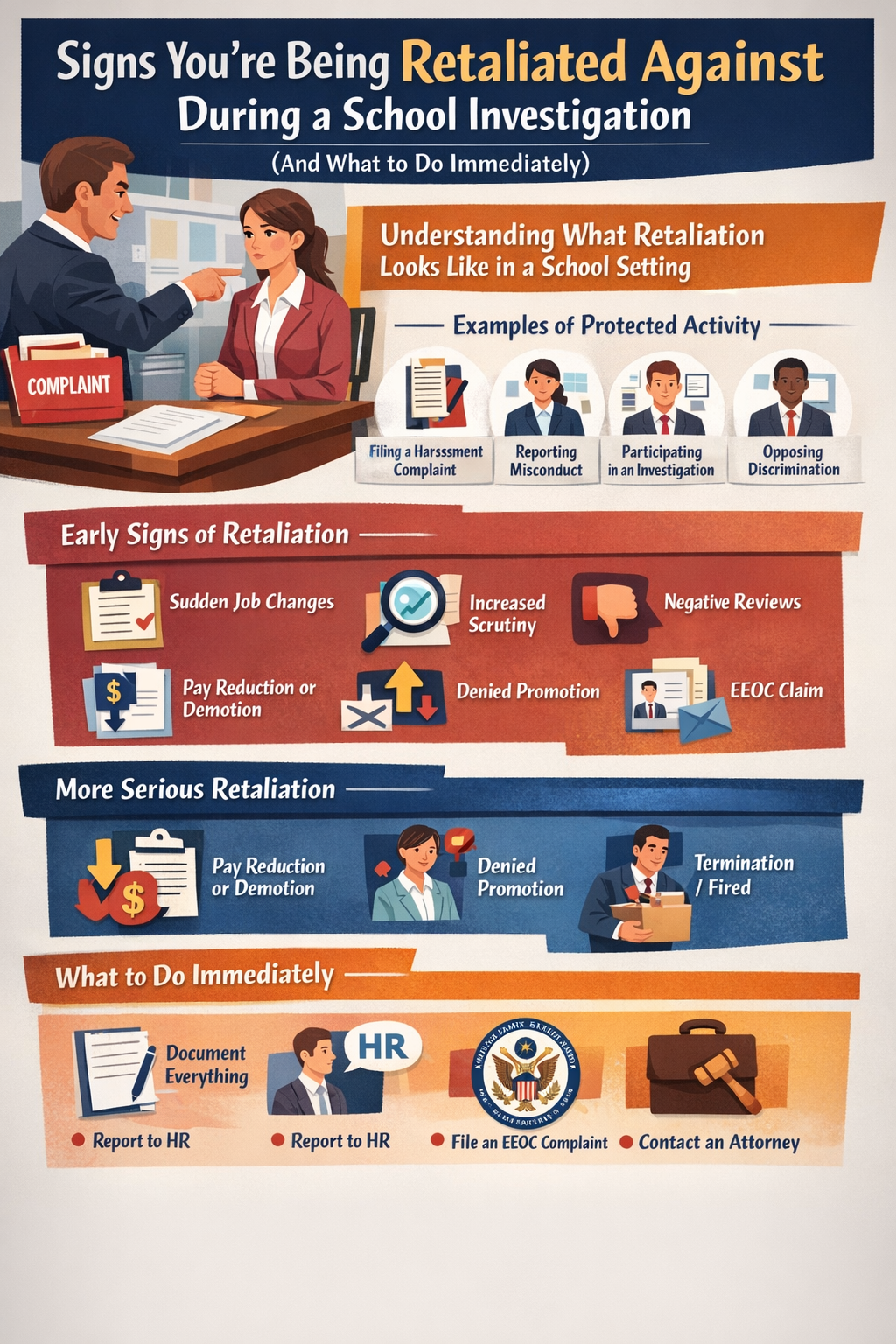
Understanding What Retaliation Looks Like in a School Setting
School investigations can feel overwhelming, especially when your career, reputation, and livelihood are on the line. Whether you are a teacher, coach, staff member, or administrator, being involved in an internal investigation can create stress and uncertainty. For many educators, working with an education lawyer who understands school investigations can be an important step in protecting their rights. What many workers do not realize is that retaliation can begin quietly, sometimes even before the investigation is complete.
When an employer treats a worker unfairly because they participated in a protected activity, this is known as retaliation. This could include filing a complaint, reporting harassment, or participating in an investigation. Speaking with a retaliation lawyer focused on workplace and school protections can help you understand whether what you are experiencing is unlawful. While many assume retaliation only happens after a lawsuit, it often starts much earlier, especially in sensitive school environments.
What Counts as Protected Activity in Schools
A protected activity refers to actions that are legally safeguarded under federal and state laws. These actions are meant to protect workers from punishment when they raise legitimate concerns.
Common Examples of Protected Activity
- Filing a complaint about discrimination or harassment
- Reporting sexual advances or inappropriate conduct
- Participating as a witness in an internal investigation
- Opposing discrimination based on national origin or disability
- Reporting wage issues such as minimum wage or unpaid wages
- Filing a claim with the Equal Employment Opportunity Commission (EEOC)
When an employee is engaging in these activities, the law is clear—employers cannot retaliate.
Why Retaliation Happens During School Investigations
Even though laws prohibit retaliation, it still happens frequently. Schools are complex environments, and administrators or managers may feel pressure to protect the institution rather than the individual employee.
In some cases, a supervisor or manager may see a complaint as a threat. This can lead to retaliatory conduct aimed at discouraging further reporting or punishing the employee who spoke up. Unfortunately, this creates a chilling effect on overall employee morale and can harm the entire workplace.
Early Signs That Retaliation Begins
Recognizing the signs early is critical. Retaliation does not always come in obvious forms like termination. Instead, it often starts with subtle changes.
Sudden Changes in Job Responsibilities
If you are reassigned to a less desirable position without explanation, this could be an adverse action. For example, a teacher who reported harassment may suddenly be moved to a different department or given duties outside their normal role.
Increased Scrutiny from Supervisors
A manager or supervisor may begin closely monitoring your work, documenting minor mistakes, or subjecting you to excessive scrutiny. While oversight is normal, a sudden increase after a complaint is a red flag.
Negative Performance Reviews
If your evaluations shift from positive to negative without clear justification, it may indicate retaliation. A reasonable employee would question such a drastic change, especially if it follows a protected activity.
More Obvious Forms of Retaliation
As retaliation escalates, the actions taken by the employer often become more direct.
Reduction in Pay or Hours
Cutting your pay or reducing your hours without cause can be considered an adverse action. This type of conduct has a clear negative impact on your financial stability and may signal unlawful retaliation.
Denial of Promotion Opportunities
If you are suddenly passed over for a promotion or removed from a desirable position, it may be linked to your involvement in a complaint or investigation.
Termination or Being Fired
Being fired after filing a complaint or participating in an investigation is one of the most serious forms of retaliation. While employers may claim other reasons, timing often tells the real story.
Subtle Workplace Behaviors That Signal Retaliation
Not all retaliation is formal. Sometimes it shows up in day-to-day interactions.
Isolation from Co Workers
You may notice co workers being instructed not to communicate with you or excluding you from meetings. This can affect overall employee morale and create a hostile workplace.
Removal from Training or Opportunities
Being excluded from training, professional development, or leadership roles can be a sign of retaliatory conduct.
Increased Workload Without Support
Some employees are given excessive responsibilities without the proper support or resources. This can be an intentional tactic to create stress or force resignation.
Retaliation and Employment Discrimination Often Overlap
Retaliation is closely tied to employment discrimination. In many cases, employees who report discrimination based on disability, national origin, or other protected categories face backlash, and an experienced retaliation lawyer for workplace disputes can help evaluate whether your situation crosses the legal line.
For example, an employee who reports sexual advances by a supervisor may later be discriminated against in scheduling, pay, or job assignments. This overlap can strengthen a discrimination claim and may lead to further legal action.
Understanding Adverse Action in Legal Terms
An adverse action is any step taken by an employer that would discourage a reasonable employee from engaging in protected activity.
Examples of Adverse Action
- Demotion to a less desirable position
- Reduction in wages or benefits
- Increased disciplinary actions
- Negative job assignments
- Termination
Courts often look at whether the action would deter someone from reporting misconduct. If the answer is yes, it may qualify as retaliation.
The Role of Federal Law in Protecting Workers
Federal law provides strong protections for employees facing retaliation. Agencies like the EEOC enforce laws that prohibit retaliation and protect workers from unlawful treatment.
These laws apply to schools, school districts, and other educational institutions. Employers are required to maintain a workplace free from harassment, discrimination, and retaliation, and many turn to a Texas law firm experienced in education and employment law to ensure they are meeting these obligations.
When Retaliation Occurs After Filing a Complaint
Timing matters. If retaliation occurs shortly after filing a complaint, it may support your claim. For example, if an employee files a report and is fired within weeks, this timing can be used as evidence.
Courts often examine whether there is a connection between the protected activity and the adverse action. This is known as causation.
How Retaliation Affects Employee Morale
Retaliation does not just harm the individual—it affects the entire workplace. When workers see a colleague being punished for speaking up, it discourages others from reporting issues.
This leads to a decline in overall employee morale and creates an environment where misconduct can continue unchecked.
What to Do Immediately If You Suspect Retaliation
Taking the right steps early can make a significant difference in protecting your rights.
Document Everything
Keep detailed records of any changes in your job, including:
- Emails from your supervisor or manager
- Changes in hours, pay, or responsibilities
- Notes about conversations and meetings
This documentation can serve as critical evidence in a claim.
Continue Performing Your Job Duties
Even if you feel targeted, continue to meet your job expectations. This helps protect your credibility and prevents the employer from using performance as a defense.
Report the Retaliation Internally
If possible, report the retaliation to your employer’s human resources department. This creates a record and shows that you attempted to resolve the issue.
Filing a Claim with the EEOC
If internal reporting does not resolve the issue, you may need to file a claim with the EEOC.
Steps in the Filing Process
- Submit a formal complaint outlining the retaliation
- Provide supporting evidence
- Participate in the investigation process
The EEOC may investigate the claim and determine whether there is a violation of federal law.
How a School Employer May Try to Justify Their Actions
Employers often attempt to justify adverse actions by citing performance issues or business needs. However, these explanations must be legitimate and not a cover for retaliation.
For example, claiming poor performance immediately after a complaint may raise concerns if there is no prior record of issues.
The Importance of Evidence in Retaliation Claims
Evidence plays a crucial role in proving retaliation. Working with a firm that handles internal investigations and employment disputes for organizations can help ensure that this evidence is gathered and preserved correctly. This may include:
- Emails or written communications
- Witness statements
- Performance reviews
- Documentation of complaints and reports
Even small details can help build a strong case.
Common Mistakes Employees Make
Many employees unintentionally weaken their claims by making avoidable mistakes.
Failing to Report Retaliation
Not reporting retaliation can make it harder to prove your case later.
Ignoring Documentation
Without proper documentation, it becomes difficult to show patterns of retaliatory conduct.
Waiting Too Long to Take Action
There are deadlines for filing claims. Delaying action can limit your legal options.
The Legal Consequences for Employers
Employers who engage in retaliation may face serious consequences, including:
- Lawsuits filed by employees
- Investigations by federal agencies
- Financial penalties
- Damage to reputation
In some cases, the Department of Justice may become involved if there are widespread violations.
Retaliation in Cases Involving Harassment
Harassment claims often lead to retaliation. Employees who report sexual advances or inappropriate behavior are particularly vulnerable.
Employers are required to protect these employees, not punish them. Failure to do so can result in additional legal liability.
How Schools Can Prevent Retaliation
Schools must take proactive steps to prevent retaliation, including: consulting with higher education law counsel on compliance and investigations where appropriate, and:
- Providing proper training for administrators and managers
- Establishing clear reporting procedures
- Enforcing policies that prohibit retaliation
These steps help create a safer and more transparent workplace, and partnering with HR consulting and training services focused on compliance can further reduce the risk of retaliation claims.
What Makes a Strong Retaliation Claim
A strong retaliation claim typically includes:
- Proof of protected activity
- Evidence of adverse action
- A clear connection between the two
Working with an experienced employment attorney can help strengthen your case.
How Masterly Legal Solutions Can Help Protect You
At Masterly Legal Solutions, we understand how stressful it can be to face retaliation during a school investigation. Our team works closely with employees, teachers, and school staff to protect their rights.
We help clients navigate the complexities of employment laws, gather evidence, and build strong claims. As an education law attorney for teachers and administrators, our firm understands how school policies and state regulations interact. Whether you are dealing with harassment, discrimination, or retaliation, we are here to support you every step of the way.
Taking Control of Your Situation
You do not have to face retaliation alone. Understanding your rights and taking immediate action can help you protect your career and your future, and guidance from an education law attorney who represents teachers in investigations can be critical during this time.
If you believe your employer has retaliated against you, it is important to act quickly. The sooner you address the issue, the stronger your position will be, especially when you work with a Texas law firm dedicated to protecting educators’ careers.
Recognizing Other Type of Retaliation That May Be Overlooked
Not all retaliation is obvious, and many employees experience another type of retaliatory behavior that can be harder to identify at first. This other type of retaliation may include being excluded from meetings, reassigned without explanation, or quietly denied opportunities that were previously available. While these actions may seem minor on their own, they can signal a pattern of conduct intended to punish an employee for speaking up. Understanding these less visible behaviors is important, as they can still have a serious impact on your career and may support a broader retaliation claim.
How the Equal Employment Opportunity Commission Protects You From Retaliation
The Equal Employment Opportunity Commission (EEOC) plays a critical role in enforcing laws that protect workers from retaliation and unlawful treatment in the workplace. If you file a discrimination claim or participate in an investigation, federal laws clearly prohibit retaliation by your employer. This means your employer cannot take adverse action against you simply because you spoke up about discrimination, harassment, or other workplace concerns. The EEOC investigates claims, reviews evidence, and helps determine whether your rights have been violated, giving employees a path forward when internal reporting fails.
When Retaliation at Work Becomes a Serious Legal Concern
Retaliation at work can quickly escalate from subtle workplace tension into a possible violation of federal and labor laws. Even if you are the only employee who has stepped forward, your rights still matter, and the law is designed to protect individuals who have exercised their rights. This includes not only filing a complaint but also participating in an investigation or engaging in other related protected activity, such as supporting a co worker or reporting misconduct. In some situations, an employee may be accused of wrongdoing as a way to shift blame or justify adverse treatment, which can raise serious concerns about illegal conduct. Whether the retaliation involves discipline, isolation, or even threats of involving police, any action taken against you after engaging in a related protected activity or another type of protected behavior should be carefully evaluated to determine if your employer has crossed the line.
Speak With Our Team About Your Situation
If something feels off in your workplace after you’ve spoken up, trust your instincts. Retaliation can escalate quickly, and early guidance can make all the difference in protecting your job, your reputation, and your peace of mind.
At Masterly Legal Solutions, we take the time to listen, evaluate your situation, and explain your options clearly. Whether you are dealing with subtle retaliation or more serious actions like being fired or demoted, our team is ready to help you move forward with confidence.
Contact us at (972) 236-5051 for a free consultation. We are here to answer your questions, help you understand your rights, and take the next steps toward protecting your career.
Disclaimer: This article is for informational purposes only and does not constitute legal advice. Every situation is different, and you should consult with a qualified attorney regarding your specific circumstances.


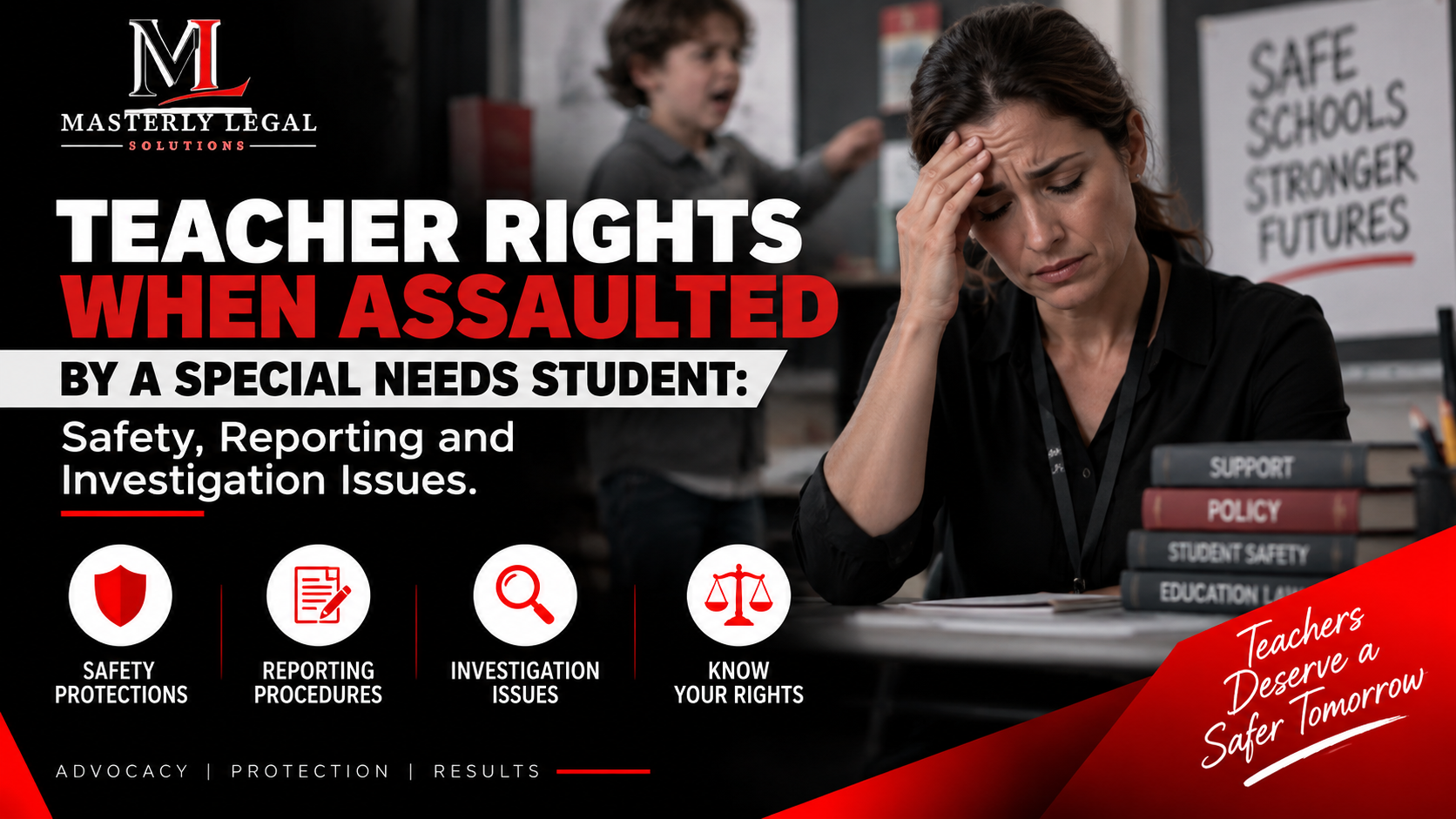
Teacher Rights When Assaulted by a Special Needs Student: Safety, Reporting and Investigation Issues


Looking for Legal & Business Solutions? Contact Us Now
Fill in the form or call us to set up a meeting





