

Administrative CPS Defense Strategies That Protect Families Early
When CPS shows up at your door, life can change in minutes. Parents often describe the first contact as a blur—someone introduces themselves, asks to come into the home, and starts talking about “reports,” “safety,” and “next steps.” Even if you believe the claims are exaggerated or completely false, the stress is real because what happens early can shape the entire case.
This article is worth reading because the administrative side of child protective services moves fast, and families who wait too long often lose valuable options. Early decisions—what you say in the first interview, what you sign, and what you provide—can affect whether CPS escalates to court, pushes for removal, or insists on ongoing services. Administrative defense is not about arguing loudly; it’s about protecting your child, preserving evidence, and making smart moves that keep your family stable while the investigation unfolds.
At Masterly Legal Solutions, we help parents and families respond early and strategically. If you’re looking for a cps defense attorney who understands the system, has the knowledge to identify weak points, and has the expertise to defend your rights under pressure, we’re here to help. We also support clients facing workplace retaliation claims and other employment law issues.
Outline: Early Administrative CPS Defense Strategies That Protect Families
Below is a clear outline of the strategies we will cover. Many of these steps apply before the first court hearing even happens, which is exactly why they are so powerful.
- CPS and child protective services: what “administrative” really means
- CPS investigation: what happens in the first 72 hours
- How to handle the first interview without creating new risk
- What to do when allegations arise and reports are filed
- Protective services and voluntary services: knowing the difference
- Safety plans, security concerns, and keeping your home stable
- Evidence, review, and validity: building your defense record early
- Supervised visitation and custody impacts: preventing long-term restrictions
- When court becomes inevitable and what to present to a judge
- How to protect the child’s health, best interest, and family stability
CPS and Child Protective Services: What “Administrative” Really Means
The administrative part of child protective services is everything CPS does before a judge gets involved. This includes the initial contact, the preliminary investigation, the notes written by the worker, and the decisions about whether the child can remain safely at home. In these early stages, CPS has broad authority to gather information, but parents still have rights and options.
When people hear “administrative,” they sometimes assume it is informal or not serious. In reality, administrative decisions can lead directly to major outcomes, including a push for ongoing services, restrictions on custody, or even removal. The stronger your early record is, the better position you are in if CPS later tries to escalate.
This is why administrative defense is imperative: it can prevent the case from becoming a crisis.
CPS Investigation: What Happens in the First 72 Hours
A cps investigation often starts with a report that was filed by a school, medical provider, neighbor, or a family member. CPS may say they are responding to safety concerns, suspected neglect, or child abuse allegations. Some parents are told CPS is simply doing a “check,” but the process can move quickly.
During the first 72 hours, CPS may seek to interview the parents, speak with the child, and evaluate the home environment. They may also request documents, ask for names of relatives, and look for signs the child is abused or exposed to danger. If CPS believes there is immediate risk, they may take fast action, including seeking emergency involvement from court.
Early strategy matters because the first notes often influence everything that follows.
Why Early CPS Notes Can Lead a Case in One Direction
CPS workers document what they see and what they think it means. If a worker writes that a parent was “uncooperative,” that note can become the lens through which later decisions are made. Even if the worker misunderstood the situation, the record may still be used as “support” for restrictions.
That is why defense begins with calm communication and smart documentation. Parents do not need to panic, but they should treat early interactions like they matter, because they do.
How to Handle the First Interview Without Creating New Risk
The first interview is often where the most damaging mistakes happen. Parents are emotional, confused, and trying to prove they are good parents. Meanwhile, CPS is assessing whether the story sounds consistent and whether the home environment supports the child’s safety.
A smart approach is to be respectful and clear without overexplaining. Do not guess, do not exaggerate, and do not fill silence with assumptions. CPS will later use statements to determine whether the allegations have “validity,” so precision matters.
If you feel overwhelmed, it can be wise to pause and request legal guidance before providing detailed narratives.
When You Should Ask to Speak With an Attorney
Some parents hesitate because they worry asking for an attorney makes them look guilty. In reality, asking for counsel can protect families from misunderstandings. An experienced attorney can help you respond appropriately, gather evidence, and avoid mistakes that lead to escalation.
In serious cases, early counsel can be the difference between stability and court involvement. If CPS is discussing removal, safety plans, or a shift toward formal action, it’s time to consider legal support immediately.
What to Do When Allegations Arise and Reports Are Filed
When allegations arise, CPS often acts like the report is credible until proven otherwise. This is especially true with claims involving child abuse, exploitation, or endangerment. Many cases also involve alleged neglect, which can be interpreted broadly.
You should assume CPS will document your response, your home conditions, and your willingness to cooperate. Parents should begin preserving records right away, including school messages, medical notes, and communications relevant to the child’s care. Keep a simple timeline and track who said what and when, because these details can matter later.
If the allegations are false, your defense starts by organizing facts—not by arguing emotionally.
Understanding “Accusations” Versus Proof
An accusation is not the same as evidence. But in CPS cases, accusations can still influence outcomes if parents do not respond carefully. CPS workers may treat certain allegations as high risk, especially if the report claims the child was abused or exposed to serious danger.
A defense strategy focuses on evidence, consistency, and stability. Your goal is to show CPS that the home is safe and the child is cared for, even while the investigation continues.
Protective Services and Voluntary Services: Knowing the Difference
CPS often recommends protective services and may offer a list of services such as parenting classes, counseling, or home-based support. Some families welcome help, while others feel the services imply guilt. The key is understanding whether a recommendation is truly voluntary or whether it is being used as leverage.
Administrative defense includes evaluating what services are reasonable, what services create unnecessary risk, and what services may later be used against you. If you agree to a service plan, document what you were told and what you completed. If you refuse, do so respectfully and with a clear explanation.
A strategic approach prevents services from becoming a trap.
How Service Agreements Can Lead to Court If Handled Poorly
Sometimes CPS frames a service agreement as the only way to avoid court. Parents feel pressured and sign quickly. Later, CPS may claim the parents failed to complete the plan, and the case escalates.
This is why reviewing service language matters. A defense plan should consider whether services are being used for support or as a tool to build a future petition. The earlier you understand the purpose, the more control you keep.
Safety Plans, Security Concerns, and Keeping Your Home Stable
Safety plans often sound simple—supervision rules, temporary living arrangements, or restrictions on a person in the home. But safety plans can dramatically alter family life and create long-term consequences. In some situations, CPS uses safety language as a way to increase security without going to court immediately.
Parents should be cautious about signing safety plans without understanding how long they last and what happens if you cannot comply. Safety plans can also impact custody disputes and future investigations. If a plan feels unreasonable, that can be a sign you need legal help.
Safety plans should protect children, not punish families unfairly.
The Role of Relatives and a Guardian in Safety Planning
Sometimes CPS suggests placing the child with a relative or appointing a temporary guardian. This can happen when CPS believes risk exists, even if the parent disagrees. While relatives may help, these placements can also create conflict if the relative later becomes a witness or seeks custody.
If relatives are involved, document agreements clearly. Protect the child’s routine and stability, and avoid escalating family conflict. Administrative defense includes managing the human dynamics that can derail a case.
Evidence, Review, and Validity: Building Your Defense Record Early
Many CPS outcomes are influenced by what is documented, not just what is true. That’s why evidence matters. Your defense record should include proof of medical care, school communication, safe living conditions, and consistent parenting routines.
Parents should prepare for a future review by assuming CPS will evaluate the whole picture. Keep copies of important documents, track services completed, and preserve messages that clarify misunderstandings. Evidence can also include witness statements from neutral sources, not just family members.
When CPS questions validity, a well-organized record can protect you.
Practical Evidence Families Can Gather Without Violating Rules
Families can gather evidence without interfering with the investigation. Examples include medical records, attendance reports, therapy notes, and photographs showing appropriate home conditions. Parents can also document work schedules and childcare arrangements to show consistency.
The goal is not to flood CPS with information. The goal is to be prepared to present what matters most when the case turns critical.
CPS Believes Risk Exists: How to Respond Without Escalating
When cps believes a child may be unsafe, the agency may push for restrictions. This is a turning point where parents must stay calm and avoid reactive behavior. Panic responses can be interpreted as instability.
A smart defense approach is to request clarity about the concerns and respond with concrete solutions. If CPS raises issues about supervision, demonstrate a reliable plan. If CPS questions the home environment, show how you corrected the issue quickly.
This is about showing stability and safety in real time.
Danger Claims and What CPS Looks For
CPS may cite danger to justify actions like supervised visitation or removal. They will look for patterns of conflict, unsafe adults in the home, or behaviors suggesting the child could be harmed. If allegations involve child abuse, CPS may treat the case as high risk.
Parents should respond with facts and evidence, not defensiveness. If the concern is exaggerated, the best strategy is to counter it with documentation and consistent conduct.
Supervised Visitation and Custody Impacts: Preventing Long-Term Restrictions
Supervised visitation can become one of the most painful outcomes for parents. It changes how a parent can interact with their child and can create long-term emotional harm for families. Supervised visitation is often imposed when CPS claims the child needs protection, even before a judge hears full evidence.
These restrictions can also shape custody outcomes in family court. If a custody dispute exists, supervised visitation can be used as leverage against a parent. That’s why early administrative defense should aim to prevent supervision orders when they are unnecessary.
If supervised visitation is imposed, document every visit and follow rules carefully while your attorney works to modify the restrictions.
Custody Disputes, Family Member Reports, and County Differences
Custody disputes often trigger CPS involvement, especially when a family member files a report during conflict. County practices can vary widely, and even the same allegations can produce different results depending on the county and caseworker approach. Parents sometimes hear comparisons to Orange County or cities like Irvine, and wonder why outcomes seem so different.
While local practices can vary, the key is staying focused on your case facts. A disciplined defense strategy works across counties because it’s built on evidence and consistency. It also prevents the investigation from being driven by chaos.
When Court Becomes Inevitable and What to Present to a Judge
Sometimes administrative defense cannot stop escalation. If CPS decides to involve court, the case enters a more formal stage with hearings, timelines, and legal standards. Parents should not wait until the day of court to organize their defense.
If court becomes inevitable, your attorney will help you present evidence clearly and professionally. A judge will want to understand safety concerns, the child’s routine, and what solutions exist. Your goal is to show that ongoing restrictions are not needed and that the family can remain stable.
Court strategy starts long before the hearing.
How Parents Can Stay Strong Under Court Pressure
Court is intimidating, but parents do not have to be perfect to win fairness. They need to be consistent, respectful, and prepared. That preparation includes records, witnesses, and clear explanations of childcare and support structures.
It also includes demonstrating the ability to protect the child from danger and provide a stable home. Even when allegations are false, parents must show they are proactive and reliable. This is how you defend your family effectively.
Protecting the Child’s Health, Best Interest, and Family Stability
A strong defense is never just about the parents—it’s about the child’s safety and stability. CPS often argues it is acting in the best interest of the child, and parents can show that best interest is served by keeping the family intact when safe.
This includes supporting the child’s routine, school stability, and emotional well-being. It also includes protecting child’s health, including medical appointments and consistent care. When families show stability, CPS has less justification to escalate.
Defense is not just legal—it’s practical and protective.
When CPS Says Parents Are “Unable” to Keep a Child Safe
Some parents are told they are “unable” to provide safety or supervision. That word can be devastating, and it can lead to court action or removal. Parents should understand that this label often comes from interpretation, not absolute truth.
If CPS claims you are unable, your defense should focus on evidence of stability, safety planning, and consistent care. This is also where legal representation becomes crucial, because labels become hard to undo once they are written into the record.
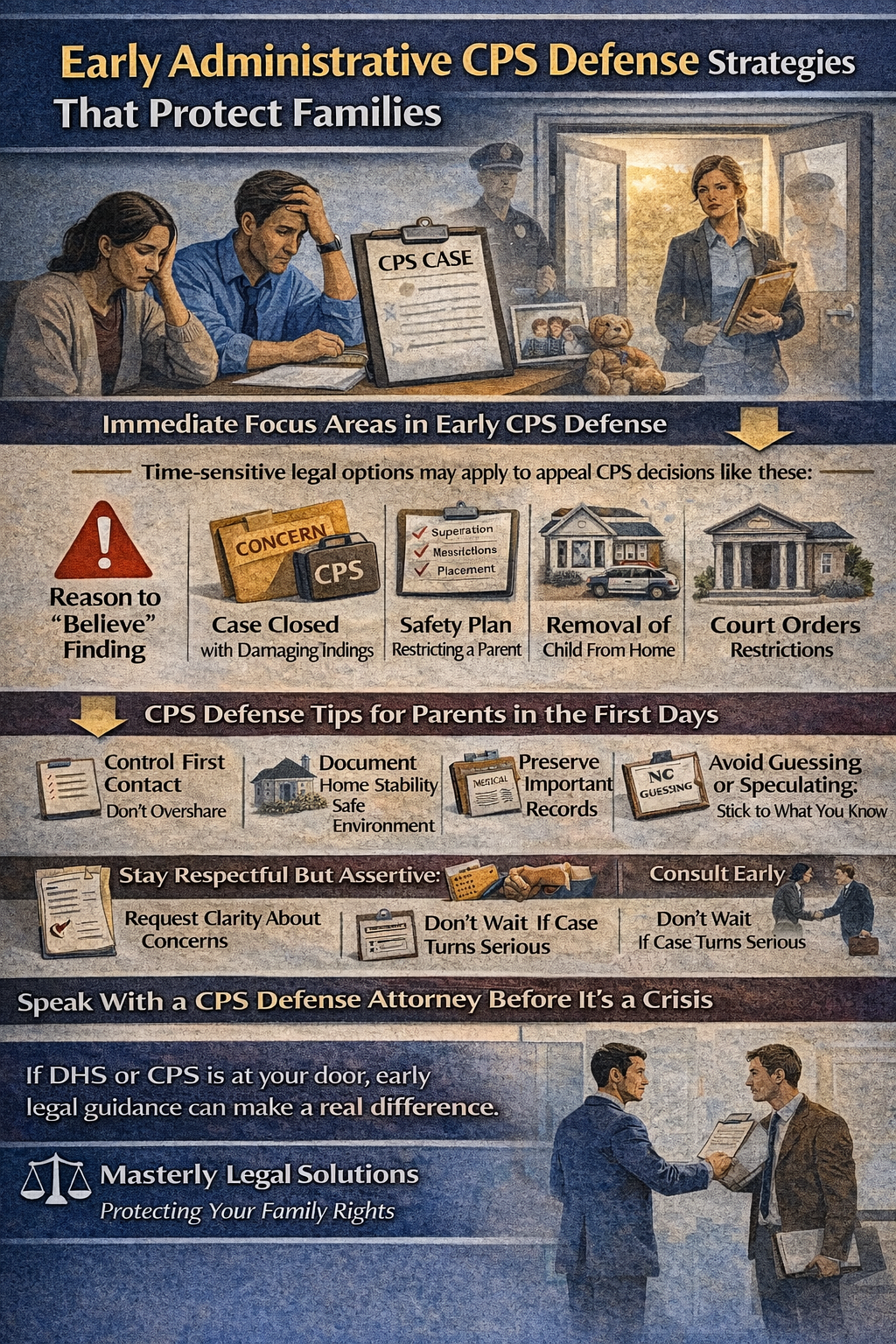
CPS Defense Strategies That Work Early: A Practical Checklist
Below is a practical checklist of administrative defense steps that can protect families early. These strategies are simple, but they can lead to better outcomes when the case is being shaped.
- Stay calm during the first interview and avoid guessing or speculating.
- Document the timeline and preserve key records and messages.
- Keep your home safe, clean, and consistent for the child.
- Understand which services are voluntary and which carry risk.
- Ask for clarity about concerns and respond with concrete solutions.
- Track every contact, including who said what and what was requested.
- Consider hiring an attorney early if the case is escalating.
These are small steps that can lead to real success because they keep you prepared and consistent.
When to Hire a CPS Defense Attorney and Why Timing Matters
Hiring counsel early can protect families from the most common mistakes. Once statements are recorded and plans are signed, it becomes harder to undo damage. A cps defense attorney can help you evaluate the allegations, gather evidence, and respond strategically.
Parents often wait because they hope CPS will close the case quickly. But if the case escalates, early decisions become the foundation for court proceedings. Hiring an experienced attorney early can change the direction of the case before it becomes a crisis.
In administrative CPS defense, timing is everything.
Proven Track Record, Expertise, and Commitment to Families
When you’re choosing an attorney, you want someone with real experience and a proven track record in protecting families. You also want a lawyer with the expertise to understand CPS procedures and how cases are decided. Most importantly, you want someone committed to defending your rights with respect and focus.
At Masterly Legal Solutions, we work with clients who feel overwhelmed and need a plan. We help families protect their home, their child, and their future. We take the responsibility seriously, because the outcome affects lives.
When CPS Cases Turn Into Lawsuits and Long-Term Legal Battles
While many cases resolve administratively, some cases lead to serious legal disputes, including a lawsuit. Lawsuits can arise when rights are violated, when actions are improper, or when families face extreme consequences without fair process. Not every case becomes litigation, but families should understand the risk and the possibility.
If CPS action leads to long-term harm, legal action may become necessary to protect parental rights. This is why administrative defense must be handled carefully—because the record you build early may matter later. The more organized your record is, the better position you are in if the case turns into a legal battle.
Defense is about protecting your family today and protecting your future tomorrow.
Contact Masterly Legal Solutions for a Free Consultation
If you are facing CPS, dealing with child protective services CPS, or worried about a case that could escalate into court restrictions or removal, it is imperative to get guidance early. Administrative decisions can lead the case in one direction quickly, and parents deserve a defense strategy that protects their child and stabilizes the home from the start.
At Masterly Legal Solutions, we provide CPS defense strategies designed to protect families early—before misunderstandings become permanent findings. If you need a cps defense attorney who will defend your rights, protect your child, and guide you through the process with clarity, we are ready to help. We also assist teachers or administrators accused of misconduct with strong legal representation in North Carolina. We focus on practical solutions, strong documentation, and disciplined communication so you can make informed decisions during a stressful time.
Call (972) 236-5051 to schedule a free consultation. Contact our team today so we can answer your questions, review what has been filed, and help you take the right action to protect your family.
Disclaimer: This article is for educational purposes only and does not constitute legal advice or legal guidance. Every case is unique, and you should speak directly with a qualified attorney regarding your specific situation.

Teacher Rights When Assaulted by a Special Needs Student: Safety, Reporting and Investigation Issues


Looking for Legal & Business Solutions? Contact Us Now
Fill in the form or call us to set up a meeting