
Workplace Violence Prevention Training: Building a Practical Response Before a Threat Becomes an Emergency
A supervisor receives a concerning message from an employee. A team member reports threatening comments from a coworker. Someone notices behavior that makes employees uncomfortable, but no one is sure whether it should be reported or who should receive the report.
Waiting until a situation becomes an emergency is not a strong workplace strategy.
Effective workplace violence prevention training helps employees and managers understand what concerning behavior may look like, how concerns should be reported, and when a situation needs to move through the organization's escalation process. The goal is not to turn employees into investigators or security professionals. It is to create a workplace where people know how to raise concerns and managers know how to respond.
For employers, this preparation supports employee safety, consistency, and confidence in leadership. It also helps connect written workplace policies with the decisions employees and managers may need to make when something does not feel right.
Workplace Violence Is Broader Than a Physical Attack
Employers may hear the phrase "workplace violence" and immediately think about physical assaults. The subject is broader.
OSHA defines workplace violence as acts or threats involving physical violence, harassment, intimidation, and other threatening behavior occurring at a work site. The agency notes that workplace violence can range from threats and verbal abuse to physical assaults and can affect employees, clients, customers, and visitors.
That distinction matters for training.
Employees should not assume they need to wait for physical violence before raising a concern. Managers should also understand that threatening or intimidating behavior can require attention even when no physical incident has occurred.
A workplace prevention program works best when people understand the organization's expectations before they encounter a difficult situation.
Workplace Violence Prevention Training Creates a Common Response
Without training, employees may respond to concerning behavior based on personal judgment.
One person reports an incident immediately. Another waits because they are uncertain whether it is serious enough. A manager tries to resolve a threat personally. Another employee tells coworkers but never informs someone who can act on the concern.
That inconsistency can weaken an organization's response.
Workplace violence prevention training can give employees and managers a shared framework for recognizing concerns and following established procedures.
Training can address questions such as:
- What types of behavior should employees report?
- Where should a concern be reported?
- What should a manager do after receiving a report?
- When should a matter be escalated?
- What emergency procedures apply when there is an immediate threat?
- How does the organization's workplace violence policy connect with its broader safety procedures?
Employees do not need to become experts in threat assessment. They need to understand their responsibilities within the organization's process.
Threat Reporting Should Be Clear Before a Problem Occurs
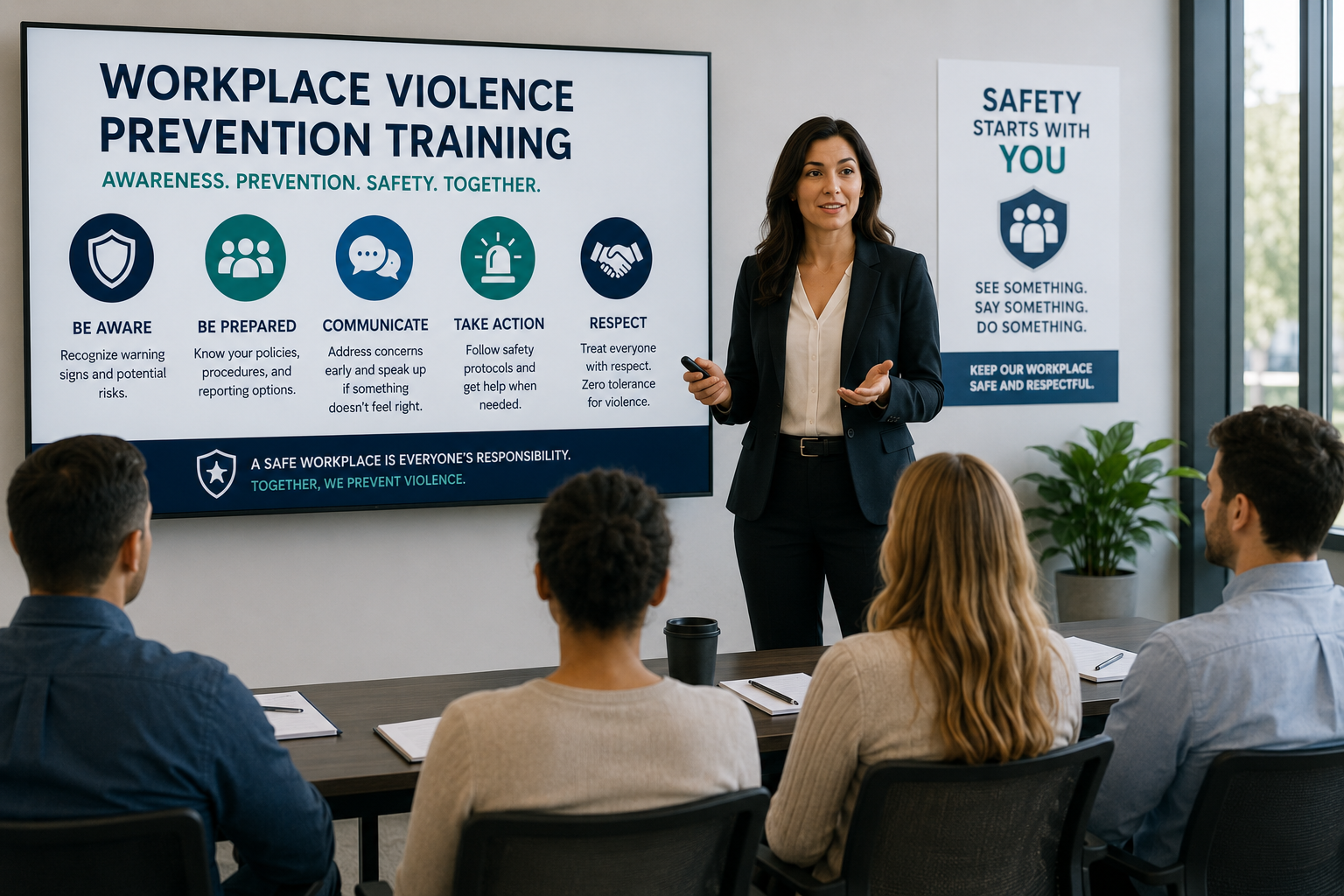
A reporting procedure has limited value if employees do not know it exists or do not understand when to use it.
Threat reporting should therefore be an important part of workplace violence training.
Consider an employee who receives a disturbing message from a coworker after a workplace disagreement. The employee may wonder whether the message is serious enough to report. A supervisor who learns about the message may also be uncertain about what happens next.
Training should reduce that uncertainty.
Employees should understand the organization's reporting options and managers should know how reports move through the established process. Training can also explain what employees should do when they believe a situation presents an immediate danger.
OSHA recommends that workplace violence policies cover workers as well as other people who may come into contact with employees, and it emphasizes making sure workers understand the policy, prevention methods, warning signs, signs of potential violent behavior, and how to report concerns tied to potential incidents before they escalate, as well as how to react when incidents occur.
Clear reporting expectations help move concerns away from hallway conversations and toward an organized response.
Manager Response Can Determine What Happens Next
Managers occupy a particularly important position in workplace violence prevention.
Employees frequently take concerns to their immediate supervisors first. That means a manager may receive information before human resources, security personnel, senior leadership, or other designated contacts know that a concern exists.
A manager's first reaction can affect whether the issue moves forward appropriately. It can also influence whether the employee feels safe reporting concerns without fear of retaliation.
An untrained supervisor may dismiss a comment as a personality conflict. Another may confront the person accused of making the threat without following company procedures. Someone else may promise an employee a particular outcome before the matter has been reviewed.
Effective training creates a different expectation.
The manager receives the concern professionally, identifies whether immediate action is needed under company procedures, preserves relevant information as appropriate, and follows the organization's escalation protocols.
That is a more structured manager response.
Employees Should Know That Reporting Is Not the Same as Investigating
One important distinction should remain clear throughout training.
Employees should not be expected to investigate potential threats themselves, just as they are not expected to master the full range of sexual harassment training legal requirements for employers.
If an employee hears or sees something concerning, the employee's responsibility under the organization's policy may be to report it through the appropriate channel. The organization can then determine what review, investigations, assessment, or response is appropriate.
Managers also need boundaries.
A supervisor who receives a report should understand what the organization's procedure requires rather than conducting an informal investigation based solely on personal judgment.
This distinction can help preserve a more orderly response and reduce the chance that important information is handled inconsistently, especially when employee reporting needs to stay separate from management review, formal follow-up, and incident management supported by HR consulting and training services.
Escalation Protocols Give Managers a Path Forward
Recognizing a concern is only the first step.
Managers need to know what happens next.
Strong escalation protocols establish where a concern should go and help supervisors understand when other parts of the organization need to become involved.
Depending on the employer's structure and procedures, the appropriate internal contacts may differ by department or internal function. That is one reason generic training may not be enough.
A useful manager-focused program should connect the subject to the employer's actual reporting structure.
For example, a manager may need to know:
Who receives a non-emergency workplace violence concern?
Who should be contacted if the concern involves another manager?
What procedures apply if an employee believes there is an immediate danger?
What information should be preserved or communicated to support clear communication?
What should a manager avoid doing while the concern is being reviewed?
Clear answers should exist before a supervisor receives a difficult report.
Employee Safety Depends on More Than a Written Policy
A workplace violence policy can establish expectations, but employees also need to understand what those expectations mean in practice.
OSHA states that a written and implemented workplace violence prevention program, together with appropriate controls and training, can reduce the potential for workplace violence. OSHA also explains that such a program can exist separately or be incorporated into a safety and health program, employee handbook, or standard operating procedures.
This connection between policy and training is important.
An employee handbook may tell employees that threats, intimidation, or violence are prohibited. Training can help employees understand where concerns go, what managers are expected to do, and how workplace procedures operate when an issue is reported.
For employers reviewing the policy side of this process, Masterly Legal Solutions also provides Employee Handbook Services and an employee handbook guide with policy and manual examples. Its services include employee handbook development and review for businesses.
Training and written policies can serve different but complementary purposes.
Workplace Violence Training Should Address Realistic Situations
Employees are more likely to understand expectations when training connects them to workplace situations they can recognize.
Consider three examples.
A concerning statement: An employee tells a supervisor that a coworker made a statement that sounded threatening after receiving workplace discipline.
A pattern of intimidation: Several employees report that a person has repeatedly used intimidating behavior that makes them concerned about coming to work.
A direct threat: A manager receives information suggesting there may be an immediate safety concern.
Some workplace violence incidents also stem from domestic violence, and competitors often note that about 27% of workplace violence incidents are linked to it.
These situations are not identical and should not be treated as though they are, much like the different scenarios employers consider when evaluating the benefits of regular sexual harassment training.
Training can help employees understand the importance of reporting concerns and help managers recognize when the organization's emergency or escalation procedures should be followed.
The purpose is not to teach employees tactical responses to violent attacks. It is to make the organization's prevention and reporting process easier to understand.
A Practical Framework for Workplace Violence Training
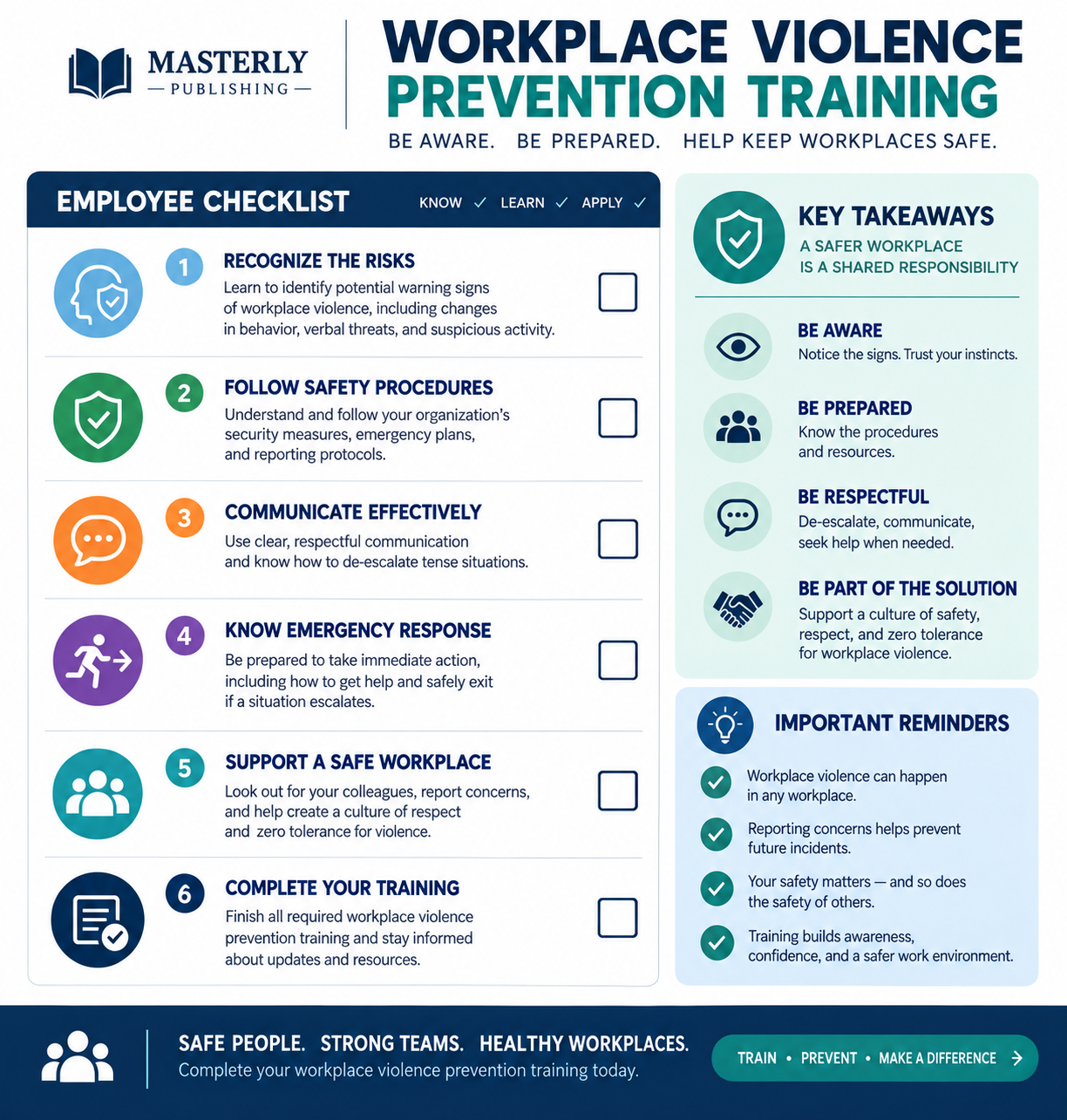
Employers evaluating a training program can focus on four areas: recognize, report, escalate, and respond.
Recognize Early Warning Signs
Employees and managers should understand the early warning signs and types of conduct addressed by the organization's workplace violence policies.
Report
Employees should know where concerns can be reported and understand the organization's expectations concerning reporting to increase awareness.
Escalate
Managers should know when and where to escalate concerns rather than trying to resolve serious situations independently.
Respond
Employees and supervisors should understand the organization's applicable procedures, including what to do when actual or potential incidents present an immediate safety concern.
This framework gives training a practical purpose without turning the program into tactical or active-shooter instruction.
A Prevention Program Should Reflect the Actual Workplace
Workplace violence risks are not identical across every organization.
OSHA identifies a number of circumstances that can increase risk in some workplaces, including working with the public, working alone or in isolated locations, providing services and care, and working with volatile or unstable individuals.
That is why employers should consider their own operations when developing a prevention program and training employees.
An office environment may face different situations than a healthcare facility, university, retail operation, or organization with employees working alone.
Training should make sense for the workforce receiving it.
Generic material can explain broad concepts. Customized training can connect those concepts with the organization's policies, reporting channels, management structure, and workplace environment.
Training Supports Trust in Leadership
Employees want to know that safety concerns will be taken seriously.
Managers want to know what leadership expects them to do.
When neither group has clear guidance, uncertainty can damage confidence in the organization.
An employee who reports concerning conduct should not have to wonder whether the response depends entirely on which supervisor happens to receive the report. Likewise, managers should not be placed in a position where they must invent a response to a serious workplace concern.
Consistent workplace violence training and manager accountability in sexual harassment prevention help establish shared expectations.
That supports a workplace culture where safety concerns have a defined path rather than being ignored, informally discussed, or handled differently across departments, and where employees can trust those concerns will receive support regardless of department.
Customized Workplace Training From Masterly Legal Solutions
Masterly Legal Solutions provides legal services and customized training sessions for entities and organizations. Its current legal services include Labor & Employment and other comprehensive legal and business services, and the firm states that training sessions are available both in person and through virtual online training.
Masterly Legal Solutions also identifies workplace safety among the areas in which it provides custom training for businesses as part of its broader business consulting services. Approximately two million people are victims of workplace violence annually, which is one reason employers look for practical training before an incident occurs.
For employers seeking workplace violence prevention training, customized education can help connect prevention concepts with the organization's workforce, policies, reporting structure, management responsibilities, broader approach to employee safety, and compliance obligations.
The objective is practical preparation before a manager or employee is faced with a serious concern.
Legal requirements and recommendations vary by jurisdiction; for example, Massachusetts recommends annual workplace violence prevention training, and Oregon requires public employers to maintain a harassment policy.
Learn more about Masterly Legal Solutions' legal services and customized training and its client-focused legal representation across practice areas.
Recognizing Risk Factors Before Workplace Concerns Escalate
A strong workplace violence prevention plan should help an organization identify relevant risk factors and establish a clear point for reporting potential violence before concerns develop into violent incidents. Certain work environments, including those involving healthcare workers, may face different risks based on the work performed, the people served, and the service provided, so each employer's plan should reflect its actual workplace.
Resources from federal agencies, including the National Institute for Occupational Safety and Health and the Department of Homeland Security, can provide general information related to preventing violence, but employers still need procedures that employees and managers can understand and follow. Training can help personnel recognize concerning conduct, which may include threats, intimidation, or expressions of intense anger, and understand how to report such behavior without trying to determine on their own whether it will lead to violence or crimes.
Employees should also understand that threatening conduct can carry serious workplace and legal consequences. Masterly Legal Solutions can help employers address these concerns through customized workplace training or broader general counsel services for businesses, and organizations can contact the firm for a free consultation to discuss their training needs.
Frequently Asked Questions About Workplace Violence Prevention Training
What is workplace violence prevention training?
Workplace violence prevention training is a structured course that helps employees and managers understand workplace violence policies, recognize concerning behavior, report concerns, and respond through established escalation procedures. It also provides practical tools employees can use in real situations, not just policy review.
What does OSHA consider workplace violence?
OSHA describes workplace violence as acts or threats involving physical violence, harassment, intimidation, and other threatening behavior occurring at a work site.
Should managers receive workplace violence training?
Managers can play an important role because employees may report threats or concerning behavior to their supervisors first. Training can clarify the manager's response and escalation responsibilities and the preventive measures they can use to help address issues before they escalate.
Should workplace violence training cover threat reporting?
Yes. Employees should understand the organization's reporting procedures, and managers should understand how concerns are handled or escalated under company policies.
Is workplace violence prevention training the same as active-shooter training?
No. Workplace violence prevention can address broader concerns such as threatening behavior, reporting, prevention policies, manager response, and escalation procedures, with the broader goal of preventing workplace violence before a situation escalates. This article does not address tactical active-shooter instruction.
Can workplace violence policies be included in an employee handbook?
OSHA notes that a workplace violence prevention program may be separate or incorporated into an occupational safety and health program, employee handbook, or standard operating procedures. Employers should determine the appropriate structure for their organization.
Does OSHA have a specific workplace violence standard?
OSHA's current workplace violence overview states that there are no specific OSHA standards for workplace violence. OSHA does, however, provide workplace violence guidance, prevention resources, enforcement information, and evolving expectations around applicable regulations and prevention practices.
Does Masterly Legal Solutions provide customized workplace training?
Yes. Masterly Legal Solutions states that it provides customized training sessions for organizations and offers training both in person and virtually. Its business consulting materials also identify workplace safety among its custom training areas.
Build a Practical Response Before a Threat Becomes an Emergency
Employees should know where to take a concern. Managers should know what to do when they receive one. Leadership should have a process that connects workplace policies, threat reporting, escalation, employee safety, and broader security measures.
Customized workplace violence prevention training can help your organization establish and maintain those expectations before a serious situation tests them.
Masterly Legal Solutions provides customized workplace training designed around organizational needs, with both in-person and virtual training options, as part of its broader legal services for individuals and organizations.
Call Masterly Legal Solutions at (972) 236-5051 or visit MasterlyLegal.com to discuss your training needs.



Teacher Rights When Assaulted by a Special Needs Student: Safety, Reporting and Investigation Issues



Looking for Legal & Business Solutions? Contact Us Now
Fill in the form or call us to set up a meeting