

How CPS Uses Home Conditions, Substance Concerns, and Domestic Issues to Expand Cases
When CPS shows up, most parents think the situation will stay focused on one specific report. Maybe someone claimed a child missed too much school. Maybe a neighbor complained about noise. Maybe a teacher saw something that raised questions. In that moment, families often expect a quick check-in, a short conversation, and then life returns to normal.
But a cps investigation rarely stays small if the caseworker finds additional concerns. Even when the original allegations are unclear, child protective services may expand the scope based on what they observe in the home, what they hear from others, or what they believe could create risk. This is one of the most stressful parts of the process—because many families feel like they are being investigated for “everything,” not just the first report.
At Masterly Legal Solutions, we provide strategic, investigation-focused support for Texas CPS matters. We help families protect their rights, respond appropriately, and avoid mistakes that can accidentally worsen the case. In this article, we explain how child protective services cps commonly uses home conditions, substance concerns, and domestic issues to broaden cases—and what you can do to protect your family without becoming overwhelmed.
CPS Expands Cases More Often Than People Expect
Many parents assume CPS will only look at the original complaint. In reality, CPS can broaden the investigation if they think additional risk factors exist. This isn’t always done out of hostility, but it can still have serious consequences for children and the entire household.
A case may start with a report about supervision and then suddenly include questions about discipline, household relationships, and sleeping arrangements. That expansion can feel unfair, especially if the family was never warned. But CPS often views risk as connected, meaning they may think one concern suggests other possible concerns.
Understanding this process helps you avoid panic-driven decisions. A calm response protects your family, keeps the case focused, and reduces the chance the situation grows beyond what it should be.
The Moment a CPS Investigation Starts, the Rules Change
Once a cps investigation begins, the situation becomes more formal than many people realize. CPS is a government agency with authority to collect information, speak with children, and document the home environment. Their records can influence later outcomes, including whether the matter goes to court.
Even if CPS starts by saying they are only “reviewing” a report, the caseworker is still building a file. That file may include notes about the home, caregiver statements, and third-party interviews. If CPS believes there is a risk to safety, the case can escalate quickly.
This is why preparation matters. You want the record to reflect stability, responsibility, and appropriate care, not confusion, chaos, or misunderstandings.
Why Home Conditions Carry So Much Weight in CPS Cases
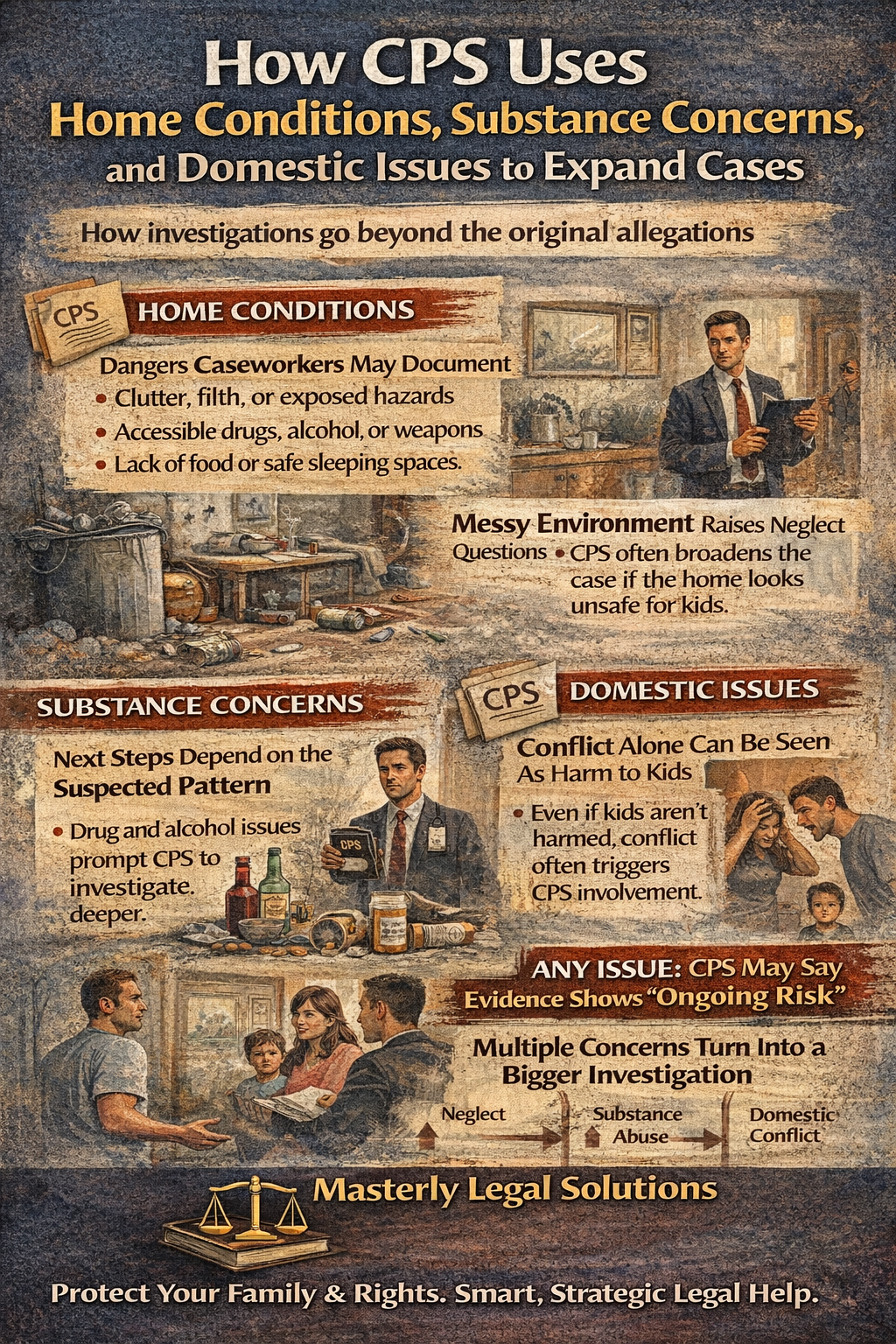
Home conditions are one of the fastest ways cases expand because CPS can physically see the environment. A caseworker may note basic cleanliness, food availability, safety hazards, and whether the home appears suitable for children. Even small issues can become “bigger” if CPS frames them as ongoing patterns.
This doesn’t mean your home has to look perfect. CPS is not supposed to demand luxury or unrealistic standards. But clutter, unsafe items, exposed medications, pests, or limited sleeping space can lead to additional questions.
If CPS connects home issues to neglect, the case often grows. The focus shifts from “one report” to whether the overall home setting protects the child’s health and well-being.
How CPS Uses “Totality of Circumstances” to Broaden an Investigation
CPS often evaluates the “totality” of what they see and hear. That means the caseworker may combine multiple smaller concerns into one larger risk narrative. A home issue might not be enough alone, but when paired with stress, conflict, or financial instability, it may be treated as higher risk.
This is a common pathway for case expansion. CPS can interpret multiple stress indicators as increased danger. The family may feel judged for normal life challenges, especially if they are going through job changes, a separation, or housing transitions.
When CPS begins this kind of expansion, it is critical to stay organized. The right legal strategy can keep the case focused on facts, not assumptions.
Clutter, Cleanliness, and Misunderstandings About Neglect
Many families fear that CPS will remove children if a home is messy. In most situations, clutter alone does not justify removal. But it can be used as supporting evidence if CPS is already investigating neglect or other safety issues.
A messy home may be documented as “unsafe living conditions” when the caseworker believes it impacts the child’s care. This can happen even when the home is simply lived-in or temporarily disorganized. The issue becomes more serious if the caseworker notes broken utilities, unsafe wiring, or lack of food.
The best approach is not to argue about every detail. It’s to show awareness, responsibility, and steps to ensure safety and stable living conditions for your children.
Common Home Conditions That Trigger Expanded CPS Review
CPS caseworkers often look for signs of risk that suggest ongoing problems. If they find these concerns, the case may expand beyond the original report. These issues do not automatically prove abuse or neglect, but they can lead to deeper investigation.
Some commonly documented concerns include:
- Unsafe sleeping arrangements for children
- Exposed medications or alcohol within reach
- Accessible weapons without secure storage
- Dangerous debris, broken glass, or sharp objects
- Signs of rodents, insects, or strong odors
- Lack of food or basic hygiene supplies
- Blocked exits or unsafe electrical hazards
If these issues exist, do not panic. Focus on what can be corrected quickly, and document improvements. A proactive response can protect your child’s health and reduce the chance CPS keeps escalating.
Substance Concerns and How Quickly They Expand CPS Cases
Substance concerns often expand CPS cases faster than almost anything else. The caseworker may ask about alcohol, prescription medication misuse, illegal substances, or impairment while supervising children. Even if no substance abuse exists, CPS may explore it if they think behavior or conditions suggest it.
This can feel intrusive, but the reason is simple. CPS believes substance impairment can affect supervision, judgment, and stability in the home. If the caseworker believes there is a pattern, they may request testing, assessments, or additional services.
These cases require careful handling. An emotional response or defensive denial can sometimes create more suspicion. A clear, fact-based approach is often more protective.
When CPS Believes Substance Use Impacts Safety
When cps believes substance use affects parenting, they may shift the case from a “review” into a higher-risk investigation category. That shift can change what the family is asked to do, what documents are requested, and whether the case moves toward formal intervention.
The caseworker may ask about frequency, history, and whether substances are present in the home. They may also ask about who watches the children, how routines are managed, and whether adults have reliable support. If CPS thinks the home environment creates a safety risk, they may escalate quickly.
This doesn’t mean the case is lost. It means the family needs strategy, documentation, and professional support that keeps the process controlled.
Domestic Issues and How CPS Connects Conflict to Neglect
Domestic issues are another major category CPS uses to broaden investigations. CPS may ask about arguments, relationship instability, threats, or whether a child witnessed violence. Even without physical violence, repeated conflict can be framed as harmful to children.
CPS often views domestic conflict through a child safety lens. If a caseworker thinks a child is living in chronic stress, they may treat it as neglect or emotional harm. The family may feel confused because no one “hurt” the child directly, yet CPS treats the environment as risky.
If domestic issues are present, do not minimize them in a way that seems dismissive. Instead, show responsible steps to protect the children and stabilize the home.
How Stress in the Home Can Be Misread as Danger
CPS caseworkers are trained to spot risk factors, but that can sometimes lead to overinterpretation. When a family is experiencing financial hardship, separation, or mental health strain, it may show up as stress in the home. The caseworker may interpret stress as lack of capacity.
The truth is many parents are doing their best under difficult circumstances. But CPS may still expand the case if they think stress creates unsafe conditions for children. The way a parent communicates during the visit can shape the caseworker’s impression.
It helps to be calm, consistent, and prepared. If you need help, it’s better to ask for appropriate resources than to become defensive and shut down.
How Allegations Grow From One Issue Into Multiple Accusations
A CPS report might begin with one allegation, but it can grow into multiple accusations as the investigation continues. For example, a report about supervision can expand into questions about medical care, discipline, and substance exposure.
This often happens when CPS interviews multiple people. Teachers, neighbors, family members, and other adults may offer opinions that become “leads.” The caseworker may then investigate those leads, even if they are rumors or misunderstandings.
Expansion does not automatically mean guilt. It means CPS is collecting information and building a narrative. Your job is to ensure the narrative reflects the full truth and your child’s real circumstances.
Neglect Allegations and the Broad Definition Problem
Neglect is one of the most common and misunderstood concepts in CPS work. People often think neglect only refers to extreme deprivation. But CPS may treat neglect as a failure to provide safe supervision, stable housing, or appropriate medical follow-up.
This broad definition is one reason CPS cases expand quickly. A caseworker can interpret many situations as neglect, especially if the home conditions are imperfect or the family is under stress. Even a one-time incident can become framed as a pattern if CPS feels uncertain.
When you understand how broad neglect is, you can respond smarter. Your response should focus on the child’s safety, stability, and your ability to provide consistent care.
Child Abuse Allegations and How CPS Documents Risk
Even though this article focuses on expanding cases, it’s important to address child abuse allegations directly. CPS is legally required to investigate child abuse reports seriously. The caseworker may document injuries, statements, behavior, and caregiver responses.
Child abuse can be alleged through physical marks, discipline complaints, or reports from professionals. Sometimes child abuse allegations are true and urgent. Other times they are exaggerated, mistaken, or made during heated disputes.
Because child abuse claims can lead to major interventions, families need careful strategy. The priority is protecting children while protecting parents from inaccurate narratives that can create long-term consequences.
How CPS Uses Children’s Statements to Expand the Scope
CPS often interviews children early in the process. If a child mentions anything that raises a question—another adult, a household conflict, or a moment of fear—CPS may treat it as a new lead.
Children are not always precise with timelines. A child may describe something in a way that sounds alarming even if it was not. CPS may still document it and expand the investigation to verify.
This is why families should not coach children. Coaching can create bigger issues. The better approach is to provide stability, reduce household stress, and let a professional guide the process carefully.
The Role of Third-Party Reports in Expanding Cases
CPS does not rely only on what a parent says. They often speak to teachers, neighbors, counselors, doctors, and other involved adults. These reports can be accurate, mistaken, or biased, but they still influence how the case develops.
A third party might report concerns about a child’s behavior, hygiene, or emotional state. CPS may treat these as signs of neglect or household instability. Sometimes third-party reports are made with good intentions. Sometimes they arise from conflict, misunderstanding, or even retaliation.
If you believe the report lacks validity, you still need to respond professionally. Attacking the reporter often makes a case look worse. Evidence and documentation are stronger than anger.
Home Visits and How Caseworkers Document What They See
A CPS home visit is both an observation and a documentation event. The caseworker may write notes about sleeping arrangements, food, cleanliness, and hazards. They may also note whether the child appears healthy, calm, and safe.
The caseworker’s notes become part of the official record. Those notes may be reviewed by supervisors or later used in court if the case escalates. That is why your conduct matters during the visit.
Stay calm. Be respectful. Answer questions with clarity and avoid unnecessary explanations. Your goal is to keep the record factual and stable.
The Hidden Risk of Over-Agreeing to Services
CPS often recommends or requests services like parenting classes, counseling, drug assessments, or home visits. Some families agree immediately because they want the investigation to end. Others feel pressured and fear the child will be removed if they don’t comply.
The risk is that agreeing too quickly can be interpreted as an admission that the allegations are true. This does not mean you should refuse everything. It means you should understand what you are agreeing to and how it will be documented.
A strategic response protects your family. You can cooperate while still protecting your rights and maintaining control over the case direction.
Counseling Recommendations and How They Affect CPS Outcomes
Counseling is often recommended when CPS believes children have been affected by stress, conflict, or unsafe environments. Counseling can be helpful, but families should understand how CPS uses it in the case file.
A counseling recommendation may be presented as supportive. But it can also become part of an ongoing compliance list. If counseling is not completed “the right way” or on the timeline CPS expects, the agency may interpret it as resistance.
If counseling is appropriate, it can be a positive step that supports child well-being. The key is documenting progress and ensuring the plan fits the child’s real needs, not just a checklist.
Custody Issues and How CPS Involvement Spills Into Family Conflict
CPS involvement often overlaps with custody disputes, even if CPS was not originally called because of a custody battle. One parent may accuse the other. Extended family may get involved. Conflicts can grow quickly.
CPS may begin investigating the child’s living situation across households. They may evaluate each parent, each home, and each support network. That can create a wider investigation than families expected.
If custody conflicts exist, be careful with communication. Avoid emotional texts and accusations. CPS cases often expand when adults escalate conflict instead of stabilizing the environment for the children.
Guardians and Extended Family Participation in CPS Cases
Sometimes a child lives with a guardian or extended family rather than a parent. CPS still evaluates the safety and stability of the household, and guardians may be treated similarly to parents during the investigation process.
A guardian may feel unfairly targeted, especially if they stepped in to help the child. But CPS may ask detailed questions about routines, medical care, school involvement, and household dynamics.
Guardians should take the process seriously and seek help when needed. A well-organized response can protect children and prevent unnecessary escalation.
What CPS Can Remove and When Removal Happens
Many families fear removal the moment CPS becomes involved. CPS can sometimes seek to remove children from the home if they believe there is immediate danger. Removal is not automatic, and it requires a serious threshold of concern.
Removal decisions can involve supervisors and legal steps. If the matter escalates, it may involve a judge and the court system. Removal can also happen through agreements, which families sometimes sign under pressure.
If removal becomes a risk, you need strategy quickly. The earlier you respond, the more options you may have to protect the children and preserve family stability.
How Court Involvement Changes the Entire Case
When a CPS matter becomes a court case, the stakes rise dramatically. Court involvement may bring hearings, deadlines, and court-ordered requirements. CPS documentation becomes extremely important in these moments.
A judge may review reports, safety concerns, and compliance steps. Families may feel overwhelmed because the process is unfamiliar and emotionally difficult. This is where having an attorney becomes essential.
Even before court, act as if the record might be reviewed. Your early actions often shape what happens later.
How CPS Determines the Next Step After an Initial Review
After the initial contact, CPS may conduct a review of what they observed and what was reported. That review helps CPS decide whether the case should close quickly, remain open for monitoring, or escalate to further steps.
CPS may also decide what services are required. They may determine whether the case is low risk or high risk based on the child’s safety and living conditions. Sometimes CPS decisions feel inconsistent or unclear, which is why families need clarity and guidance.
Your goal should be to respond in a way that supports the child’s safety while limiting unnecessary case expansion.
Exploitation and Other Serious Allegations CPS Investigates
Some cases involve concerns about exploitation, unsafe supervision with strangers, or inappropriate environments. CPS may investigate whether children are exposed to dangerous adults, unstable living arrangements, or risky supervision patterns.
Even if exploitation is not the original report, CPS may explore it if they hear something concerning from interviews or observations. These allegations are serious and can lead to rapid escalation.
If this issue arises, it is critical to act carefully and professionally. A well-prepared defense plan protects children and ensures the case does not grow on assumptions alone.
Authority and Why CPS Has So Much Influence Early On
CPS has legal authority to investigate allegations involving child safety, abuse, and neglect. Their role is to assess risk and determine whether intervention is needed. That influence is strongest early in the case, when the record is being built.
Families often feel powerless because they do not know what CPS can legally require. They may comply out of fear rather than strategy. But fear-driven decisions often create long-term problems.
With knowledge and professional guidance, families can respond appropriately without giving up control. Understanding CPS authority helps protect your rights and your family.
How Parents Can Protect Children Without Escalating Conflict
Parents often feel like they must “fight” CPS immediately. But the best protection is not always conflict. A calm strategy can protect children, stabilize the home, and reduce the chance the case expands.
Protection looks like documentation, safe conditions, clear communication, and responsible follow-through. It also looks like getting professional support early, especially when the allegations involve abuse, neglect, or domestic issues.
Your goal is to protect the children’s health, safety, and stability. A focused plan helps you do that without making the case worse.
What an Attorney Actually Does in CPS Defense
A CPS matter is not the time to guess your way through the process. An attorney helps families understand the rules, the risks, and the steps needed to protect the case record. The attorney can also communicate with CPS on your behalf and help prevent misunderstandings.
A strategic attorney works to keep the case organized, focused, and defensible. This includes responding to document requests, preparing for interviews, and correcting inaccurate assumptions. The right attorney also helps families avoid over-agreeing to services that create unnecessary complications.
At Masterly Legal Solutions, our approach is administrative, proactive, and investigation-focused. We defend families by protecting the process, not just reacting when things escalate.
What to Look for When You Hire CPS Lawyers
Many families search for cps lawyers during a crisis. They want someone who understands the system and can reduce the pressure quickly. When you hire counsel, the goal is not drama. The goal is a plan that protects your family and prevents unnecessary expansion.
Look for professionalism, experience, and clear communication. You want someone who can explain what matters, what does not, and how to protect your child’s well-being. You also want someone who understands that CPS cases are deeply personal and stressful.
Choosing the right legal support can be the difference between a controlled case and a spiraling investigation.
The Importance of Experience and a Proven Track Record
A CPS case can move fast, and the record is built early. That is why experience matters. Families need guidance from a legal team that understands how CPS decisions are made and how the investigation unfolds in real life.
At Masterly Legal Solutions, we bring proven track record experience in proactive CPS strategy and administrative case handling. We focus on protecting children, supporting families, and addressing concerns without feeding the case with avoidable mistakes.
When your family is under investigation, you do not need fear-based advice. You need clear direction and a stable plan that works.
When CPS Cases Expand Across Counties and What That Can Look Like
Families sometimes move, travel, or have children living across households. That can cause cases to expand across a county or multiple counties, depending on where the child lives and where reports originate. CPS may coordinate with other offices if needed.
People sometimes read online information from other regions like Orange County, Irvine, or even San Bernardino, but those areas may have different procedures and local practices. A family may also see content about cps charlotte nc, which can be confusing if their situation is Texas-based.
The key is to focus on the rules that apply to your specific state and county. A local strategy helps ensure you are responding correctly and protecting your rights where the case is actually happening.
How “Safety” Language Can Change a Parent’s Decision-Making
CPS often uses safety language, and for good reason—child safety is the agency’s responsibility. But safety language can also pressure families into rushed decisions. Parents may sign agreements or accept restrictions without fully understanding the consequences.
Safety is important, but so is clarity. A plan should support safety while preserving family stability. When safety language is used to push fast compliance, it’s okay to pause and seek assistance.
A calm response protects children and reduces the chance of mistakes. It also helps families keep control of the process.
How Handling the First Week Can Shape the Entire Investigation
The first week after CPS contact is often the most important. This is when the record is being created, services may be requested, and decisions may be made about the case direction. Families who respond with panic often create contradictions that CPS later relies on.
Handling the first week well looks like staying organized and staying calm. It means documenting what happened, correcting obvious hazards in the home, and communicating with care. It also means recognizing when the situation is serious enough to require an experienced attorney.
A strong early response can prevent case expansion and protect the family’s long-term stability.
Key Steps Families Can Take to Reduce Case Expansion
Families can take proactive steps that reduce the chance CPS expands the case. These steps should be practical, respectful, and focused on the children’s well-being. They are not about hiding, they are about protecting.
Here are a few examples of protective steps:
- Make sure the home is safe and accessible for children
- Document improvements and keep records organized
- Keep routines stable for the children
- Communicate calmly and avoid emotional escalation
- Follow reasonable service recommendations when appropriate
- Seek legal advice if allegations are serious or expanding
These steps help create a stable record. Stability matters when CPS is deciding what happens next, and seeking legal services can also support your case.
Success Starts With a Clear Strategy From the Beginning
In CPS cases, real success is not just “getting through it”—it’s protecting your family, your rights, and your child’s future without allowing the situation to spiral. The choices you make during the first stage of a CPS investigation can shape the outcome, especially when CPS begins expanding concerns beyond the original report. When families respond calmly, document properly, and get the right legal guidance early, they often put themselves in a stronger position for a faster and more favorable resolution. A strategic approach helps keep the case focused on facts instead of fear.
What Families Face When CPS Expands an Investigation
When CPS becomes involved, families often face more pressure than they expected, especially if the caseworker starts asking about home conditions, domestic conflict, or substance concerns. The situation can feel overwhelming because the investigation may expand quickly and involve repeated visits, interviews, and requests for services. Many parents feel like they are being judged from every angle, even when they are doing their best. The right support and preparation can reduce stress, prevent mistakes, and help families stay in control of the process.
Understanding the Different Types of CPS Concerns That Can Expand Cases
CPS investigations can involve different types of concerns, and some expand more easily than others once a case begins. A report may start with supervision issues but grow into discussions about neglect, emotional harm, substance exposure, or unsafe home conditions. CPS often treats these concerns as connected, which is why a single allegation can lead to a much broader review. Knowing the types of issues CPS may focus on helps families prepare, respond appropriately, and protect their child’s well-being from unnecessary escalation.
How Masterly Legal Solutions Supports Families Through CPS Investigations
At Masterly Legal Solutions, our commitment is to help families respond strategically during CPS involvement. We focus on protecting children, protecting parents, and guiding clients through the investigation process without panic or unnecessary conflict. We provide legal services built on clarity, preparation, and real-world experience.
We understand how quickly CPS can expand cases, especially when home conditions, substance concerns, or domestic issues are involved. We also know how to help families keep the process controlled by focusing on facts, documentation, and appropriate action. Our team brings knowledge and expertise that helps families protect what matters most.
If you feel overwhelmed, you are not alone. CPS cases are stressful, and early guidance can make a major difference.
Contact Masterly Legal Solutions for a Free Consultation
When CPS starts asking deeper questions about your home, domestic conflict, or substance concerns, it can feel like your case is growing faster than you can keep up. Many parents try to handle everything alone until they realize the investigation is expanding into broader claims about neglect, abuse, or alleged risk to a child’s health. By then, the pressure can be intense, and one wrong move can create long-term damage.
If you found this article while searching online terms like cps charlotte nc, the most important thing to know is that CPS procedures vary by state. Masterly Legal Solutions provides strategic CPS defense and administrative appeal representation exclusively for Texas CPS matters. We help families protect children, respond professionally, and avoid decisions that make the case worse.
Call Masterly Legal Solutions at (972) 236-5051 to schedule your free consultation. We will help you understand what CPS is doing, what the next steps may be, and how to defend your family with clarity and confidence.
Disclaimer: This article is for educational purposes only and does not constitute legal guidance or legal advice. Every situation is different, and you should speak with a qualified attorney about your specific circumstances.


Teacher Rights When Assaulted by a Special Needs Student: Safety, Reporting and Investigation Issues



Looking for Legal & Business Solutions? Contact Us Now
Fill in the form or call us to set up a meeting