

Administrative Leave During School Investigations and Legal Options
Being placed on administrative leave can leave a teacher or school employee with more questions than answers. You may be told not to report to work, asked not to contact coworkers or students, or informed that the school district is conducting an investigation.
You may still be receiving your regular pay, but that does not necessarily make the situation less serious.
If you are searching for administrative leave meaning, you are likely trying to understand what your leave says about your employment and what you should do before the investigation moves forward.
Administrative leave is not automatically a finding of wrongdoing. In many school settings, it is a temporary employment status used while a district reviews allegations or other concerns. But the reason for the leave, the terms of the notice, and what happens during the investigation can have important consequences for your career.
Masterly Legal Solutions represents educators and school employees facing investigations, administrative leave, disciplinary action, and professional concerns. If you have been placed on leave, our attorneys can help you understand your position before you respond to the district.
Administrative Leave Definition: What Does It Mean for a School Employee?
The administrative leave definition can vary depending on the employer and applicable policies.
Generally, administrative leave means an employee is temporarily removed from their normal work duties while the employer handles a workplace matter. The employee may remain employed and may continue receiving pay and benefits, depending on the applicable policies and circumstances.
For a teacher, administrator, counselor, coach, or other school employee, administrative leave may occur while a district investigates an allegation involving professional conduct, student-related concerns, workplace behavior, policy violations, or another matter.
Being placed on administrative leave does not necessarily mean the district has decided that you are guilty of misconduct, and unlike standard leave categories, it is typically employer-directed rather than employee-initiated.
However, it does mean that something has caused the district to take formal action, and in many school settings, it is a temporary employment status that can also limit access to sensitive company information while allegations are reviewed.
That is why the details matter.
Why School Investigation Leave Should Be Taken Seriously
School investigation leave can be stressful because you may not know what the district has been told, what evidence it has, or what decision may come next.
A district may be gathering information from administrators, employees, students, parents, or other witnesses as part of workplace investigations. You may also be asked to attend a meeting or provide a statement in writing.
What you say during this stage can become part of the investigation record, and the meaning of administrative leave can vary under company policy, employment contracts, union contracts, or collective bargaining agreements.
An employee who feels pressure to immediately explain everything may unintentionally provide incomplete information, speculate about events, or make statements that can later be interpreted differently. For most people, that uncertainty can affect their well-being and make the situation feel like it has interrupted their entire life.
This is one reason legal protection for teachers can be valuable before a significant investigative interview. Common reasons for this kind of leave include an investigation process involving alleged conduct, discrimination, harassment, a retaliation complaint, unlawful conduct, or other disputes.
Masterly Legal Solutions can review the circumstances and help you understand the potential employment and professional consequences before you respond. The employee may remain employed while the matter is reviewed, and paid leave may continue compensation such as salary, health insurance, and other benefits, while unpaid administrative leave may arise in specific circumstances.
Being placed on administrative leave does not necessarily mean misconduct occurred or that termination will follow. Employee rights, legal rights, and due process may depend on the applicable employment law frameworks, including employment law, and on whether outside agencies become involved. Those details can affect later employment decisions, including discipline, return to work, discrimination claims, or wrongful termination and wrongful termination claims, so early advice from legal counsel, a legal team, or an employment attorney can help you assess the risks.
Federal employees, union-covered employees, and an at-will employee may each face a different investigation process, different protections, and different paths under contracts or policy.
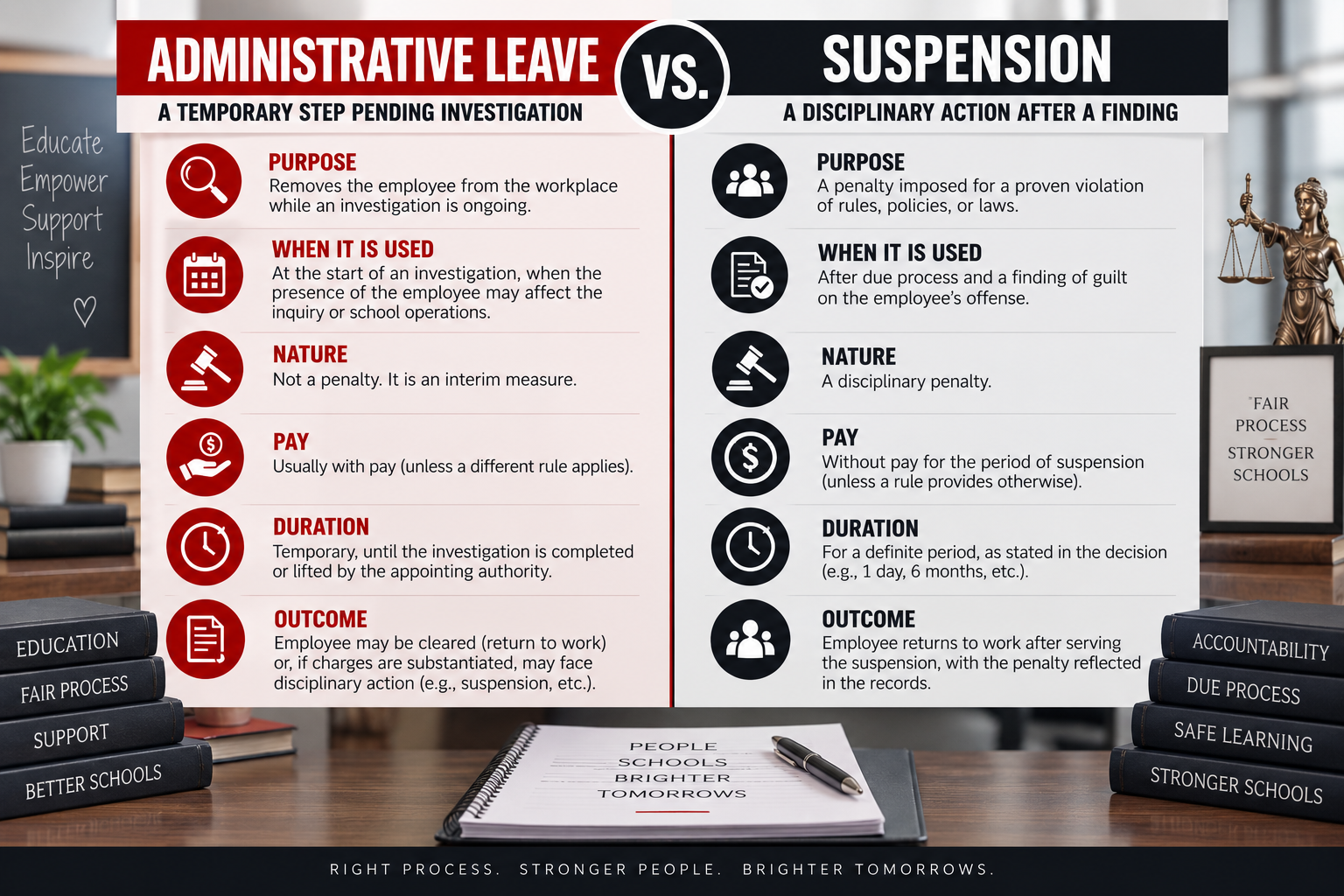
Does Administrative Leave Mean You Are Being Disciplined?
Not necessarily.
Administrative leave and discipline are different concepts, although the distinction depends on company policy, the specific circumstances, and any employment contracts, union contracts, or collective bargaining agreements that apply.
A district may place an employee on administrative leave pending investigation while it investigates an allegation without having reached a final disciplinary decision, and in some cases the leave may be paid while in others it may involve unpaid leave or unpaid administrative leave.
The investigation may eventually result in no discipline, corrective action, or formal discipline, and it can also shape later employment decisions.
For educators, the situation can become more complicated when an investigation may involve common reasons such as harassment, discrimination, retaliation complaints, or other disputes, may raise due process and employee rights concerns, and may create added risks if written responses are not careful and fact-based, especially in states with specific educator misconduct defense processes like North Carolina educator misconduct defense. What you say during this stage can become part of the investigation record, so careful writing and fact-based communications matter.
An employee who feels pressure to explain everything immediately should be cautious, especially where employment law and broader employment law frameworks may affect the process. A misstatement can affect legal rights and increase the chances of wrongful termination or wrongful termination claims, even for an at-will employee.
This is one reason legal counsel can be valuable before an interview or written response, and an education law attorney can help assess whether the allegations, procedures, and notice align with applicable rules.
If your leave notice or investigation raises concerns about your teaching certificate or professional standing, Masterly Legal Solutions' educator defense services can provide additional legal support, depending on the specific circumstances and any employee rights or legal rights implicated by the matter.
What Does Paid Leave Pending Investigation Mean?
Many employees search for information about paid leave pending investigation because they are confused about why they are not working while continuing to receive their normal pay and salary.
Paid administrative leave can allow an employer to keep an employee away from the workplace while workplace investigations take place.
Receiving pay during this period does not necessarily mean the investigation is unimportant. It also does not automatically mean that disciplinary action will follow. In many cases, administrative leave pending investigation is non-disciplinary at the outset, although company policy and the specific circumstances can affect that analysis.
The terms of the leave should be reviewed carefully.
Your notice may contain information about your employment status, restrictions on communication, expected availability, investigative meetings, health insurance, other benefits, compensation, or other requirements. A district may place an employee on leave to protect students, staff, or the integrity of the process. By contrast, unpaid administrative leave or other unpaid leave is more often associated with punitive action or economic issues than standard paid administrative leave.
If you are unsure what your notice means, an attorney can review it with you, including how the leave may affect employee rights, legal rights, and later employment decisions if the district is trying to reduce wrongful termination risks.
What Happens During School Workplace Investigations?
Every investigation is different.
A school district may review documents, interview employees, speak with students or parents, examine communications in writing, and evaluate other available information as part of the investigation process.
The district may also ask the employee who is under investigation to provide a statement or participate in an interview. Paid administrative leave pending investigation usually means the employee continues receiving salary and may keep health insurance and other benefits as part of overall compensation.
This is often the point when educators become concerned about what they should say. Paid administrative leave can allow an employer to remove an employee from daily duties while facts are reviewed. A company may also use leave to separate the employee from the workplace during workplace investigations while preserving employee rights pending later employment decisions.
You should not assume that every investigation will lead to discipline. You should also not assume that remaining silent or providing an immediate response without legal counsel is always the best approach.
Your legal rights and responsibilities depend on the specific circumstances, your employment relationship, applicable district policies, and other legal considerations. The terms of the leave should be reviewed carefully because company policy and specific circumstances can affect whether leave stays paid or becomes unpaid.
Masterly Legal Solutions can provide education law attorney representation during an educator investigation and help you respond to the process in a careful and informed way.
Administrative Leave Can Affect Your Professional Reputation
For educators, an investigation can affect more than a current job.
A serious allegation may create concerns about your professional reputation, future employment, certification, or relationship with your school district.
Even when an investigation does not result in termination, the investigation process can be stressful and disruptive, and the outcome often depends on the specific circumstances.
District reviews may examine alleged conduct, written communications, and complaints involving discrimination claims, harassment, a retaliation complaint, other disputes, or possible unlawful conduct. A district may also keep an employee away from the workplace to protect sensitive company information while the review is ongoing.
That makes it important to approach the matter carefully from the beginning.
Your goal should be to protect your professional interests while allowing the investigation to be addressed through the appropriate process.
If an interview or leave decision could affect employee rights, legal rights, or raise due process concerns, an experienced education lawyer can help you assess the risks of later employment decisions, including wrongful termination or wrongful termination claims.
Masterly Legal Solutions works with educators who need experienced education law legal services when an investigation threatens their employment or professional standing, disrupts their daily and professional life, or raises concerns about well-being.
When Should You Speak With an Attorney?
You do not have to wait until the district makes a final decision.
Consider seeking legal guidance when:
- You have received an administrative leave notice.
- The district has opened a formal investigation.
- You have been asked to attend an investigative interview.
- You are being asked to provide a statement in writing.
- The allegations could affect your employment and create legal and professional risks, including future employment concerns and, in some cases, wrongful termination disputes or wrongful termination claims.
- You are concerned about your teaching certificate.
- You believe the district has misunderstood important facts.
- You are worried about possible disciplinary action, harassment, discrimination, or other employee rights issues.
- You have been told that the matter may be reported to a professional agency or that outside agencies may become involved.
Even when an investigation does not result in termination, the process can still affect your well-being and disrupt your professional life in ways that feel all-consuming. Early legal review with an education law attorney for teachers and administrators can help you understand your legal rights and due process before you make statements or decisions that could affect the outcome. It can also help you document key facts carefully, assess discrimination claims, and decide when to bring in legal counsel or a broader legal team. If you want to discuss the situation early, ask whether a free consultation is available, especially if you are weighing a possible retaliation complaint or other dispute, including potential wrongful termination or need steps to take on administrative leave as a Texas teacher. Protecting your position early can matter if the allegations later expand into discrimination claims, retaliation complaints, or other disputes.
How Masterly Legal Solutions Helps Educators on Administrative Leave
Administrative leave can be difficult to navigate when you are also trying to protect your career.
Masterly Legal Solutions provides legal representation for educators and school employees dealing with workplace investigations and disciplinary concerns.
Depending on the circumstances, legal assistance may include:
- Reviewing your administrative leave notice
- Evaluating the allegations
- Preparing for investigative interviews
- Reviewing district policies, company policy, employment contracts, union contracts, and collective bargaining agreements
- Advising you about communications with school officials
- Representing you during an investigation
- Addressing potential disciplinary action
- Assisting with educator defense matters
- Advising on potential TEA-related concerns
You do not have to wait until the district makes a final decision. Early legal counsel can help protect employee rights, legal rights, and due process while the matter is still ongoing.
Depending on the circumstances, legal assistance may also include:
- Helping you prepare for meetings where statements or interview responses may affect later employment decisions
- Advising on whether leave status, pay, or compensation issues may be affected by district action
- Evaluating concerns involving discrimination, harassment, or a retaliation complaint
- Explaining the key differences that may apply if agency rules, federal employees, or other classifications become involved
- Reviewing how district procedures may affect an at-will employee compared with protections in school settings
- Assessing whether outside agency review could become involved in discrimination claims
- Identifying concerns tied to school policies, personnel procedures, and related disputes
- Addressing situations where you are worried the district's handling of the matter could create wrongful termination claims or other risks
The appropriate legal strategy depends on your individual circumstances. Speaking with an employment attorney or legal team can help you assess your options; if available, you can also request a free consultation.
For matters involving the Texas Education Agency, see TEA defense services or our broader TEA investigation representation for Texas educators.
FAQ About Administrative Leave Meaning
What is the administrative leave meaning for teachers?
Administrative leave generally means a teacher is temporarily removed from regular duties while the school district handles an investigation or other employment matter. It does not automatically mean the teacher has been found responsible for misconduct.
Is administrative leave the same as suspension?
Not necessarily. Unlike standard leave categories that employees usually request themselves, administrative leave is generally directed by the employer under company policy, often while an investigation is pending, while suspension may be disciplinary and in some specific circumstances involve unpaid administrative leave or unpaid leave. The exact meaning depends on district policies and the circumstances.
Is administrative leave usually paid?
It may be. Paid leave pending investigation is used by some employers, and suspension and unpaid administrative leave are more likely to be punitive or tied to economic issues, though the exact meaning depends on company policy and the specific circumstances. In paid situations, compensation can include regular salary, health insurance, and other benefits, but what continues depends on the applicable policies, agreements, and circumstances.
Can a school investigate me while I am on administrative leave?
Yes. The investigation may continue while you are away from your regular duties.
Can I be required to attend an investigation interview?
Depending on the circumstances and applicable employment rules, a district may require an employee to participate in an investigation. Keeping someone away from regular duties can also help protect sensitive company information during the investigation. If the interview could affect your employment or professional license, consider getting legal counsel beforehand so you can better protect your legal rights and employee rights, understand due process, and approach your answers and writing carefully.
Does administrative leave mean I will lose my teaching job?
No. Administrative leave does not automatically mean termination. The outcome depends on the investigation, evidence, applicable policies, and other specific circumstances, so careful preparation matters because your written or spoken statements can affect due process concerns, employee rights, legal rights, and later employment decisions. In some cases, the matter ends with reinstatement; in others, it can lead to discipline or termination, which ends the employment relationship immediately and may raise issues such as wrongful termination or wrongful termination claims if the process was flawed. If you are under investigation, consider speaking with legal counsel beforehand.
Can administrative leave affect my teaching certification?
Potentially. Some educator investigations can lead to professional or certification concerns depending on the allegations and what happens during the investigation.
Should I hire an attorney while on administrative leave?
If the investigation could affect your job, professional license, reputation, or future employment, consulting an attorney early can help you understand your legal position and make informed decisions. Termination is different because it ends all employment connections immediately. An employment attorney or experienced legal team can explain your options, and many offer a free consultation so you can get legal counsel before deciding your next step. Later employment decisions depend on the specific circumstances, and in some situations employees may raise wrongful termination concerns or claims.
Can Masterly Legal Solutions represent me during a school investigation?
Yes. Masterly Legal Solutions provides legal representation for educators and school employees facing investigations, administrative leave, disciplinary matters, workplace investigations, discrimination claims, retaliation complaint matters, wrongful termination claims, and related disputes. Speaking with an employment attorney or the firm’s legal team early can help you understand your options, and if available, ask about a free consultation.
Request Confidential Guidance Before Responding to the District.
If you have been placed on administrative leave, you do not have to figure out the administrative leave meaning of your notice by yourself.
What happens next can affect your employment and professional future. Before giving a statement, attending a significant investigative meeting, or responding to serious allegations, consider getting legal guidance tailored to your situation from an experienced employment attorney.
Masterly Legal Solutions represents educators and school employees facing administrative leave, workplace investigations, and related disputes, including discrimination claims, retaliation complaints, or wrongful termination claims where applicable. Our legal team can help you understand your options and seek legal counsel before key decisions are made.
Call (972) 236-5051 or contact Masterly Legal Solutions to request a confidential free consultation.
This page provides general information and is not legal advice. It does not create an attorney-client relationship. Employment and educator rights depend on the specific facts, applicable policies, agreements, and law.



Teacher Rights When Assaulted by a Special Needs Student: Safety, Reporting and Investigation Issues



Looking for Legal & Business Solutions? Contact Us Now
Fill in the form or call us to set up a meeting