

Steps Teachers Should Take the Moment an Investigation Begins
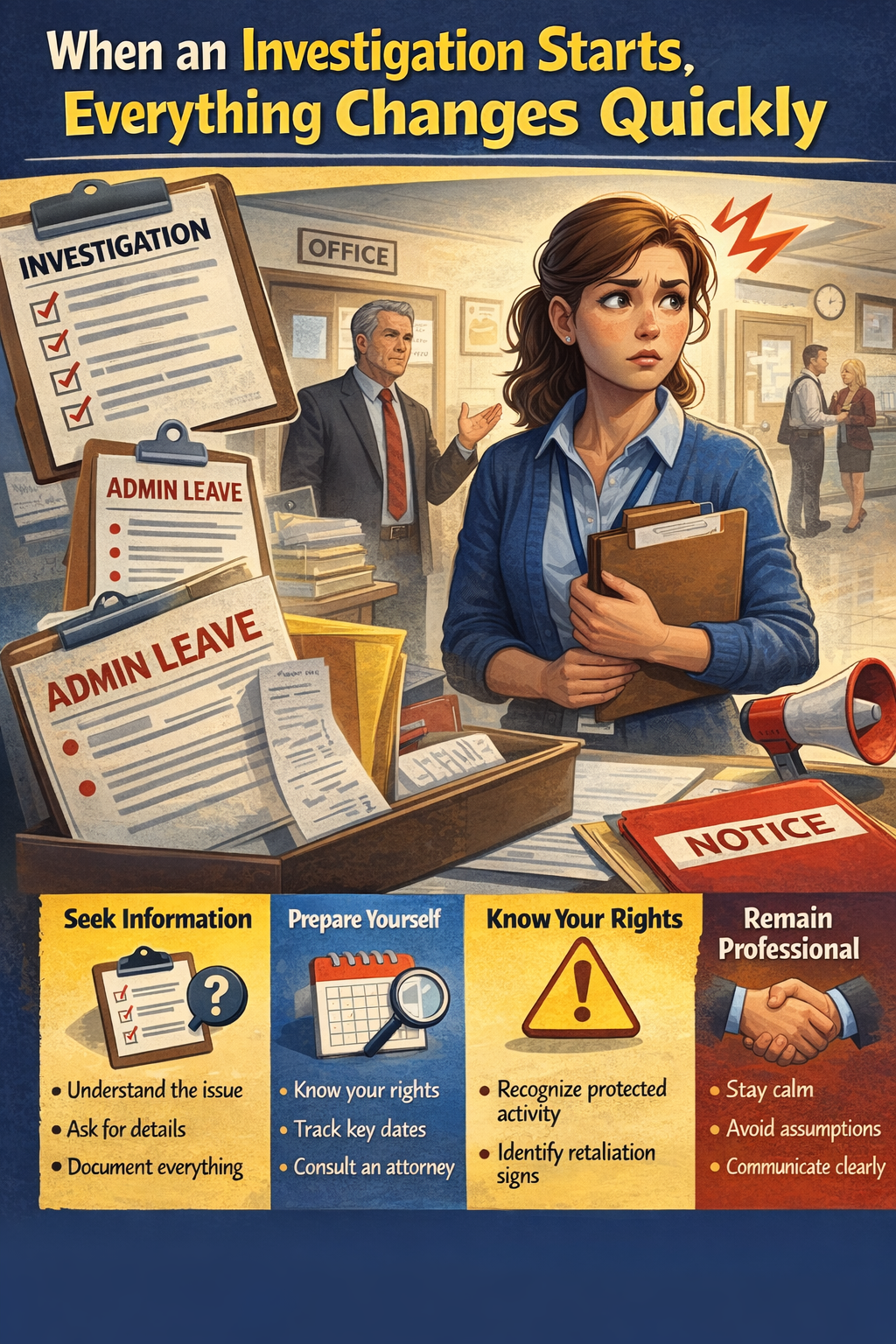
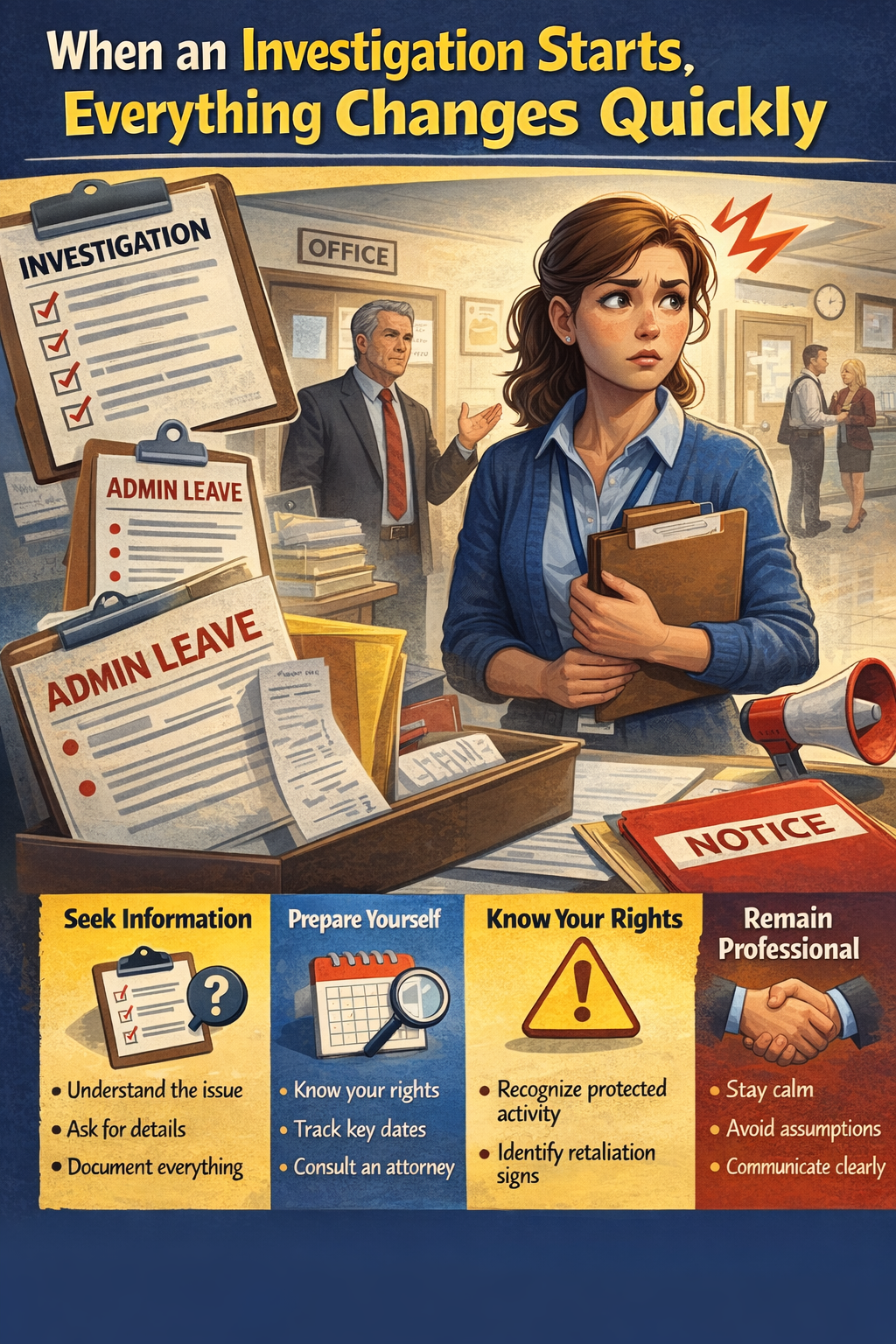
When an Investigation Starts, Everything Changes Quickly
The moment an investigation begins, many teachers feel a wave of uncertainty. It is normal to feel confused, concerned, or even overwhelmed when your employer starts reviewing alleged misconduct. In many cases, workers are unsure what the process means for their career, their pay, and their professional reputation. What matters most in this early stage is how you respond and how you protect your rights moving forward.
An investigation can impact your employee's current position, your hours, and even your long-term future. Employers often move quickly, sometimes placing employees on administrative leave or making sudden changes to their responsibilities. While some actions may be standard procedure, others may raise questions about fairness or retaliation. Understanding what steps to take immediately can make a meaningful difference.
Understanding What an Investigation Means for Teachers
An investigation in a school or educational setting usually involves reviewing alleged misconduct or a possible violation of agency policies. This process may include interviews, document reviews, and input from agency officials or other authorized agency officials. In some situations, the agency determines whether temporary changes, such as administrative leave, are necessary.
It is important to understand that an investigation does not automatically mean wrongdoing occurred. Employers may conduct internal reviews as part of routine personnel management or in response to a complaint. However, the way an investigation is handled can affect employee morale and overall employee morale across the workplace. Teachers should remain aware of how decisions are made and whether those decisions align with internal policies and the law.
Stay Calm and Avoid Immediate Reactions
One of the most important steps teachers can take is to remain calm. Emotional reactions, while understandable, can sometimes complicate the situation. A reasonable employee should focus on gathering information rather than making assumptions.
For example, if a supervisor or manager informs you of an investigation, listen carefully to what is being said. Ask for clarification if needed, but avoid making statements that could be misunderstood. Your initial response can influence how agency judgments are formed moving forward.
Request Clear Information About the Investigation
Teachers should ask for details about the investigation as soon as possible. This includes understanding the nature of the alleged misconduct, who is conducting the investigation, and what steps are expected.
You may want to ask:
- What is the purpose of the investigation?
- Who are the authorized agency officials involved?
- Will there be interviews or documentation required?
- How long is the process expected to take?
Having this information helps you prepare and ensures that your rights are protected. It also allows you to identify whether the investigation is being handled properly or in an ad hoc manner.
Understand Your Rights Under the Law
Teachers are protected under various laws, including provisions within the United States Code that prohibit retaliation and protect employees who engage in protected activity. These protections apply when workers report concerns, cooperate with police, or participate in an investigation.
Employers must follow regulations and agency policies when taking action during an investigation. If an employer takes adverse action that is directly related to your participation, it may raise concerns about retaliation. Knowing your rights allows you to recognize when something does not feel right.
Be Aware of Protected Activity
Protected activity includes actions such as filing a complaint, reporting harassment, or assisting in an investigation. Teachers who engage in protected activity are legally protected from retaliation.
Examples of protected activity include:
- Reporting workplace safety concerns
- Participating in interviews during an investigation
- Cooperating with police or other agencies
- Supporting co workers who raise concerns
Understanding protected activity helps you recognize when retaliation occurs and ensures you can take appropriate action if needed.
Document Everything from the Start
Documentation is one of the most powerful tools teachers have during an investigation. Keeping detailed records can help establish timelines and identify patterns.
Important details to document include:
- Dates and times of meetings
- Changes to your employee's work schedule
- Communications with human resources or your manager
- Any adverse action taken against you
These records can be critical if you need to demonstrate a possible violation of the law.
Pay Attention to Administrative Leave Decisions
Administrative leave is commonly used during investigations, but it must be applied carefully. In some cases, employers place employees on paid administrative leave to allow the investigation to proceed without disruption.
However, teachers should watch for situations where administrative leave is used excessively or without clear justification. Administrative leave should typically be limited to brief periods or short periods, especially when no immediate risk is present. If an employer continues to grant administrative leave without explanation, it may raise concerns.
Understanding Paid Administrative Leave and Its Impact
Paid administrative leave may sound beneficial, but it can still have a negative impact on a teacher’s career. Being removed from the classroom or your employee's current position can affect your professional standing and employee morale.
Employers may claim that administrative leave supports the agency’s mission, but context matters. For example, if administrative leave is used repeatedly or extended beyond brief or short periods, it may suggest something more than routine procedure. Teachers should monitor how long they remain on administrative leave and whether it aligns with agency policies.
Recognize Investigative Leave and Notice Leave
Investigative leave and notice leave are additional tools employers may use during an investigation. Investigative leave is often applied when the employer believes your presence could interfere with the process. Notice leave may occur when changes to employment status are pending, and some employers may benefit from outside counsel for internal probes to ensure these decisions remain fair and compliant.
While these forms of leave are permitted under OPM regulations and OPM guidance, they must be used fairly. If an employer applies investigative leave or notice leave inconsistently, it may raise questions about agency judgments.
Watch for Sudden Changes in Your Role
During an investigation, employers may attempt to reassign teachers or change their responsibilities. These changes can sometimes place employees in a less desirable position or remove them from a desirable position.
For example, a teacher may be reassigned to administrative duties or removed from classroom instruction. While the agency determines these changes based on its mission, timing is important. If changes occur immediately after a complaint or protected activity, they may not be coincidental.
Monitor Changes in Pay and Benefits
Teachers should carefully review any changes to their pay or benefits during an investigation. Even small adjustments can have a lasting impact.
Examples include:
- Reduction in pay
- Loss of benefits
- Changes to work hours
- Denial of additional opportunities
When these changes occur alongside other actions, they may be considered adverse action.
Stay Professional with Your Supervisor and Manager
Maintaining professionalism is essential throughout the investigation process. Even if you feel unfairly treated, it is important to communicate respectfully with your supervisor and manager.
This approach helps protect your credibility and ensures that your actions cannot be used against you. It also demonstrates that you are acting in good faith, which can be important if the situation escalates.
Be Careful When Speaking with Co Workers
Teachers often turn to co workers for support during difficult times. While this can be helpful, it is important to be cautious about what you share.
Discussions about the investigation could be misinterpreted or used in ways you did not intend. It is best to focus on factual information and avoid speculation.
Understand How Employers Make Decisions
Employers rely on agency policies, internal policies, and regulations when making decisions during an investigation. These decisions are often influenced by agency judgments and the agency head.
In some cases, employers may also follow guidance from a presidential directive, presidential memorandum, or executive order. While these frameworks provide structure, they must still be applied fairly and consistently.
Recognize When Retaliation May Be Occurring
Retaliation can take many forms, and it is not always obvious. Teachers should be aware of actions that could indicate retaliation occurs, and may want to consult a retaliation lawyer for workplace law help if they notice troubling patterns.
Examples include:
- Increased scrutiny from management
- Unjustified disciplinary action
- Repeated placement on administrative leave
- Isolation from other employees
When these actions follow a protected activity, they may indicate retaliation.
Keep Track of Patterns Over Time
Sometimes retaliation becomes clear only when viewed over time. Teachers should track events over a calendar year to identify patterns.
For example, repeated adverse action, changes in work hours, or ongoing administrative leave may suggest a larger issue and might justify filing a formal retaliation or labor complaint. Patterns can provide strong evidence of improper behavior.
Know the Limits of Employer Authority
Employers have the authority to take certain actions during an investigation, but that authority is not unlimited. Actions must be specifically authorized and consistent with the law.
If an employer takes actions that appear excessive or unnecessary, it may raise concerns. Teachers should question whether those actions are truly needed or if they may have a different purpose.
Be Aware of Excused Absence and Safety Leave
In some situations, employers may offer an excused absence or safety leave. These types of leave are intended to protect both employees and the workplace.
However, they must be applied consistently. If an employer selectively applies these options, it may indicate unequal treatment.
Understand the Role of Human Resources
Human resources plays a key role in managing investigations. They are responsible for ensuring that policies are followed and that employees are treated fairly.
Teachers should maintain open communication with human resources and document all interactions. Employers, in turn, may benefit from HR consulting services and training to ensure that concerns are addressed appropriately.
Consider How Workplace Actions Affect You
Every action taken during an investigation can have a direct effect on your career. Whether it involves administrative leave, changes in pay, or reassignment, the impact can be significant.
Teachers should evaluate whether these actions are directly related to the investigation or if they seem excessive.
Recognize the Impact on Workplace Environment
Investigations can affect not only the individual involved but also the broader workplace. Changes in employee morale, interactions with co workers, and overall atmosphere may shift.
If the environment becomes hostile or isolating, it may indicate deeper issues within the agency.
Take Early Steps to Protect Yourself
Taking action early can make a difference in how the situation unfolds. Teachers should focus on protecting their rights and documenting their experiences.
This includes keeping records, seeking guidance, and staying informed about their rights under the law.
Seek Legal Guidance When Necessary
If you believe your rights are at risk, it may be time to speak with professionals who understand retaliation and employment law. Retaliation lawyers can help evaluate your situation and provide guidance.
At Masterly Legal Solutions, we assist workers who are facing investigations, adverse action, and potential retaliation through our dedicated retaliation lawyer services. Our goal is to help you protect your career and your future.
How Retaliation Lawyers Can Help You Navigate Personnel Management Decisions
When an investigation involves alleged misconduct, the way employers handle personnel management decisions becomes extremely important. Schools and other employers are expected to follow agency policies when reviewing a situation, but that does not always happen in practice. In some cases, decisions that appear routine may actually result in adverse action against employees, especially if they have recently raised a concern or participated in a complaint. This is where retaliation lawyers and other education law attorneys for teachers can play a critical role in helping teachers understand whether their rights have been violated. A legal professional can review how the employer applied policies, assess whether actions were fair, and help protect your career if those decisions were not handled properly.
When Employers Must Issue Internal Policies Consistent With Fair Practices
Employers have a responsibility to issue internal policies consistent with the law and fair workplace standards, especially when an investigation begins. These policies should clearly explain how employees are treated, including the use of paid leave, expectations within the office, and how decisions are made across the company. For example, if employees are placed on leave or reassigned, those actions should follow a structured process rather than being handled inconsistently. When a business fails to apply its own policies evenly, it may create confusion and raise concerns about fairness. Teachers should pay close attention to whether the employer’s actions match what is written in official guidelines.
Workplace Activities, Time Limits, and Protected Rights
Many schools and organizations allow participation in activities such as blood donations or other officially sponsored events, which are often seen as positive aspects of workplace culture. However, access to these opportunities should not change unfairly during an investigation or after a complaint. In some situations, employers may make decisions on a time limited basis, such as temporarily restricting participation or adjusting responsibilities. While this can be appropriate, it must be clearly justified and applied equally to all employees. Teachers should also understand that protections extend beyond a single complaint and include other related protected activity and related protected activity connected to the situation.
How Business Decisions Can Impact Your Position
Decisions made during an investigation often reflect broader business considerations, but they should never come at the expense of fairness or employee rights. Whether in a school, office, or larger company, employers must ensure that their actions are not influenced by retaliation or bias. For example, a teacher may notice changes in responsibilities, communication, or access to opportunities that feel out of place, or even feel pressure to resign. These changes should always be directly tied to legitimate needs, not as a response to a complaint or participation in an investigation, and educators should understand when an employer may be forcing you to resign. When actions seem inconsistent or unsupported by any other provision of policy, it may signal a deeper issue that deserves attention.
Contact Us for a Free Consultation
Facing an investigation can feel overwhelming, especially when your career, pay, and reputation are on the line. You do not have to navigate this process alone. Our team at Masterly Legal Solutions is here to help you understand your rights, identify potential retaliation, and take the right steps forward.
If you have concerns about administrative leave, adverse action, or how your employer is handling an investigation, including whether an independent internal investigation is being conducted properly, we encourage you to reach out. We take the time to listen, review your circumstances, and provide clear guidance tailored to your situation.
Call us today at (972) 236-5051 for a free consultation. Let us help you protect your rights, your career, and your peace of mind, whether you are facing classroom allegations, misappropriation of funds investigations, or other workplace concerns.
This article is for educational purposes only and does not constitute legal advice. For advice specific to your situation, please contact a qualified attorney.
How Retaliation Lawyers Can Help You Navigate Personnel Management Decisions
When an investigation involves alleged misconduct, the way employers handle personnel management decisions becomes extremely important. Schools and other employers are expected to follow agency policies when reviewing a situation, but that does not always happen in practice. In some cases, decisions that appear routine may actually result in adverse action against employees, especially if they have recently raised a concern or participated in a complaint. This is where retaliation lawyers and other education law attorneys for teachers can play a critical role in helping teachers understand whether their rights have been violated. A legal professional can review how the employer applied policies, assess whether actions were fair, and help protect your career if those decisions were not handled properly.
When Employers Must Issue Internal Policies Consistent With Fair Practices
Employers have a responsibility to issue internal policies consistent with the law and fair workplace standards, especially when an investigation begins. These policies should clearly explain how employees are treated, including the use of paid leave, expectations within the office, and how decisions are made across the company. For example, if employees are placed on leave or reassigned, those actions should follow a structured process rather than being handled inconsistently. When a business fails to apply its own policies evenly, it may create confusion and raise concerns about fairness. Teachers should pay close attention to whether the employer’s actions match what is written in official guidelines.
Workplace Activities, Time Limits, and Protected Rights
Many schools and organizations allow participation in activities such as blood donations or other officially sponsored events, which are often seen as positive aspects of workplace culture. However, access to these opportunities should not change unfairly during an investigation or after a complaint. In some situations, employers may make decisions on a time limited basis, such as temporarily restricting participation or adjusting responsibilities. While this can be appropriate, it must be clearly justified and applied equally to all employees. Teachers should also understand that protections extend beyond a single complaint and include other related protected activity and related protected activity connected to the situation.
How Business Decisions Can Impact Your Position
Decisions made during an investigation often reflect broader business considerations, but they should never come at the expense of fairness or employee rights. Whether in a school, office, or larger company, employers must ensure that their actions are not influenced by retaliation or bias. For example, a teacher may notice changes in responsibilities, communication, or access to opportunities that feel out of place, or even feel pressure to resign. These changes should always be directly tied to legitimate needs, not as a response to a complaint or participation in an investigation, and educators should understand when an employer may be forcing you to resign. When actions seem inconsistent or unsupported by any other provision of policy, it may signal a deeper issue that deserves attention.
Contact Us for a Free Consultation
Facing an investigation can feel overwhelming, especially when your career, pay, and reputation are on the line. You do not have to navigate this process alone. Our team at Masterly Legal Solutions is here to help you understand your rights, identify potential retaliation, and take the right steps forward.
If you have concerns about administrative leave, adverse action, or how your employer is handling an investigation, including whether an independent internal investigation is being conducted properly, we encourage you to reach out. We take the time to listen, review your circumstances, and provide clear guidance tailored to your situation.
Call us today at (972) 236-5051 for a free consultation. Let us help you protect your rights, your career, and your peace of mind, whether you are facing classroom allegations, misappropriation of funds investigations, or other workplace concerns.
This article is for educational purposes only and does not constitute legal advice. For advice specific to your situation, please contact a qualified attorney.




Teacher Rights When Assaulted by a Special Needs Student: Safety, Reporting and Investigation Issues



Looking for Legal & Business Solutions? Contact Us Now
Fill in the form or call us to set up a meeting





