The Role Retaliation Attorneys Play During School District Investigations
When School Investigations Create Fear in the Workplace
School employees dedicate their careers to serving students and supporting educational communities. Yet when a workplace investigation begins inside a school district, many workers suddenly feel uncertain about their future. Concerns about retaliation, job security, and reputation often surface quickly. An employee who has raised concerns about misconduct, safety issues, or workplace discrimination may worry that the employer will respond negatively.
In these moments, guidance from experienced retaliation attorneys becomes incredibly important. Legal professionals who understand federal and state laws can help an employee protect his or her job while navigating the legal process. Investigations inside public institutions can become complex, particularly when allegations involve harassment, discrimination, or violations of the civil rights act.
For many educators and school staff, having the right legal advocate ensures that their rights remain protected throughout the investigation. Skilled employment lawyers help individuals understand their legal protections and determine whether unlawful retaliation may be occurring.
Understanding Workplace Retaliation in School Districts
What Retaliation Looks Like in Education Settings
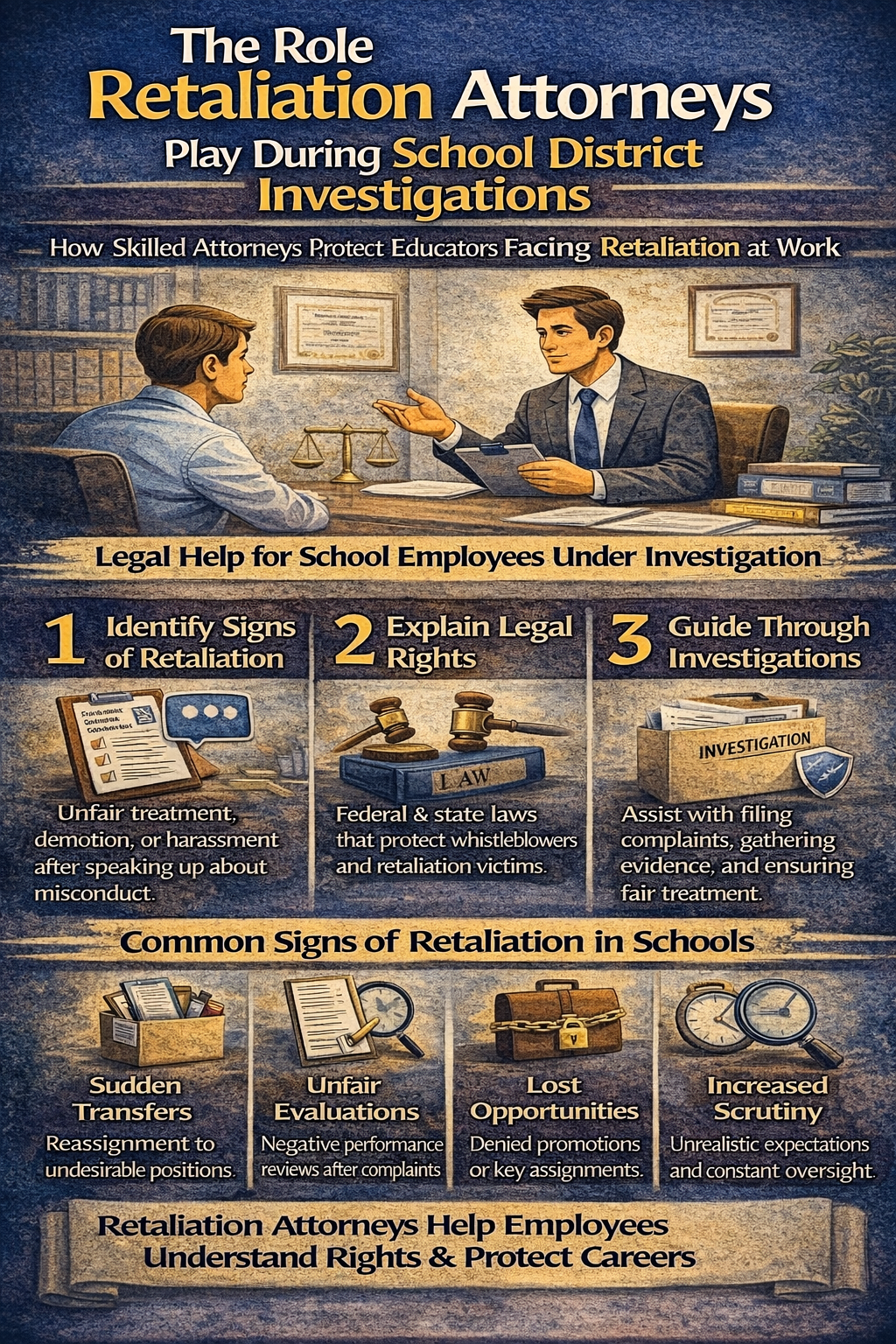
Retaliation in a school workplace does not always appear obvious at first. Sometimes it begins with subtle changes that make an employee feel isolated or punished for speaking up. When retaliation occurs, the employer takes an adverse action against an employee because that individual engaged in protected activity, such as reporting discrimination or cooperating in an investigation.
School districts, like other employers, must follow federal law and state laws that prohibit retaliation. These laws protect individual employees who raise concerns about workplace retaliation and discrimination, safety issues, or unethical behavior.
Retaliation in educational institutions may appear in many forms, including:
- Unfair performance reviews after filing a complaint
- Removal from leadership roles or committees
- Reassignment to a less desirable position
- Denial of promotional opportunities
- Sudden changes to work hours
Each of these actions can damage an employee’s career and overall employee morale within the organization.
The Laws That Protect Employees
Federal Laws Addressing Retaliation and Discrimination
Several federal statutes protect employees who experience workplace discrimination or retaliation. These laws protect employees who take action against unfair treatment in the workplace.
Among the most important protections are those contained in Title VII of the civil rights act. Under Title VII, employers may not engage in discrimination based on race, national origin, religion, sex discrimination, or gender discrimination.
These protections also apply when an employee reports misconduct. If an employer denies wrongdoing and punishes the reporting individual, that action may violate federal law.
Other federal statutes include:
- The disabilities act, which protects workers with disabilities
- Laws prohibiting age discrimination
- Protections related to sexual orientation discrimination
- Whistleblower laws protecting employees who report wrongdoing
These statutes form the foundation for many employment discrimination cases and related labor retaliation complaints.
How State Laws Strengthen Employee Protections
While federal law provides important protections, state laws often add additional safeguards. Many states allow employees to file a complaint with a state agency before pursuing a lawsuit.
For example, individuals may report discrimination to the equal employment opportunity commission or a local agency that investigates discrimination claims. These federal agencies review evidence and determine whether unlawful retaliation or discrimination occurred, and some situations may also require help from an education law attorney to navigate parallel school or licensing investigations.
State law can also provide protections involving family responsibilities, immigration status, or other issues affecting workers.
Common Types of Workplace Discrimination in Schools
Direct and Indirect Discrimination
School employees sometimes face direct discrimination, which occurs when someone is intentionally treated differently because of a protected characteristic. In other situations, policies may unintentionally create unequal outcomes for certain groups.
Examples of workplace discrimination in schools may involve:
- Gender discrimination affecting promotions
- Sex discrimination related to maternity leave
- Discrimination based on national origin
- Bias involving sexual orientation
These situations can create a hostile workplace environment, often accompanied by harassment from supervisors or co workers, where early advice from education law attorneys for teachers can be critical.
Protected Activity and Employee Rights
What Counts as Protected Activity
Employees who participate in certain activities receive protection under federal law. These actions are known as protected activity and include reporting illegal behavior or assisting in investigations.
Examples of protected activity include:
- Reporting discrimination to supervisors or human resources
- Cooperating with the equal employment opportunity commission
- Filing internal complaints about workplace discrimination
- Participating as potential witnesses in investigations
If an employee engages in protected activity and later experiences negative consequences, retaliation cases may arise, and some school districts may also need proactive HR consulting and training services to reduce the risk of these disputes.
How Retaliation Appears During School Investigations
Subtle Forms of Retaliation
Retaliation often develops slowly. An employee who previously held a desirable position may suddenly be reassigned to a less desirable position. Duties may change, or the individual may lose promotional opportunities.
In other situations, job assignments may be altered so that the employee faces unrealistic expectations. These actions may appear administrative but can represent unlawful retaliation.
Other common retaliatory actions include:
- Denial of paid time for professional activities
- Exclusion from important meetings
- Negative performance reviews
- Increased scrutiny from supervisors
Such conduct can create significant stress in both the workplace and an employee’s personal life.
The Role of Retaliation Attorneys
Legal Guidance During School Investigations
Experienced retaliation attorneys play a critical role during school district investigations. They evaluate the facts, analyze whether unlawful retaliation may have occurred, and guide employees through the legal process, often working in tandem with dedicated education lawyers for teachers and schools when school-specific policies and regulations are involved.
An attorney helps determine whether the employer’s actions qualify as adverse action under the legal definition of retaliation. If so, the attorney can assist the employee in protecting his or her rights.
These professionals also review employment contracts, disciplinary records, and internal policies. Their goal is to identify evidence that supports a discrimination claim or retaliation case, particularly for educators facing misconduct investigations that threaten their licenses and careers.
Investigations and the Legal Process
Filing a Complaint
When retaliation occurs, an employee may need to file a complaint with the equal employment opportunity commission or a relevant state agency. This step begins the formal legal process, which can run alongside education law investigations into a teacher’s conduct or licensure.
During this stage, federal agencies review documents, interview potential witnesses, and evaluate whether the employer violated federal and state laws.
Legal counsel helps the employee prepare statements, gather evidence, and ensure deadlines are met.
The Impact of Retaliation on Employees
Retaliation can affect every aspect of a person’s professional and personal life. Losing leadership roles, facing harassment, or experiencing wrongful termination or pressure to resign or quit a job can cause emotional and financial stress.
An employee may also struggle with family responsibilities, especially when workplace conflict affects job stability. In some cases, retaliation interferes with benefits such as job protected leave or fmla leave.
These experiences can affect not only the individual employee but also his or her family member and household.
Harassment and Retaliation in School Environments
When Workplace Conflict Escalates
In some situations, harassment accompanies retaliation. Supervisors or co workers may create a hostile workplace environment through intimidation, exclusion, or verbal attacks.
Repeated harassment can damage an employee’s reputation and confidence. It may also impact job performance and professional relationships.
If retaliation escalates to threats or physical harm, immediate legal intervention may become necessary.
Reasonable Accommodations and Employee Rights
Under the disabilities act, employers must provide reasonable accommodations to eligible employees with disabilities unless doing so creates an undue hardship.
These reasonable accommodations may include schedule adjustments, modified duties, or workplace accessibility improvements.
If an employee requests accommodations and then faces retaliation, the employer may be violating federal law.
Settlement Negotiations and Legal Strategy
When retaliation claims develop, attorneys often pursue settlement negotiations before trial. This approach allows both parties to resolve disputes while avoiding lengthy litigation.
Experienced employment lawyers evaluate the strength of the case, review evidence, and advise the employee on possible outcomes.
These negotiations may address lost wages, overtime pay, reinstatement, or compensation for emotional distress.
Why School Employees Need Legal Advocates
School districts operate under strict policies and administrative structures. When allegations of discrimination or retaliation arise, the investigation process can feel overwhelming for an employee.
Having a legal advocate ensures that laws protect employees during these situations. Attorneys understand how federal and state laws apply to public institutions and education systems.
Their role is to defend the rights of workers, protect professional reputations, and ensure accountability.
Protecting Employees From Future Discrimination
Addressing retaliation is not only about correcting past misconduct. It also helps prevent future discrimination and ensures schools remain fair workplaces.
Legal action encourages employers to improve employment practices, strengthen reporting systems, and promote equality among workers.
When employees feel safe reporting problems, the entire organization benefits.
Contact Masterly Legal Solutions for Help With Retaliation Cases
School district investigations can place tremendous pressure on educators and staff. If you believe you may be experiencing retaliation, it is important to speak with experienced legal professionals who understand employment law and the unique challenges within educational institutions.
At Masterly Legal Solutions, our team of experienced retaliation attorneys works with employees facing workplace disputes involving discrimination, harassment, and wrongful disciplinary actions. We understand how complicated these situations can become and are committed to protecting your professional reputation and legal rights.
Our attorneys help clients evaluate potential discrimination claims, navigate the legal process, and pursue fair outcomes through negotiation or litigation when necessary. If you believe your employer has taken adverse action after you engaged in protected activity, our team is ready to help.
Call (972) 236-5051 to schedule a free consultation and discuss your situation with an experienced legal professional. We will review your circumstances, explain your rights under federal law, and help you determine the best path forward.
Disclaimer: This article is provided for informational purposes only and does not constitute legal advice. Reading this content does not create an attorney-client relationship. Individuals facing workplace disputes should consult a qualified attorney to receive guidance tailored to their specific circumstances.



Looking for Legal & Business Solutions? Contact Us Now
Fill in the form or call us to set up a meeting